
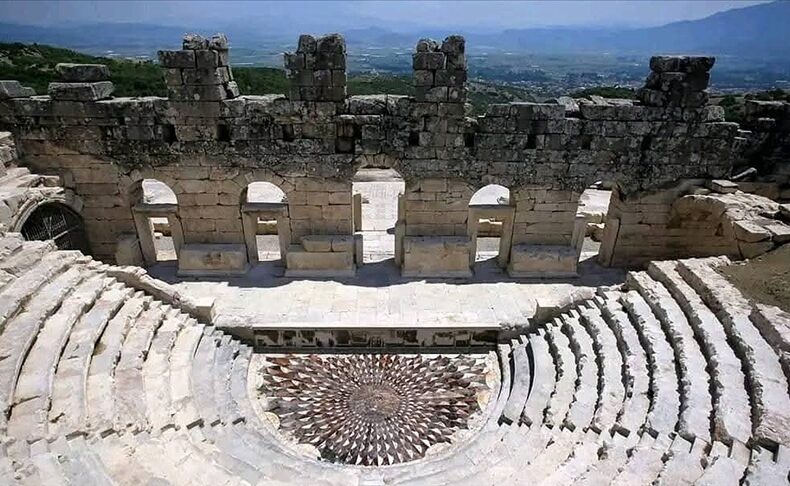
2,000-Year-Old Medusa Mosaic at Kibyra Reopens to Visitors in Türkiye
In the ancient city of Kibyra, located in Burdur’s Gölhisar district, one of the most remarkable surviving works of Roman stone craftsmanship has been revealed once again. The 2,000-year-old Medusa mosaic, protected throughout the winter months, has now reopened to visitors with the arrival of the new season.
Seasonal conservation and reopening
Each year, the mosaic is carefully covered to protect it from harsh weather conditions, including moisture, frost, and temperature fluctuations. This conservation strategy ensures the long-term preservation of one of Kibyra’s most iconic features.
With the end of winter, the protective layers have been removed. Excavation director Prof. Dr. Şükrü Özüdoğru confirmed that both the Medusa mosaic and the Odeion Stoa floor mosaics are now accessible and will remain open to visitors until the end of November 2026.
A rare example of opus sectile technique
What distinguishes the Kibyra Medusa mosaic is its technique. Unlike traditional mosaics made from small tesserae, this piece was created using opus sectile—a method that involves cutting and assembling large pieces of colored marble to form detailed compositions.
📣 Our WhatsApp channel is now LIVE! Stay up-to-date with the latest news and updates, just click here to follow us on WhatsApp and never miss a thing!!
This approach required a high level of precision and planning, making such works relatively rare. The Kibyra example stands out as one of the finest preserved representations of this technique in the ancient world.
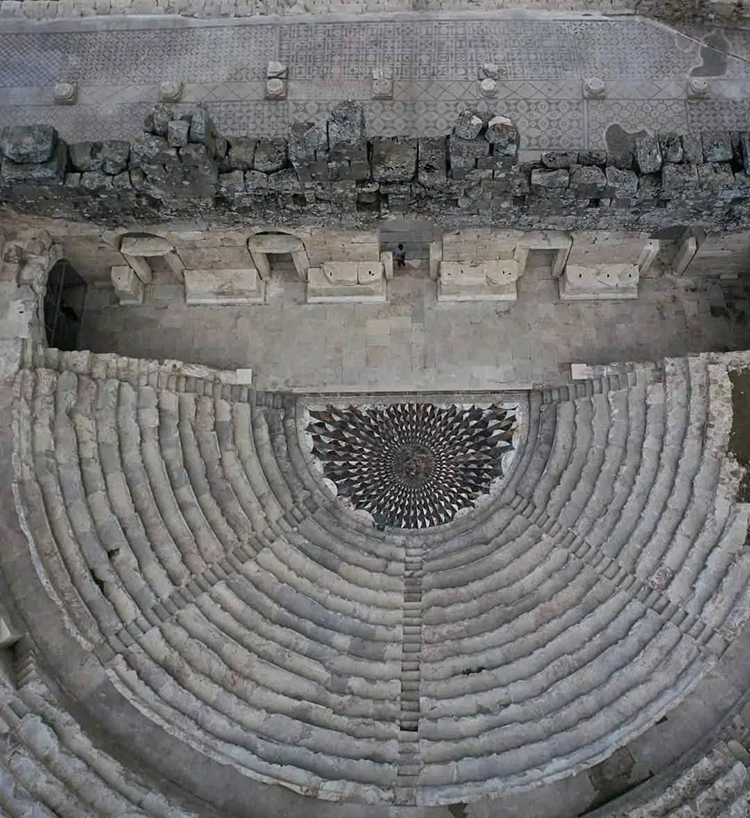
At the center of Kibyra’s odeion
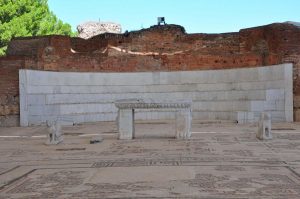
The mosaic is located at the very center of the city’s odeion, a multifunctional public building that served as a concert hall, council chamber, court, and theater.
Its placement is not merely decorative. In ancient belief, Medusa functioned as an apotropaic symbol, believed to ward off evil. Positioned at the heart of a civic structure, the figure likely carried symbolic meaning, protecting both the building and the activities within it.
Water flows again in the monumental fountain
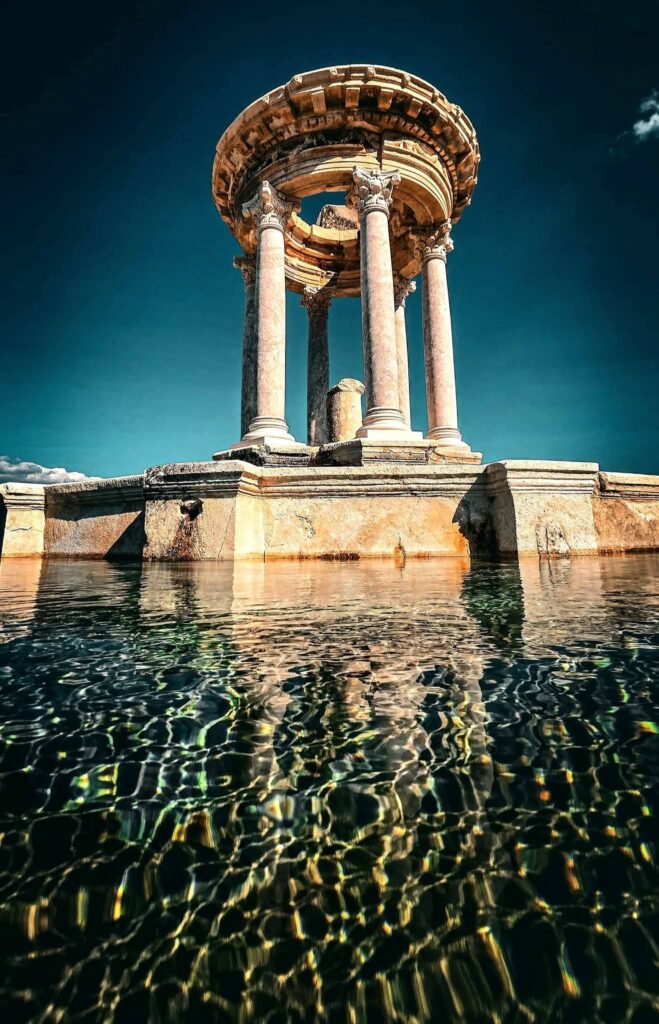
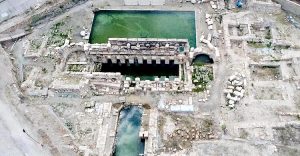
Alongside the reopening of the mosaic, another element of the ancient city has been reactivated. Water has begun flowing once again through the monumental circular fountain, supplied from its original source.
This subtle restoration adds a dynamic layer to the site, offering visitors a more immersive sense of how Kibyra may have once functioned as a living urban space.
A limited-time encounter with antiquity
The Medusa mosaic is not accessible year-round. Its seasonal unveiling adds a sense of rarity to the experience, as visitors have only a limited window to see it in situ.
More than a decorative feature, the mosaic reflects the intersection of Roman artistry, symbolic belief, and public architecture—all preserved within the fabric of Kibyra.
- A 1700-year-old statue of Pan unearthed during the excavations at Polyeuktos in İstanbul
- The granary was found in the ancient city of Sebaste, founded by the first Roman emperor Augustus
- Donalar Kale Kapı Rock Tomb or Donalar Rock Tomb
- Theater emerges as works continue in ancient city of Perinthos
- Urartian King Argishti’s bronze shield revealed the name of an unknown country
- The religious center of Lycia, the ancient city of Letoon
- Who were the Luwians?

- A new study brings a fresh perspective on the Anatolian origin of the Indo-European languages

- Perhaps the oldest thermal treatment center in the world, which has been in continuous use for 2000 years -Basilica Therma Roman Bath or King’s Daughter-
- The largest synagogue of the ancient world, located in the ancient city of Sardis, is being restored
Leave a Reply