833-Year-Old Leaning Minaret of Sivas Ulu Cami Enters Critical Restoration Phase
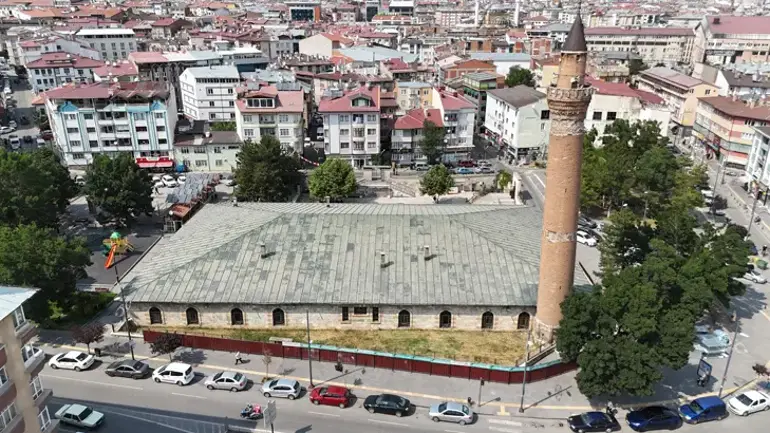
A major restoration project at the historic Sivas Ulu Cami has reached a decisive stage, as work intensifies on its iconic leaning minaret, a structure that has defined the city’s skyline for more than eight centuries.
Ongoing conservation efforts, led by regional heritage authorities, are now focusing on stabilizing and preserving the minaret’s exterior—an intervention that could also reveal previously undocumented construction details hidden beneath centuries of wear.
Scaffolding Signals a Turning Point in Minaret Restoration
One of the most visible developments at the site is the installation of a steel scaffolding system around the leaning minaret. This structure, expected to be completed by the end of April, will allow specialists to carry out detailed surface restoration and structural assessments.
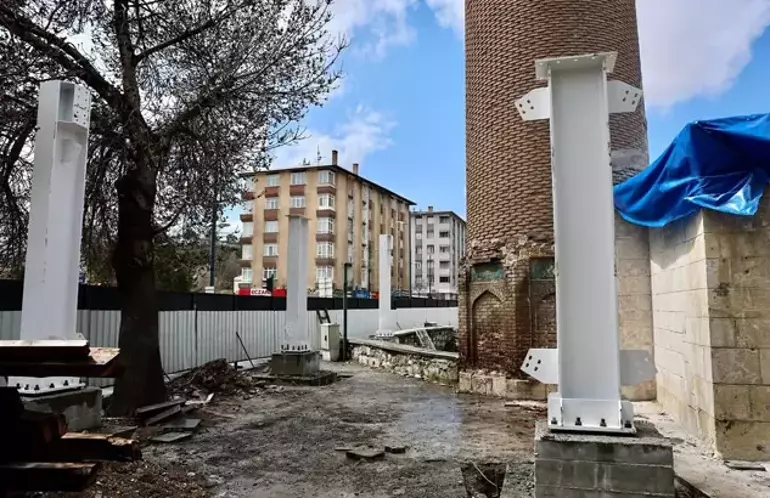
The minaret, long noted for its subtle but unmistakable tilt, is not only an architectural curiosity but also a fragile historical element. Any intervention requires a careful balance between preservation and minimal alteration, ensuring that its distinctive form is maintained.
📣 Our WhatsApp channel is now LIVE! Stay up-to-date with the latest news and updates, just click here to follow us on WhatsApp and never miss a thing!!
Structural Reinforcement Underway Inside the Mosque
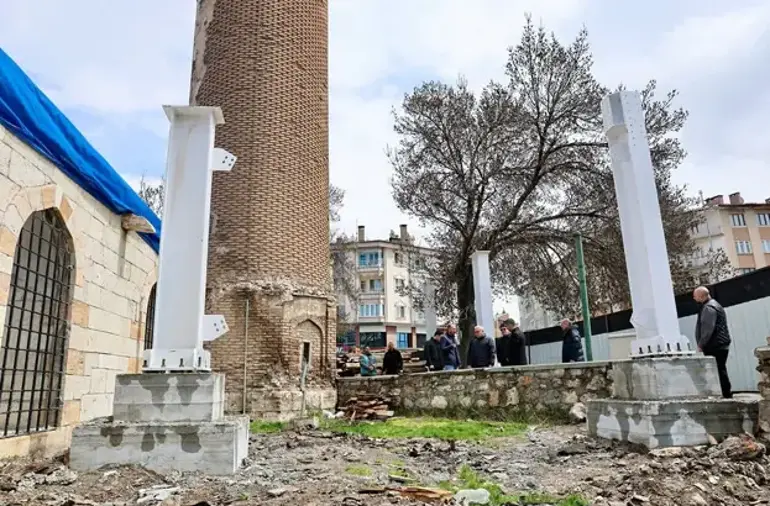
While the minaret draws public attention, equally critical work is unfolding inside the mosque. A comprehensive foundation reinforcement program is currently in progress, aimed at strengthening the building’s long-term stability.
So far, 30 out of 50 planned support columns have been completed. Work continues steadily on the remaining columns, reflecting a methodical approach designed to safeguard the structure without compromising its historical integrity.
This phase is particularly important, as it addresses structural vulnerabilities that may not be immediately visible but are essential for the building’s future resilience.
Next Phase to Focus on Wooden Roofing and Interior Restoration
According to the restoration schedule, the next stage will begin in May, when teams will start installing wooden upper flooring elements in line with the mosque’s original architectural character.
Following this, interior leveling works will be carried out, along with the replacement of stones that do not match the building’s authentic material fabric. These interventions aim to restore visual coherence while respecting the mosque’s original construction techniques.
Such decisions are critical in heritage conservation, where the goal is not to “renew” a monument, but to preserve its historical authenticity as faithfully as possible.
More Than a Restoration: Reinterpreting a Landmark
The Sivas Ulu Cami is widely regarded as one of central Anatolia’s most significant medieval structures. Its leaning minaret, in particular, has become a defining symbol of the city—often compared, in local discourse, to other famous tilted towers around the world.
As restoration progresses, researchers and conservators anticipate that the project may also shed light on lesser-known aspects of the mosque’s construction history, including techniques used to accommodate—or possibly correct—the minaret’s inclination.
In this sense, the project represents more than routine conservation. It is an opportunity to re-examine a landmark monument, deepening our understanding of Anatolian architectural heritage.
- A 1700-year-old statue of Pan unearthed during the excavations at Polyeuktos in İstanbul
- The granary was found in the ancient city of Sebaste, founded by the first Roman emperor Augustus
- Donalar Kale Kapı Rock Tomb or Donalar Rock Tomb
- Theater emerges as works continue in ancient city of Perinthos
- Urartian King Argishti’s bronze shield revealed the name of an unknown country
- The religious center of Lycia, the ancient city of Letoon
- Who were the Luwians?
- A new study brings a fresh perspective on the Anatolian origin of the Indo-European languages

- Perhaps the oldest thermal treatment center in the world, which has been in continuous use for 2000 years -Basilica Therma Roman Bath or King’s Daughter-
- The largest synagogue of the ancient world, located in the ancient city of Sardis, is being restored
Leave a Reply