
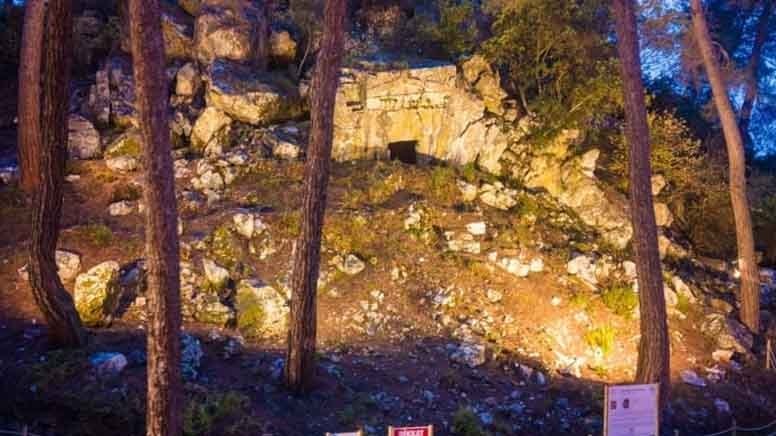
2,500-Year-Old Carian Rock-Cut Tomb in Marmaris Placed Under Protection
A 2,500-year-old rock-cut tomb in Marmaris, southwestern Türkiye, has been formally secured under heritage protection following a conservation-focused intervention led by local authorities and academic specialists. The monument, known as the Yeşilbelde Rock Tomb, has been registered as a protected cultural asset and stabilized against environmental and structural risks.
Located in Yeşilbelde neighborhood, the tomb stands out as the only known example in Marmaris of a temple-fronted rock-cut tomb, a funerary form widely associated with ancient Caria and neighboring Lycia. Unlike most regional parallels, which tend to follow the Ionic order, the Yeşilbelde monument features a Doric façade, an architectural choice that adds to its rarity and scholarly importance.
Conservation led by academic and institutional cooperation
The conservation work was carried out with the support of the Marmaris Chamber of Commerce, under the academic consultancy of Mehmet Gürbüzer, and the supervision of the Marmaris Museum Directorate. The intervention focused on clearing invasive vegetation, arranging the immediate surroundings, and establishing a controlled perimeter. Informational signage, lighting, and surveillance systems were installed to ensure long-term monitoring and protection.
Originally, the project included considerations for limited public access. However, structural assessments identified weaknesses in the bedrock floor, alongside physical indicators associated with the 1957 Fethiye earthquake. In response, the plan was revised to prioritize preservation over visitation, aligning with current best practices in archaeological heritage management.
📣 Our WhatsApp channel is now LIVE! Stay up-to-date with the latest news and updates, just click here to follow us on WhatsApp and never miss a thing!!
The Carian context: funerary architecture and regional identity
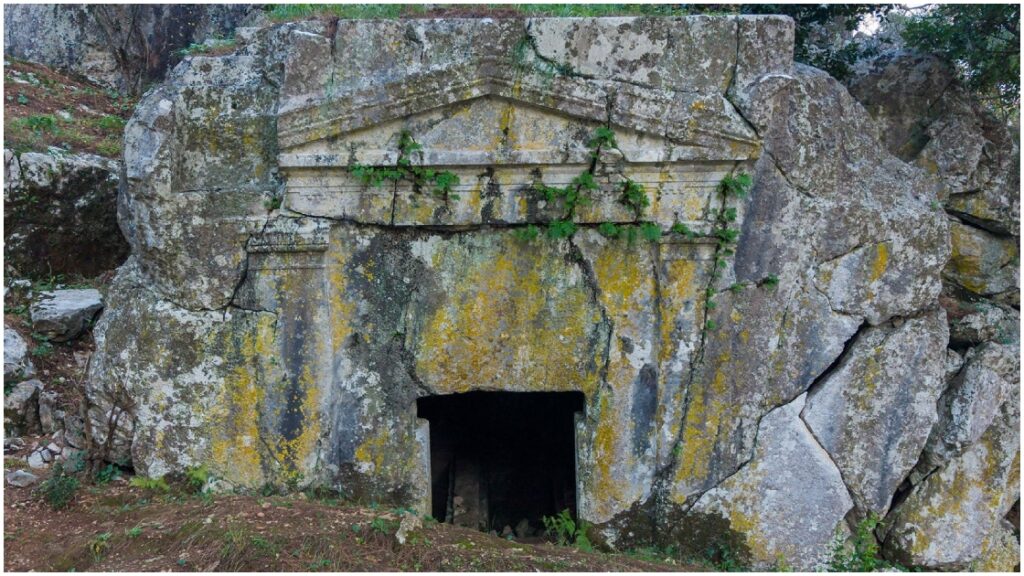
During the Classical period, Caria developed a distinctive funerary tradition that blended local Anatolian customs with architectural forms drawn from the wider Aegean world. Rock-cut tombs with temple-like façades became one of the most visible expressions of elite identity, serving not only as burial places but also as enduring markers of status and territorial presence.
Carian builders did not simply replicate Greek models. Instead, they adapted architectural elements in regionally specific ways, experimenting with proportions, column orders, and façade compositions. The Doric design of the Yeşilbelde Rock Tomb reflects this selective approach, suggesting that local communities actively reshaped external influences to suit their own cultural and symbolic needs.
Tentatively dated to the 4th–5th centuries BCE, the single-chambered tomb belongs to a period of political and cultural transformation in Caria, when local power structures operated within the broader framework of Persian satrapal administration. Funerary monuments from this era are widely understood as statements of local authority and continuity rather than purely religious constructions.
“Preserving heritage for future generations”
Commenting on the project, Marmaris Chamber of Commerce President Mutlu Ayhan emphasized that safeguarding cultural heritage remains a long-term commitment.
“Protecting Marmaris’s cultural assets and carrying them into the future is as important as integrating them into tourism,” he said, noting that such efforts reflect the region’s shared cultural responsibility.
Ayhan also acknowledged the contributions of museum officials, forestry authorities, and the academic team involved in the project, underlining the collaborative nature of heritage protection.
A controlled future for a fragile monument
While the Yeşilbelde Rock Tomb will not be opened to general visitation in the near term, its stabilization and secured setting ensure that the monument itself—and the historical knowledge it represents—will endure. As a rare Doric example within Carian funerary architecture, the tomb offers valuable insight into the cultural landscape of Classical southwestern Anatolia, demonstrating that preservation can be the most effective way of keeping the past accessible.
- A 1700-year-old statue of Pan unearthed during the excavations at Polyeuktos in İstanbul
- The granary was found in the ancient city of Sebaste, founded by the first Roman emperor Augustus
- Donalar Kale Kapı Rock Tomb or Donalar Rock Tomb
- Theater emerges as works continue in ancient city of Perinthos
- Urartian King Argishti’s bronze shield revealed the name of an unknown country
- The religious center of Lycia, the ancient city of Letoon
- Who were the Luwians?
- A new study brings a fresh perspective on the Anatolian origin of the Indo-European languages

- Perhaps the oldest thermal treatment center in the world, which has been in continuous use for 2000 years -Basilica Therma Roman Bath or King’s Daughter-
- The largest synagogue of the ancient world, located in the ancient city of Sardis, is being restored
Leave a Reply