
2,400-Year-Old Submerged City Remains Filmed Beneath Dicle Dam in Diyarbakır
Beneath the still surface of the Dicle Dam Lake, traces of an older Eğil are still there — not erased, just hidden.
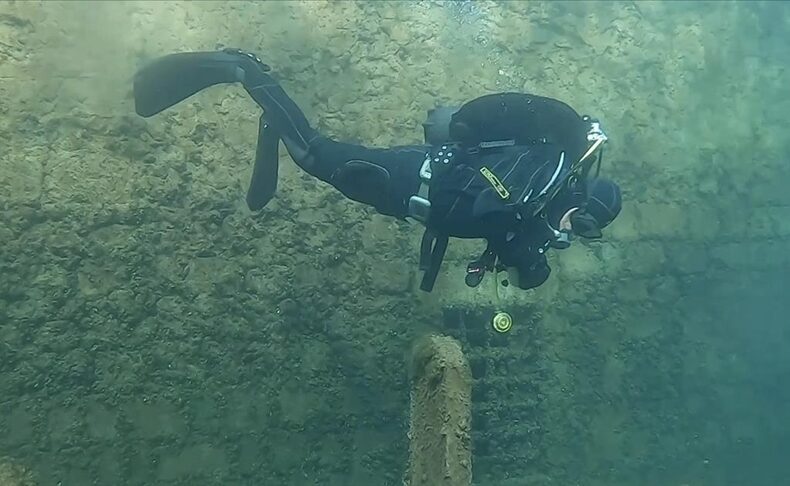
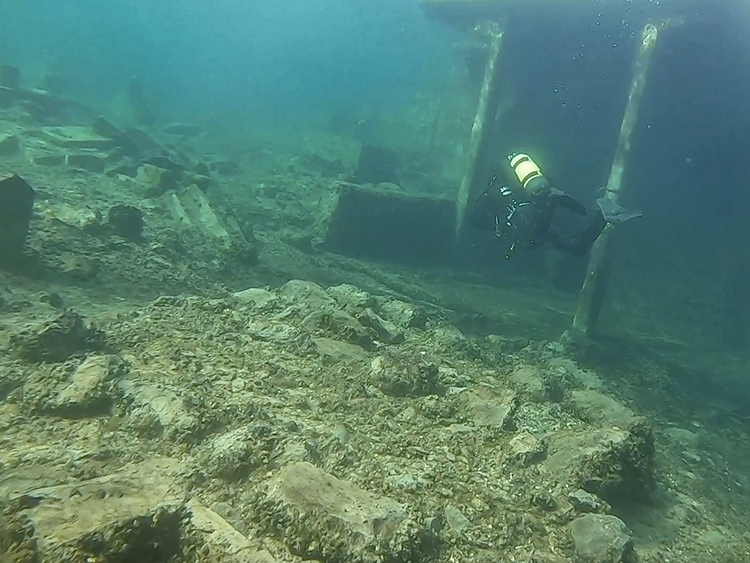
Recent underwater footage recorded in the Eğil district of Diyarbakır has brought these remains back into view. During a routine training dive, search-and-rescue teams documented architectural structures lying beneath the reservoir — some of them dating back nearly 2,400 years.
The images don’t show isolated ruins. What appears instead is something more complete: fragments of a once-lived settlement, now suspended underwater.
A landscape that didn’t disappear — it sank
Eğil sits about 52 kilometers from Diyarbakır and has long been more than a small district. Its location, overlooking the Tigris, made it a continuous point of settlement for centuries.
📣 Our WhatsApp channel is now LIVE! Stay up-to-date with the latest news and updates, just click here to follow us on WhatsApp and never miss a thing!!
Hurrians, Assyrians, Urartians, Persians, Romans, Byzantines… the sequence is long. After the 7th century, Islamic rule reshaped the area again. Each period left a layer behind.
That layered history is exactly what now lies beneath the dam.
Construction of the Dicle Dam began in 1986. By 1997, the reservoir had filled. As the water rose, entire neighborhoods — along with their monuments — disappeared below the surface.
What was moved — and what wasn’t
Not everything was left behind.
The tombs associated with the prophets Zulqifl and Elyesa were relocated in 1995 to Nebi Harun Hill before the waters reached them. That decision preserved the most symbolically important sites.
But much of the surrounding built environment remained where it was.
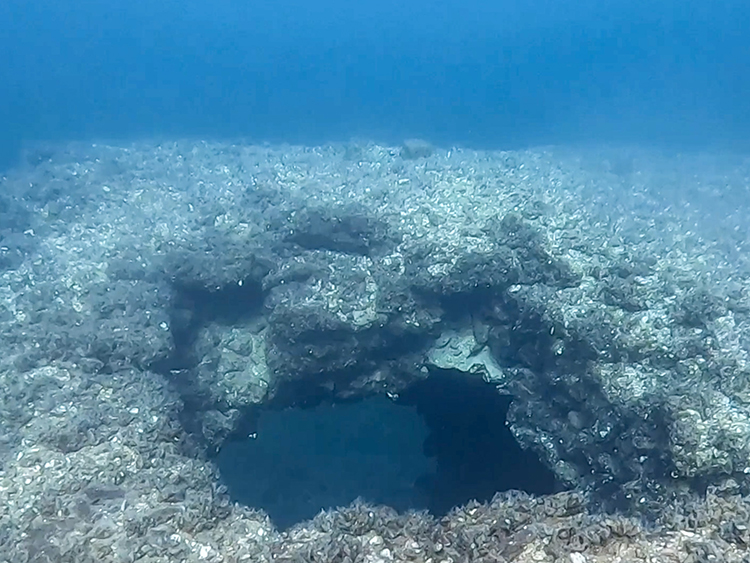
Mosques, madrasas, rock-cut tombs, cemeteries… even a Byzantine bath complex. These were not relocated. They were submerged.
Today, they still stand — just out of sight.
What the divers actually recorded
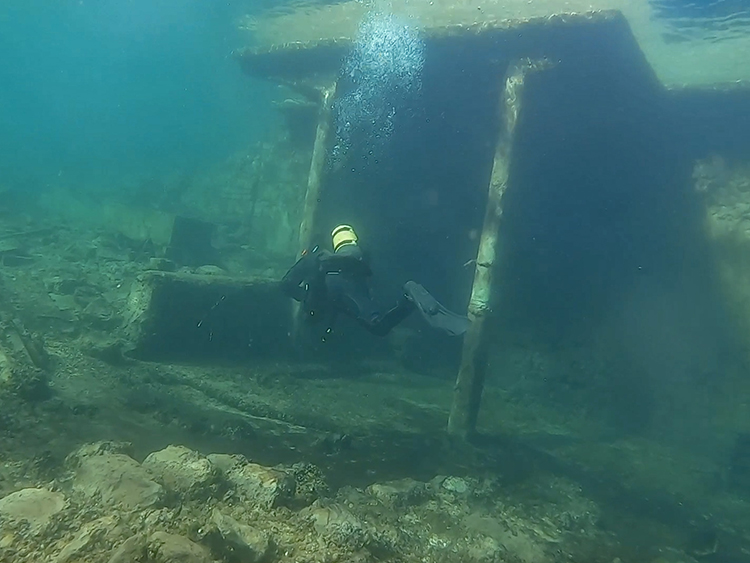
According to Prof. Dr. İrfan Yıldız from Dicle University, the newly recorded footage offers a rare visual record of these submerged structures.
Among the visible remains are the tomb and mosque linked to Prophet Elyesa, along with the adjacent Caferiye (Lala Kasım) Madrasa. Parts of the Tekke neighborhood cemetery can also be seen.
Elsewhere, the Byzantine-era Deran Bath — once positioned between the tomb complex and the castle — is believed to be among the structures now underwater.
These are not scattered fragments. They belong to a coherent historical landscape, once functioning as both a religious and residential center.
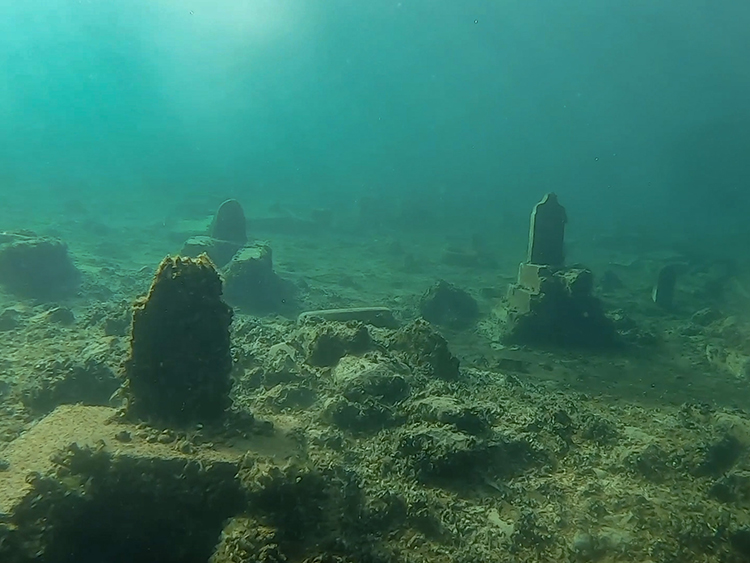
Still standing — even underwater
What stands out in the footage is not only the presence of these structures, but their condition.
Despite decades underwater, many appear structurally intact. Their outlines remain recognizable. Walls, spatial organization, even relative positioning — still traceable today.
In dry years, when water levels drop, some of these silhouettes become visible from above. Briefly, the submerged town reappears.
Then it disappears again.
More than a local story
Eğil is not the only place in Türkiye where heritage lies beneath dam waters. But it is one of the rare cases where multiple structures can still be observed in situ.
That changes its importance.
As Yıldız points out, underwater archaeology in Türkiye is still developing. Sites like Eğil offer a different kind of archaeological archive — one that hasn’t been excavated, but also hasn’t been lost.
It’s simply waiting.
And beneath the reservoir, the old settlement — quiet, intact, and largely untouched — continues to exist.
- A 1700-year-old statue of Pan unearthed during the excavations at Polyeuktos in İstanbul
- The granary was found in the ancient city of Sebaste, founded by the first Roman emperor Augustus
- Donalar Kale Kapı Rock Tomb or Donalar Rock Tomb
- Theater emerges as works continue in ancient city of Perinthos
- Urartian King Argishti’s bronze shield revealed the name of an unknown country
- The religious center of Lycia, the ancient city of Letoon
- Who were the Luwians?

- A new study brings a fresh perspective on the Anatolian origin of the Indo-European languages

- Perhaps the oldest thermal treatment center in the world, which has been in continuous use for 2000 years -Basilica Therma Roman Bath or King’s Daughter-
- The largest synagogue of the ancient world, located in the ancient city of Sardis, is being restored
Leave a Reply