
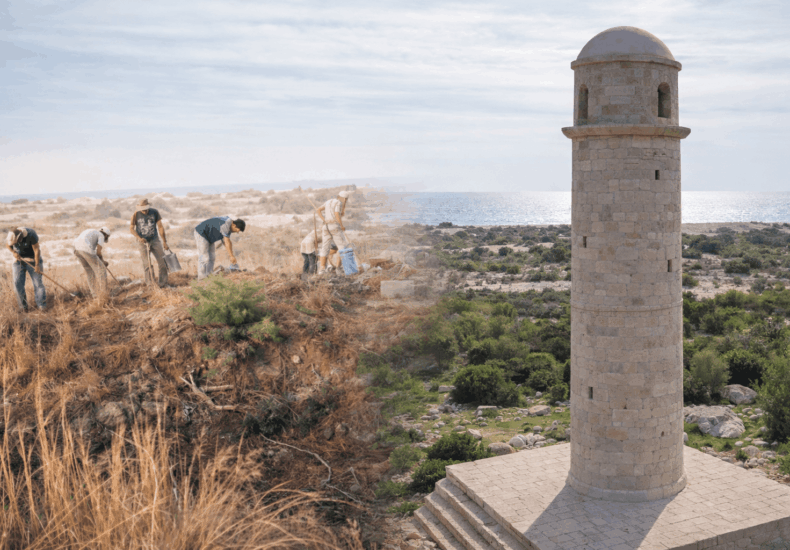
Under the Blazing Sun, It All Began: The First Day of the Patara Lighthouse Excavation
The Patara Lighthouse excavation began under a blazing July sun in 2004, as a small team of archaeologists and students pushed through sand and heat with little indication of what lay beneath. There was no road, no visible structure—only dunes stretching toward the sea.
But even then, there was a growing sense that this was no ordinary dig.
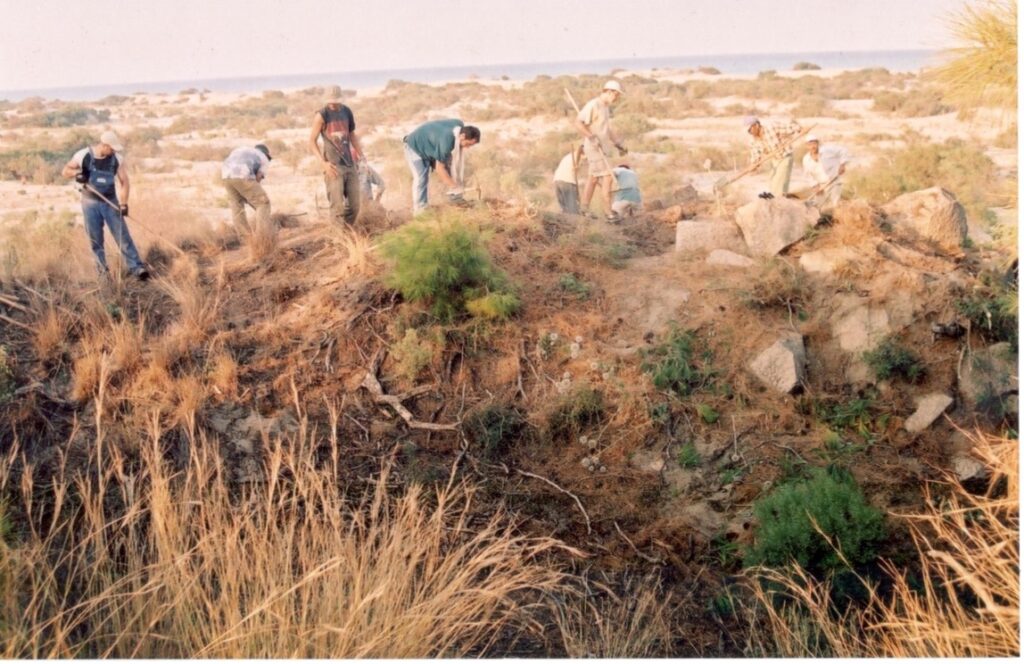
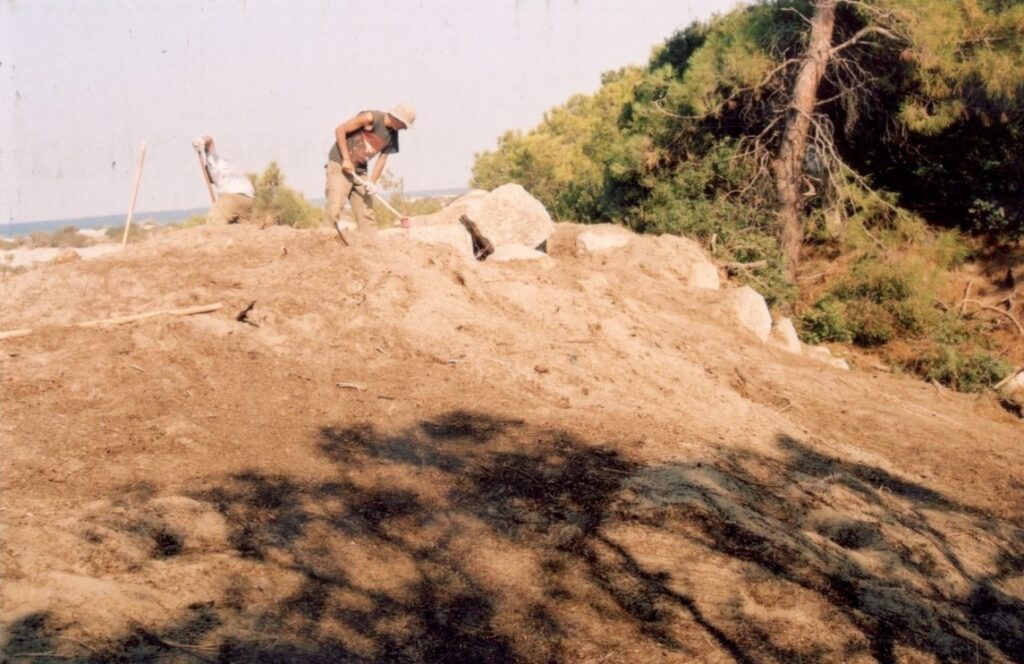
Recently shared photographs by archaeologist Prof. Dr. Havva İşkan Işık have brought that moment back into focus. The images, taken on the very first day of the Patara Lighthouse excavation, capture both the physical hardship and the emotional intensity of a project that would later become one of Türkiye’s most remarkable archaeological reconstructions.
“We never said we were tired” — a memory from the field
Reflecting on the discovery, İşkan described the conditions in a candid and vivid note:
📣 Our WhatsApp channel is now LIVE! Stay up-to-date with the latest news and updates, just click here to follow us on WhatsApp and never miss a thing!!
“These photographs from the first day of the Patara Lighthouse excavation were found by my dear PhD student Hakan Gerçek during a ‘dig’ at his home. They date back to a scorching July day in 2004, before digital photography became part of our daily lives.
There was no road to the lighthouse—we had to walk across the sand, sinking with every step. We lost count of how many shoe soles melted in the heat. But we never said we were tired, we never gave up. Because from the very first moment, the entire team knew we had made an extraordinary discovery.”
Her words reveal something that goes beyond the images: a shared scientific intuition, present even before the structure fully emerged from the sand.
From buried ruins to a Roman maritime landmark
What began as a physically demanding excavation soon revealed the remains of a monumental Roman lighthouse, originally built during the reign of Emperor Nero around 60 CE.
Located at the entrance of the ancient harbor city of Patara, on Türkiye’s southwestern coast, the lighthouse once served as a critical navigational beacon in the eastern Mediterranean. For centuries, it guided ships safely to shore—until a devastating earthquake in 1481 caused its collapse, burying it beneath layers of sand.
A long-term excavation shaped by two generations
The story of the lighthouse cannot be separated from the broader archaeological work at Patara.
Systematic excavations at the site began in 1988 under the direction of Prof. Dr. Fahri Işık, who laid the scientific groundwork for understanding the city’s urban layout, public buildings, and maritime significance.
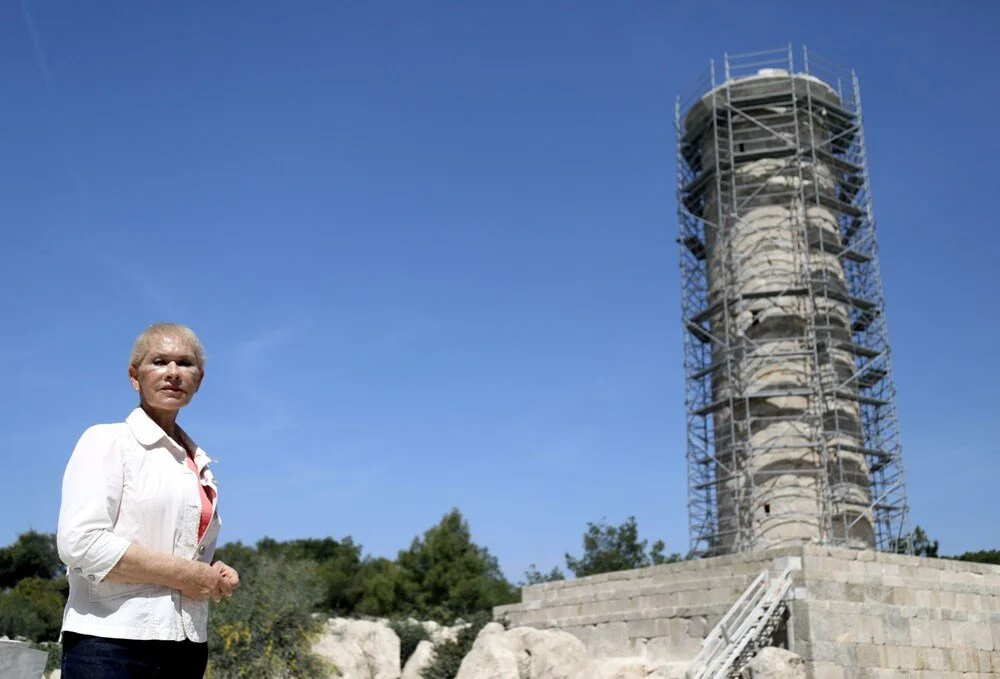
In 2009, Prof. Dr. Havva İşkan Işık took over the directorship, marking a new phase in the project. Under her leadership, the lighthouse evolved from a buried structure into a carefully studied and reconstructed monument.
Rather than simply exposing the remains, the team undertook a detailed process of architectural analysis and scientific reconstruction, making the Patara Lighthouse one of the rare examples where an ancient structure has been re-erected in close alignment with its original design.
A rare example of archaeological reconstruction
Today, the Patara Lighthouse stands once again—no longer just a ruin, but a visible testament to both Roman engineering and modern archaeological methodology.
Its reconstruction represents more than restoration. It reflects a broader shift in archaeological practice: from excavation to interpretation, and from preservation to public visibility.
Looking back at the moment it all began
The recently resurfaced photographs return us to a time before any of this was certain—before the structure was identified, before the reconstruction plans were drawn.
On that first day, there was only heat, sand, and effort.
But as those working on the site would later recall, there was also something else:
a quiet certainty that they were standing at the beginning of something significant.
- A 1700-year-old statue of Pan unearthed during the excavations at Polyeuktos in İstanbul
- The granary was found in the ancient city of Sebaste, founded by the first Roman emperor Augustus
- Donalar Kale Kapı Rock Tomb or Donalar Rock Tomb
- Theater emerges as works continue in ancient city of Perinthos
- Urartian King Argishti’s bronze shield revealed the name of an unknown country
- The religious center of Lycia, the ancient city of Letoon
- Who were the Luwians?
- A new study brings a fresh perspective on the Anatolian origin of the Indo-European languages

- Perhaps the oldest thermal treatment center in the world, which has been in continuous use for 2000 years -Basilica Therma Roman Bath or King’s Daughter-
- The largest synagogue of the ancient world, located in the ancient city of Sardis, is being restored
Leave a Reply