
Roman Marble Head Illicitly Taken from Smyrna Returned to Türkiye from U.S. Museum After Decades
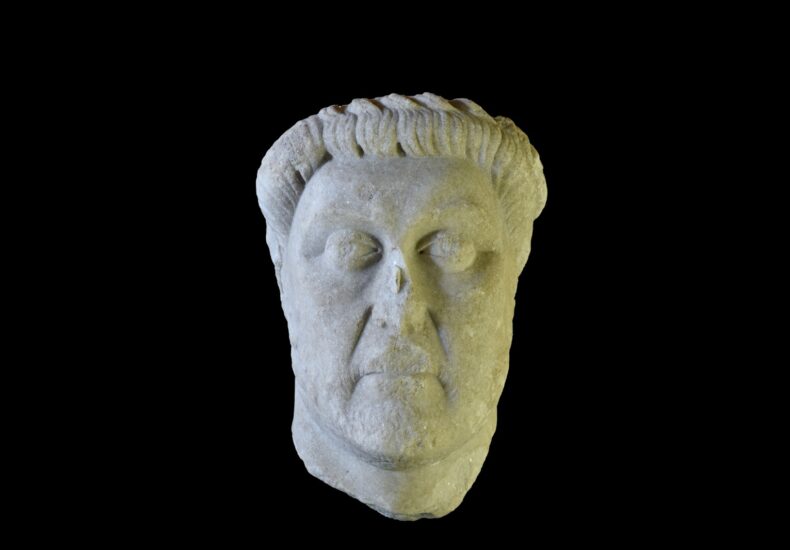
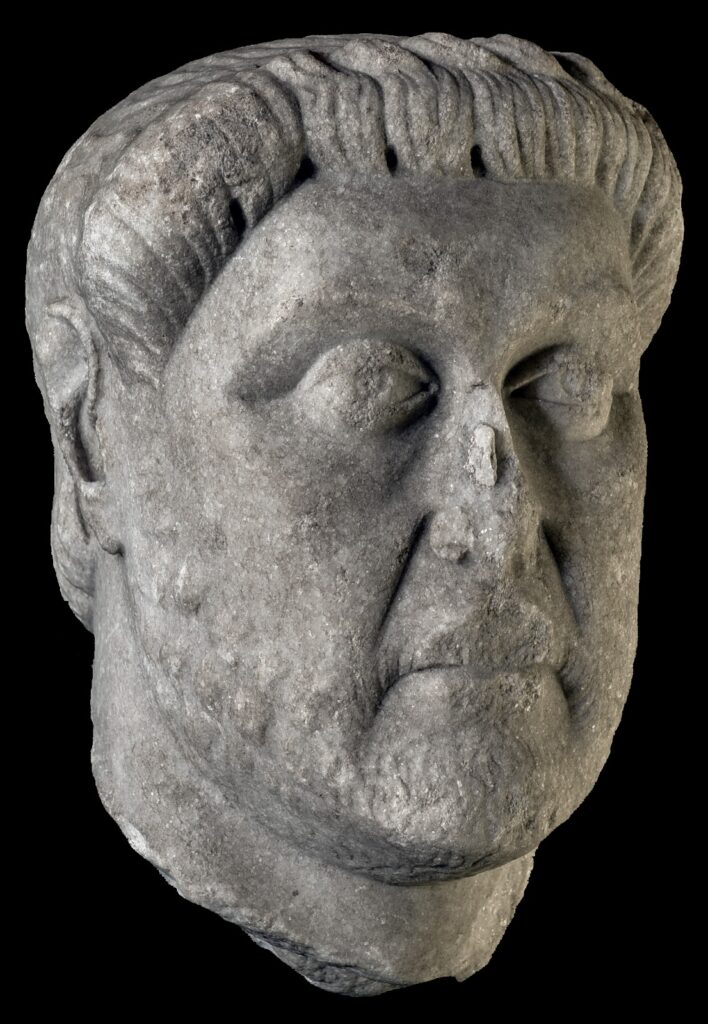
A marble head carved in ancient Smyrna nearly 1,600 years ago has finally returned to Türkiye, decades after it was taken abroad under unclear circumstances. The artifact, now confirmed to have originated from the Smyrna Agora, was repatriated from the Denver Art Museum following extensive scientific and archival research.
Dating to the 5th century AD, during the Late Roman Theodosius period, the sculpture is now on public display at the İzmir Archaeological Museum—back in the city where it was first unearthed.
Archival Records Reveal Its True Origin
The turning point in the case came from a combination of historical documentation and modern scholarly analysis. Reports dating back to 1934, alongside expert evaluations, firmly established that the marble head had been discovered during excavations at the Smyrna Agora.
These findings confirmed a critical reality: the artifact had been removed from Türkiye through illicit means, most likely during a period when archaeological oversight and legal protections were far less developed than today.
📣 Our WhatsApp channel is now LIVE! Stay up-to-date with the latest news and updates, just click here to follow us on WhatsApp and never miss a thing!!
Unlike many disputed antiquities with uncertain origins, this piece could be tied to a specific excavation history—making its return both legally and ethically significant.
A Return Secured Through Cooperation
Rather than a prolonged legal battle, the repatriation process unfolded through direct institutional dialogue. Turkish authorities and the Denver Art Museum worked together, relying on documented evidence and academic consensus.
This approach reflects a broader transformation in how museums handle contested artifacts. Increasingly, provenance research and transparency are reshaping the ethics of collections, especially when clear evidence of illicit removal emerges.
A Sculpture from a Changing Roman World
Stylistically, the marble head belongs to the Theodosius era—a period marked by profound transformation across the Roman Empire. As Christianity became dominant, artistic conventions began to shift, moving away from classical naturalism toward more symbolic and abstract representations.
Although the identity of the figure remains unknown, its craftsmanship suggests it once stood in a prominent public or architectural setting. Sculptures of this kind were not merely decorative—they were expressions of authority, belief, and social order in Late Antiquity.
Smyrna and Its Archaeological Legacy
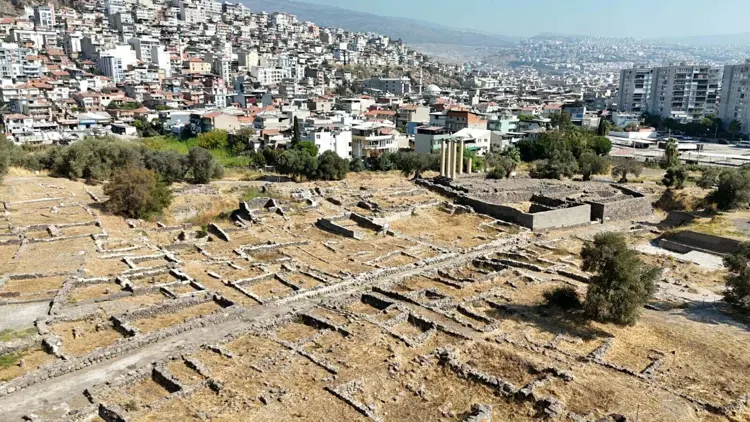
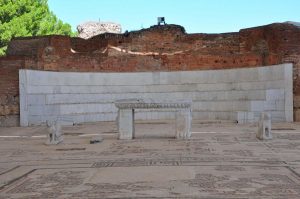
Ancient Smyrna, located in present-day İzmir, was one of the most influential urban centers of the eastern Mediterranean. Its agora served as the heart of civic life, where commerce, politics, and daily interaction converged.
Excavations at the site have revealed a continuous urban story stretching from the Hellenistic period into the Byzantine era. The return of this artifact adds another layer to that narrative—reconnecting a displaced object with its original archaeological and cultural setting.
More Than a Return—A Restoration of Context
Now exhibited in the İzmir Archaeological Museum, the marble head represents more than a recovered object. It is part of a broader effort to restore fragmented histories and reclaim cultural heritage removed from its place of origin.
In that sense, its return is not only about where the object is displayed—but about restoring the historical context that gives it meaning.
- A 1700-year-old statue of Pan unearthed during the excavations at Polyeuktos in İstanbul
- The granary was found in the ancient city of Sebaste, founded by the first Roman emperor Augustus
- Donalar Kale Kapı Rock Tomb or Donalar Rock Tomb
- Theater emerges as works continue in ancient city of Perinthos

- Urartian King Argishti’s bronze shield revealed the name of an unknown country

- The religious center of Lycia, the ancient city of Letoon
- Who were the Luwians?

- A new study brings a fresh perspective on the Anatolian origin of the Indo-European languages

- Perhaps the oldest thermal treatment center in the world, which has been in continuous use for 2000 years -Basilica Therma Roman Bath or King’s Daughter-
- The largest synagogue of the ancient world, located in the ancient city of Sardis, is being restored
Leave a Reply