
Rare 1,500-Year-Old Knife Set Found Together in Hadrianopolis Reveals Deep Roots of Animal Husbandry
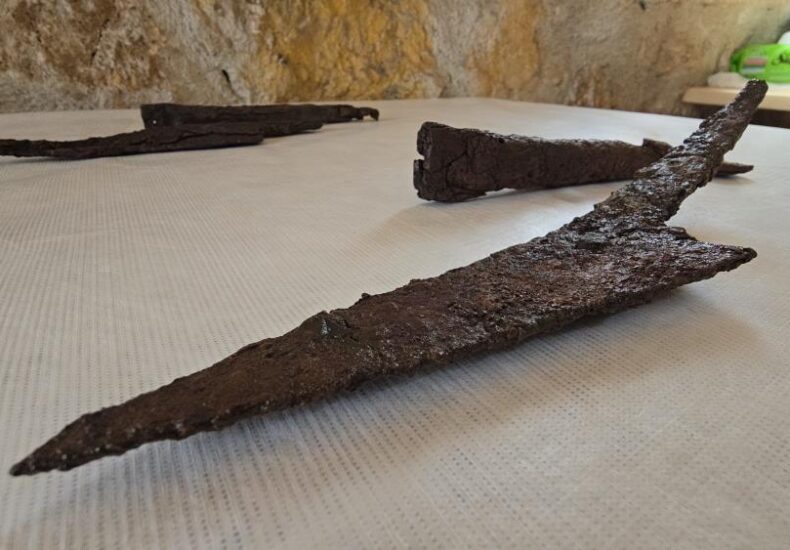
Archaeologists working at Hadrianopolis often referred to as the “Black Sea’s Zeugma” have uncovered a rare knife set found together in a single context, offering new insight into daily life in Late Antiquity.
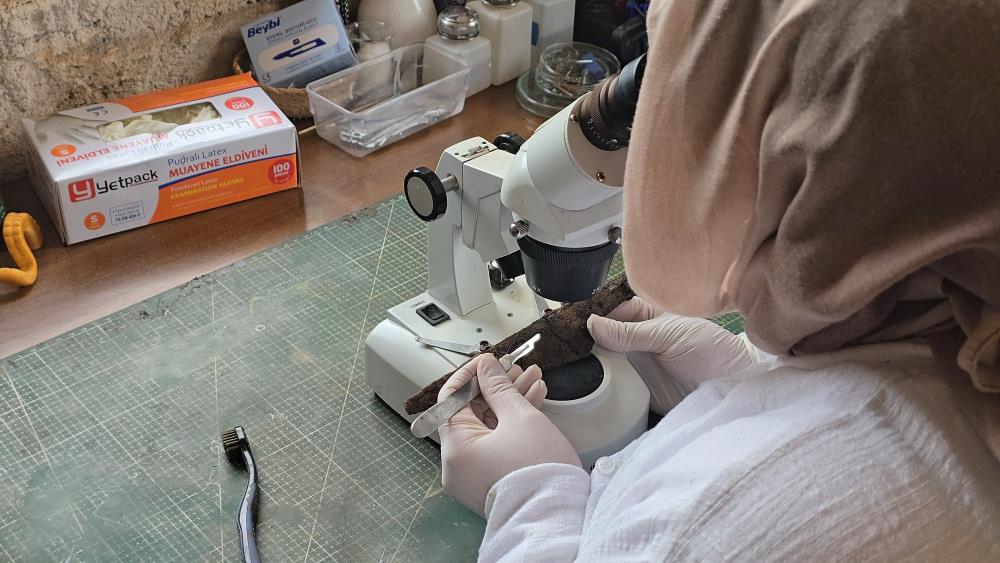
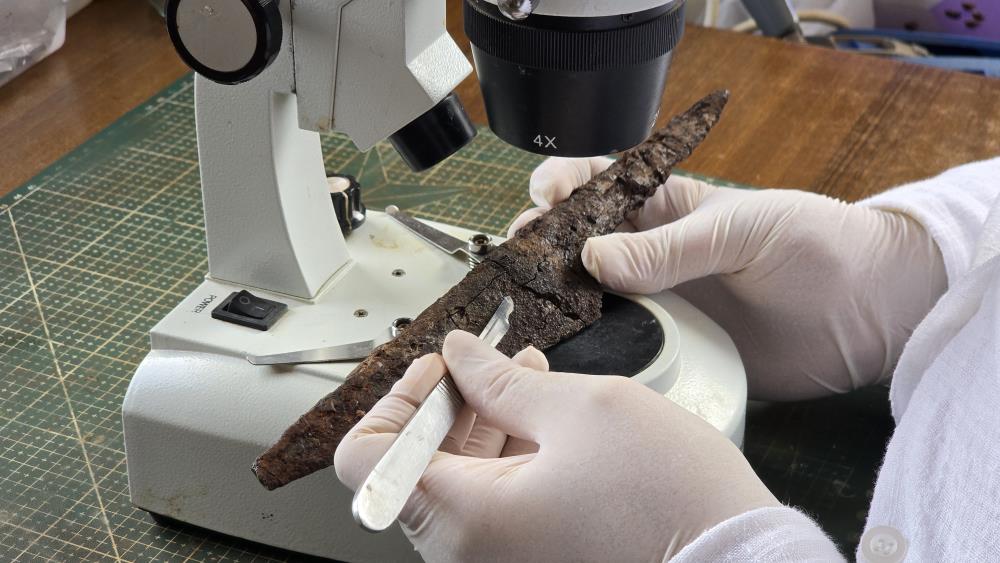
The discovery was made in a kitchen area within the Bath Complex, where four iron knives of similar type but different sizes were found alongside a sharpening stone. Initially recovered in nearly 250 fragmented pieces, the knives were later restored in the laboratory, revealing their original forms as a functional set.
A rare set pointing to livestock-based activity
What makes the find particularly significant is that the knives were recovered together as a complete group, rather than as isolated tools. According to excavation director Prof. Dr. Ersin Çelikbaş, this context provides a clear clue about how they were used.
“Finding these tools as a set in the same context suggests that the people living here were likely engaged in animal husbandry,” he said.
📣 Our WhatsApp channel is now LIVE! Stay up-to-date with the latest news and updates, just click here to follow us on WhatsApp and never miss a thing!!
The interpretation aligns with previous archaeological evidence indicating that livestock production played a central role in the local economy during the Late Roman–Early Byzantine period.
A small stone with a deeper timeline
The sharpening stone discovered alongside the knives adds another layer of significance. Identified as a type similar to the locally known “kösele stone,” it suggests that this material, widely known from later historical periods, may have been in use much earlier than previously documented.
Evidence of long-term continuity
Stratigraphic analysis dates the knife set to the 5th–6th centuries AD, pointing to a well-established system of production and daily routines in Hadrianopolis.
Taken together, the knives and sharpening stone indicate that animal husbandry in the region was not a temporary activity but part of a long-standing tradition that appears to have continued for over 1,500 years, extending into the present-day practices of Eskipazar.
Cover Image Credit: İHA
- A 1700-year-old statue of Pan unearthed during the excavations at Polyeuktos in İstanbul
- The granary was found in the ancient city of Sebaste, founded by the first Roman emperor Augustus
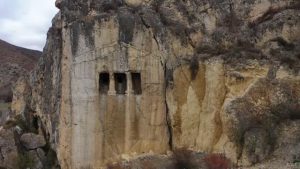
- Donalar Kale Kapı Rock Tomb or Donalar Rock Tomb
- Theater emerges as works continue in ancient city of Perinthos

- Urartian King Argishti’s bronze shield revealed the name of an unknown country

- The religious center of Lycia, the ancient city of Letoon
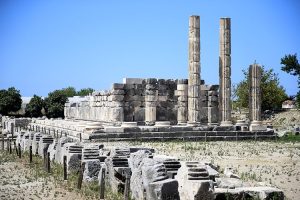
- Who were the Luwians?

- A new study brings a fresh perspective on the Anatolian origin of the Indo-European languages

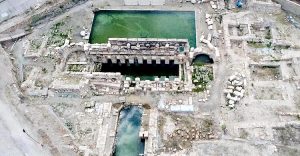
- Perhaps the oldest thermal treatment center in the world, which has been in continuous use for 2000 years -Basilica Therma Roman Bath or King’s Daughter-
- The largest synagogue of the ancient world, located in the ancient city of Sardis, is being restored
Leave a Reply