
A 3,000-Year-Old Rock-Cut Toilet in the Phrygian Valley Is Attracting Visitors’ Attention
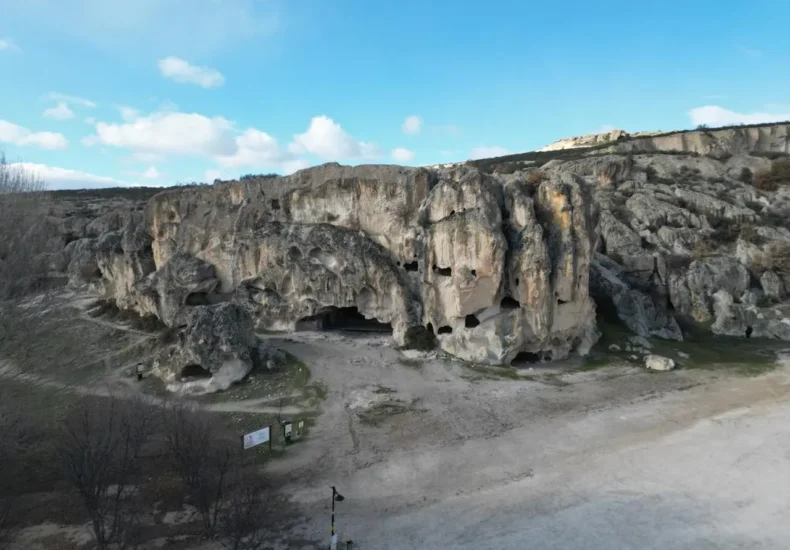
In the heart of western Anatolia, the Phrygian Valley continues to surprise visitors not only with its monumental rock façades and ancient sanctuaries, but also with striking details from everyday life. One of the most talked-about features in recent years is a 3,000-year-old rock-cut toilet, carved into a multi-story structure in the Ayazini area of the valley, now drawing growing interest from both tourists and researchers.
Located on the upper level of a three-story rock-cut dwelling, the toilet offers a rare and tangible glimpse into how ancient communities organized domestic space, hygiene, and daily routines thousands of years ago.
An Unexpected Detail Inside a Rock-Cut “Apartment”
The structure housing the toilet is often described as one of the earliest examples of apartment-style living in Anatolia. Unlike single-chamber rock shelters, this building was carved vertically into the bedrock, with clearly defined floors connected by interior passages, suggesting long-term and organized use.
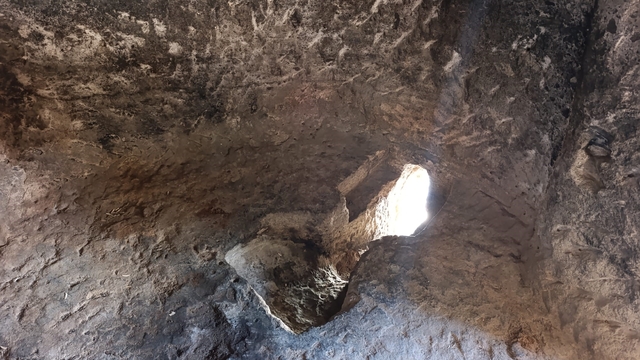
What makes the site especially striking is the presence of a squat-style toilet carved directly into the rock on the third floor. According to an official information panel installed by the Afyonkarahisar Provincial Directorate of Culture and Tourism, this feature is described as “the earliest known alaturka-style toilet”, highlighting its importance in the history of sanitation.
📣 Our WhatsApp channel is now LIVE! Stay up-to-date with the latest news and updates, just click here to follow us on WhatsApp and never miss a thing!!
For many visitors, encountering such a familiar element in an ancient setting creates a powerful and unexpected connection with the past.
Rethinking Daily Life in Phrygian Anatolia
The Phrygians, who flourished roughly between the 9th and 7th centuries BCE, are best known for their monumental architecture, cult monuments, and the legendary figure of King Midas. Yet discoveries like the Ayazini toilet shift attention away from royal symbolism toward ordinary aspects of life, often overlooked in archaeological narratives.
The careful placement of a toilet within a living space suggests that privacy, cleanliness, and practical planning were already embedded in domestic architecture, long before the advanced sewer systems of later Greek and Roman cities.
The Phrygian Valley as a Cultural Landscape
Rather than a single archaeological site, the Phrygian Valley is a vast cultural region extending across modern-day Afyonkarahisar, Eskişehir, and Kütahya. Its landscape is shaped by rock-cut dwellings, tombs, inscriptions, and open-air sanctuaries that document continuous use from the Early Iron Age through the Roman and Byzantine periods.
Ayazini, one of the most accessible and visited parts of the valley, reflects this long continuity. While the rock-cut structure and its toilet are attributed to the Phrygian period, later modifications show that the space remained functional for centuries, adapting to changing needs without losing its original character.
A Small Feature With Big Impact
What makes this rock-cut toilet especially compelling is not its size or decoration, but its human scale. Unlike monumental façades or elite tombs, it speaks directly to everyday concerns shared across millennia.
As visitor numbers continue to rise in the Phrygian Valley, such details are reshaping how the region is experienced—transforming it from a landscape of distant antiquity into a place where ancient lives feel unexpectedly close and familiar.
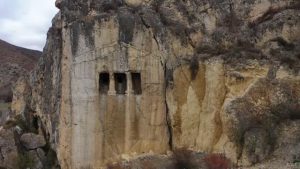
Cover Image: Rock-cut dwellings carved into the limestone cliffs of the Phrygian Valley, where multi-story structures such as the Ayazini complex reveal everyday aspects of life in ancient Phrygia, including early examples of domestic planning and sanitation. Credit: IHA
- A 1700-year-old statue of Pan unearthed during the excavations at Polyeuktos in İstanbul
- The granary was found in the ancient city of Sebaste, founded by the first Roman emperor Augustus
- Donalar Kale Kapı Rock Tomb or Donalar Rock Tomb
- Theater emerges as works continue in ancient city of Perinthos
- Urartian King Argishti’s bronze shield revealed the name of an unknown country
- The religious center of Lycia, the ancient city of Letoon
- Who were the Luwians?
- A new study brings a fresh perspective on the Anatolian origin of the Indo-European languages

- Perhaps the oldest thermal treatment center in the world, which has been in continuous use for 2000 years -Basilica Therma Roman Bath or King’s Daughter-
- The largest synagogue of the ancient world, located in the ancient city of Sardis, is being restored
Leave a Reply