
A Roman Elite’s Marble Bathtub Reused as a Fountain Trough Discovered at Ephesus
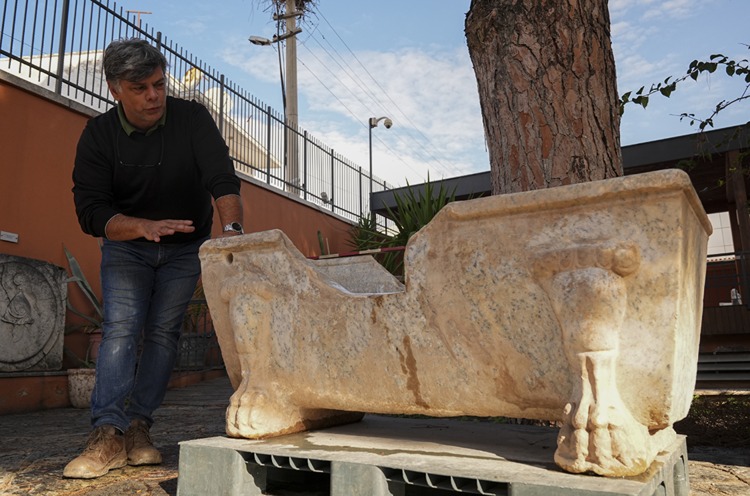
At Ephesus, one of the most intensively studied cities of the ancient Mediterranean, archaeologists continue to encounter the unexpected consequences of urban life stretching across centuries. During the 2025 excavation season at the UNESCO World Heritage Site, a finely carved Roman marble bathtub—once associated with elite domestic life—has been uncovered along the city’s Stadium Street, later repurposed as a utilitarian fountain trough.
The discovery was made during ongoing excavations coordinated by Dokuz Eylül University in cooperation with the Ephesus Museum, the Austrian Archaeological Institute, and Türkiye’s Ministry of Culture and Tourism. Work this year has focused on clearing long-overgrown areas of the ancient city, revealing layers of reuse that illuminate how Ephesus adapted its built environment over time.
A luxury object from a wealthy Roman household
The marble bathtub was found along Stadium Street, a major urban artery connecting public and residential zones of Roman Ephesus. Archaeologists believe the object originally belonged to the famed Terrace Houses (Yamaç Evler), where the city’s wealthiest families resided during the early Imperial period.
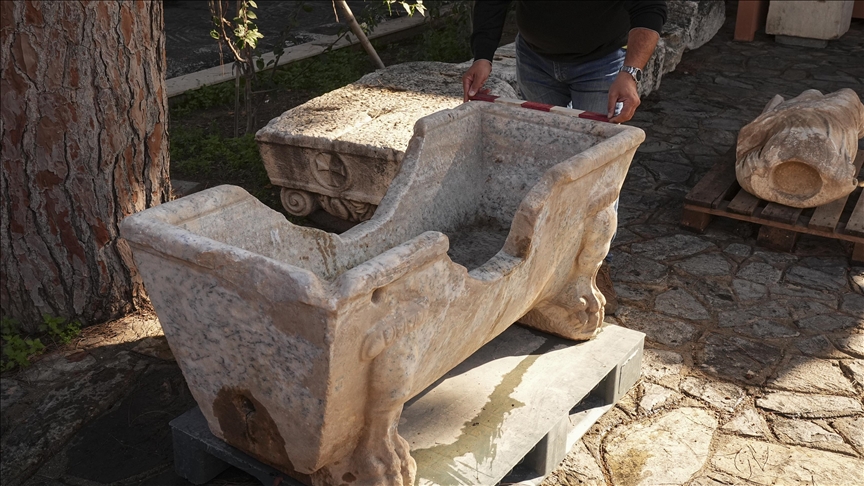
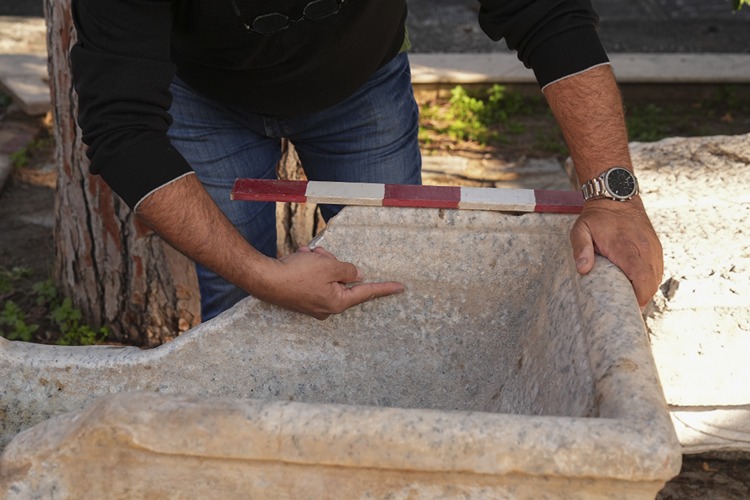
Carved from Greco Scritto, a distinctive regional marble prized for its veined appearance, the bathtub measures approximately 146 centimeters in length, 73 centimeters in width, and 60 centimeters in height. Based on its form, craftsmanship, and archaeological context, the piece has been dated to the 1st century CE.
📣 Our WhatsApp channel is now LIVE! Stay up-to-date with the latest news and updates, just click here to follow us on WhatsApp and never miss a thing!!
According to excavation coordinator Prof. Dr. Serdar Aybek, the find is unusual precisely because such domestic bathing installations rarely survive intact. While monumental public bath complexes dominate the Roman archaeological record, private bathing fixtures associated with elite homes are far less commonly preserved.
Roman bathing culture beyond the public baths
Roman bathing culture is most often associated with vast public thermae, and Ephesus itself housed one of the largest bath complexes in the Roman world: the Harbor Baths, covering nearly 70,000 square meters. These monumental structures catered to large crowds and played a central role in urban social life.
The newly discovered bathtub, however, represents a different aspect of Roman hygiene and luxury. Its relatively compact dimensions indicate use within a private residence rather than a public facility. Prof. Aybek emphasizes that the object’s elaborate details point unmistakably to elite ownership. The tub features finely carved moldings, egg-and-dart (kyma) decoration, and sculpted lion-paw feet—ornamental elements typically reserved for high-status furnishings.
Such workmanship suggests that the bathtub was commissioned for a household of considerable wealth, reflecting both social standing and the adoption of Roman lifestyle ideals within domestic spaces.
From private luxury to public utility
One of the most revealing aspects of the find is not its original function, but its later transformation. Archaeological analysis shows that the bathtub was reused during a later phase of urban repair along Stadium Street. Two deliberately cut holes—one at the top for water inflow and another at the bottom for drainage—demonstrate that the object was converted into a fountain trough.
This practice, known as spolia, was widespread in Late Antiquity and beyond, when earlier architectural and sculptural elements were recycled for new purposes. Prof. Aybek notes that the bathtub’s form was altered intentionally, even though such modifications would have been unnecessary for its original use. The absence of random breakage further supports the interpretation that the conversion was planned and functional.
The find offers a vivid example of how Ephesus continuously reworked its urban fabric, blending luxury objects from earlier centuries into the practical infrastructure of later periods.
An unexpected Roman statue beneath the road
Excavations along Stadium Street also yielded a second, equally striking discovery: a fragmented male statue that had been reused as paving material. Measuring approximately 123 by 50 centimeters, the sculpture was found face-down beneath the road surface, inverted to serve as a leveling stone.
Stylistic analysis dates the statue to the transitional period between the late Hellenistic era and the early Roman Empire, spanning the 1st century BCE to the 1st century CE. The figure was originally carved in multiple sections, with the head, arms, and feet designed to be attached separately—an approach common in large-scale Roman statuary.
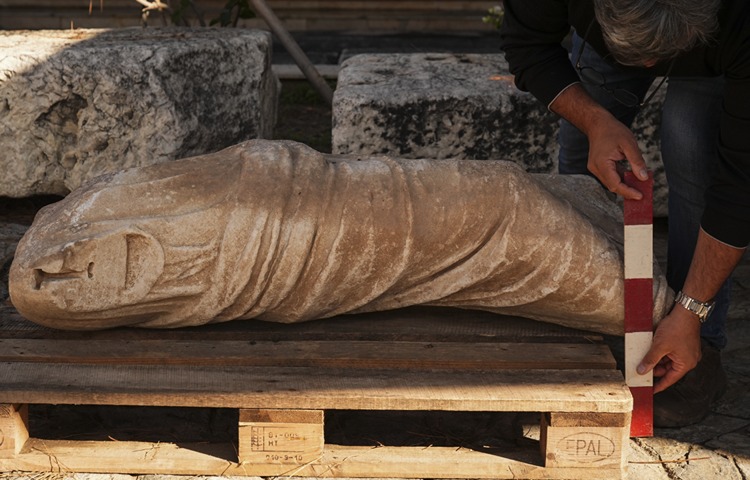
The statue came to light only after the excavation team removed the stone to correct the road level. Beneath it lay what Prof. Aybek described as an entirely unexpected surprise, underscoring how deeply layers of reuse are embedded within Ephesus’s streets.
Both the marble bathtub and the male statue have now been transferred to the Ephesus Museum, where they join one of the most significant archaeological collections in the eastern Mediterranean.
Ephesus as a city of continuity and transformation
Together, these discoveries reinforce a central theme in the archaeology of Ephesus: continuity through adaptation. Objects once created for elite display and private comfort were later stripped of their original meaning and integrated into the everyday mechanics of a living city.
From luxurious domestic interiors to functional street infrastructure, the marble bathtub’s journey encapsulates the long and complex urban history of Ephesus—one in which prestige, practicality, and survival were constantly renegotiated across centuries.
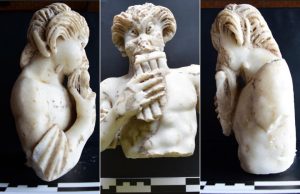
- A 1700-year-old statue of Pan unearthed during the excavations at Polyeuktos in İstanbul
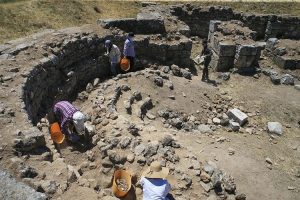
- The granary was found in the ancient city of Sebaste, founded by the first Roman emperor Augustus
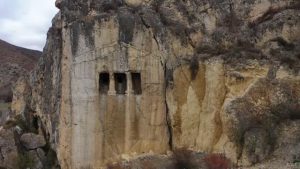
- Donalar Kale Kapı Rock Tomb or Donalar Rock Tomb
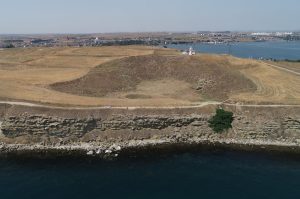
- Theater emerges as works continue in ancient city of Perinthos
- Urartian King Argishti’s bronze shield revealed the name of an unknown country
- The religious center of Lycia, the ancient city of Letoon
- Who were the Luwians?
- A new study brings a fresh perspective on the Anatolian origin of the Indo-European languages

- Perhaps the oldest thermal treatment center in the world, which has been in continuous use for 2000 years -Basilica Therma Roman Bath or King’s Daughter-
- The largest synagogue of the ancient world, located in the ancient city of Sardis, is being restored
Leave a Reply