
Assyrian Goddess Ishtar Emerges on a Silver Pendant at the Ancient Port of Amos
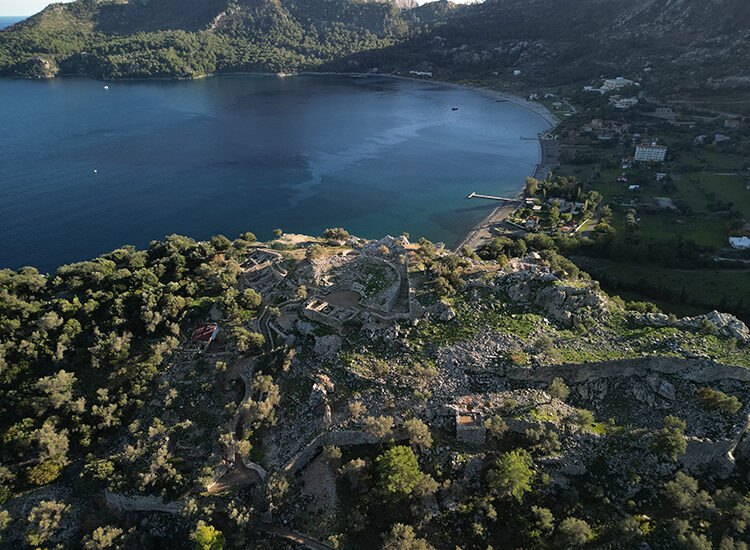
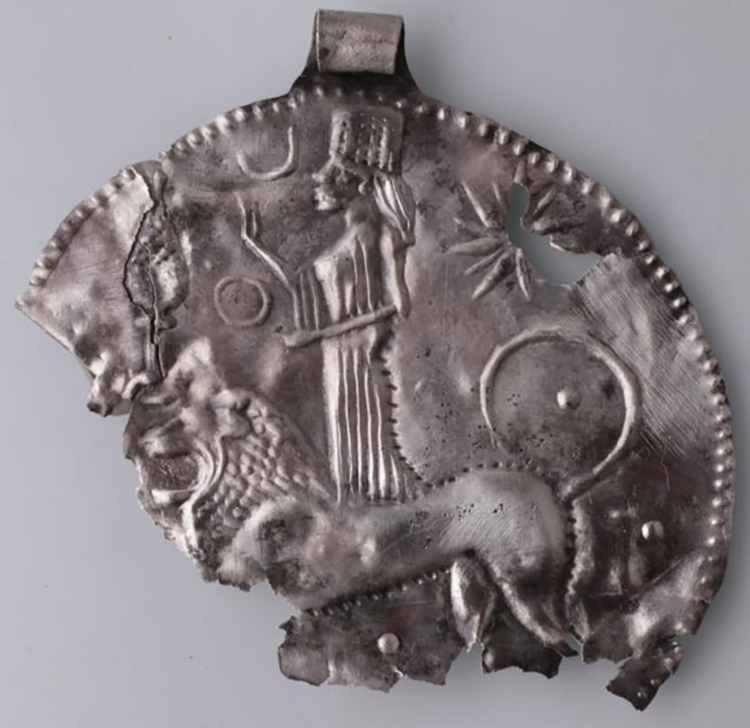
At the ancient port city of Amos, overlooking the Gulf of Gökova on Türkiye’s southwestern coast, archaeologists have uncovered a rare silver pendant bearing symbols associated with the Assyrian goddess Ishtar. Small in scale but rich in meaning, the object offers new evidence for the cultural reach of Near Eastern belief systems into coastal Anatolia during antiquity.
A symbolic find from a strategic harbor
The pendant was discovered during the 2025 excavation season at Amos Ancient City, a settlement positioned on Asarcık Hill with direct access to maritime routes linking the Aegean and eastern Mediterranean. Crafted in silver, the ornament features a lion figure accompanied by an eight-pointed star—iconographic elements widely recognized as attributes of the goddess Ishtar in Assyrian religious tradition.
Archaeologists working at the site interpret the pendant as more than a decorative accessory. The deliberate pairing of these symbols suggests an object carrying religious or ideological meaning, likely reflecting personal belief, identity, or protection rather than mere adornment.
Interpreting Ishtar’s symbols
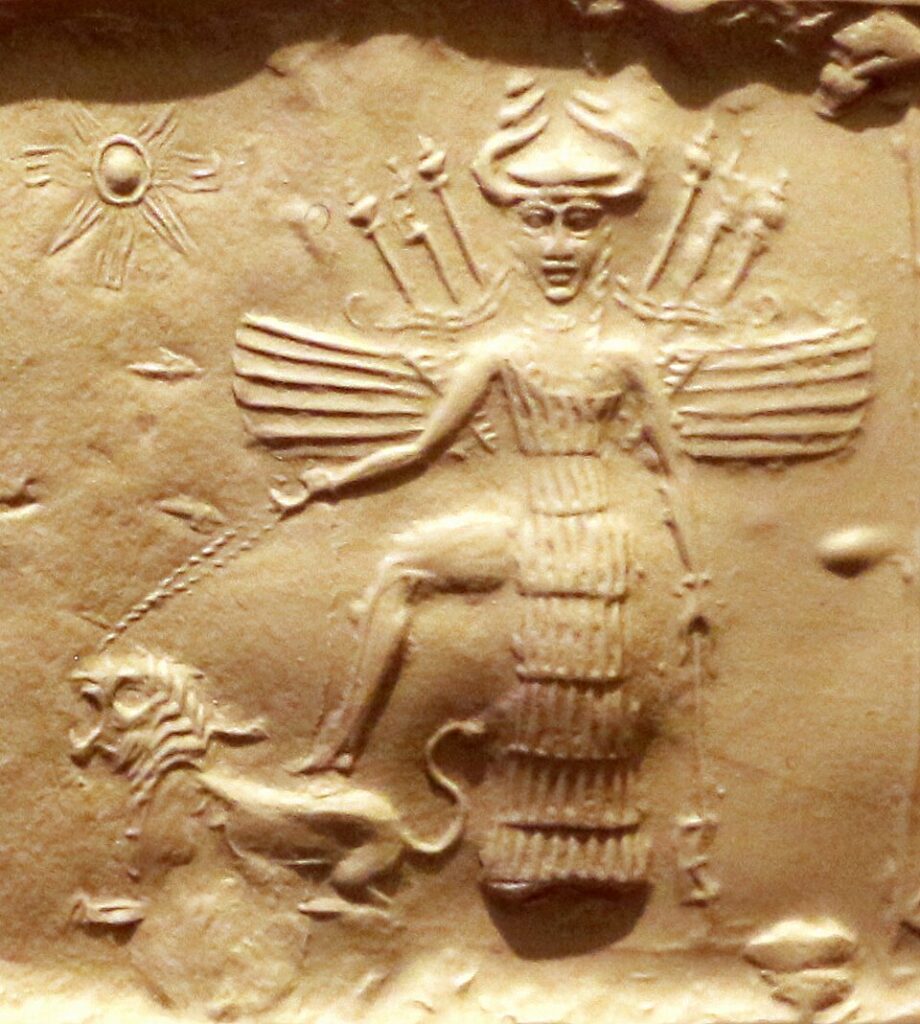
According to the excavation director, Assoc. Prof. Dr. Mehmet Gürbüzer of Muğla Sıtkı Koçman University, the iconography is unambiguous. The lion, long associated with power and warfare, and the eight-pointed star, a celestial emblem, together form a visual language closely tied to Ishtar’s cult. Their appearance on a single object allows researchers to identify the cultural background of the pendant with a high degree of confidence.
📣 Our WhatsApp channel is now LIVE! Stay up-to-date with the latest news and updates, just click here to follow us on WhatsApp and never miss a thing!!
Ishtar herself was known in earlier Mesopotamian contexts as Inanna, a deity whose domains encompassed fertility, love, war, and divine authority. Over centuries, her worship spread widely across the Near East, and her symbols traveled with merchants, soldiers, and diplomats. The Amos pendant provides tangible proof that these ideas reached far beyond Mesopotamia.
Amos and long-distance connections
From the 7th century BCE onward, the Mediterranean world experienced increasing contact with the cultures of the Near East through trade and military interaction. As a harbor city, Amos occupied a favorable position within these networks. The discovery of an Ishtar-related object at the site strengthens interpretations of the city as an active participant in long-distance exchange, rather than a peripheral coastal settlement.
Dr. Gürbüzer emphasizes that early-period finds at Amos consistently point to a community with notable economic and cultural capacity. In this context, the pendant is seen as part of a broader pattern, reflecting the city’s integration into interconnected worlds spanning Anatolia, the Levant, and Mesopotamia.
Excavations past and present
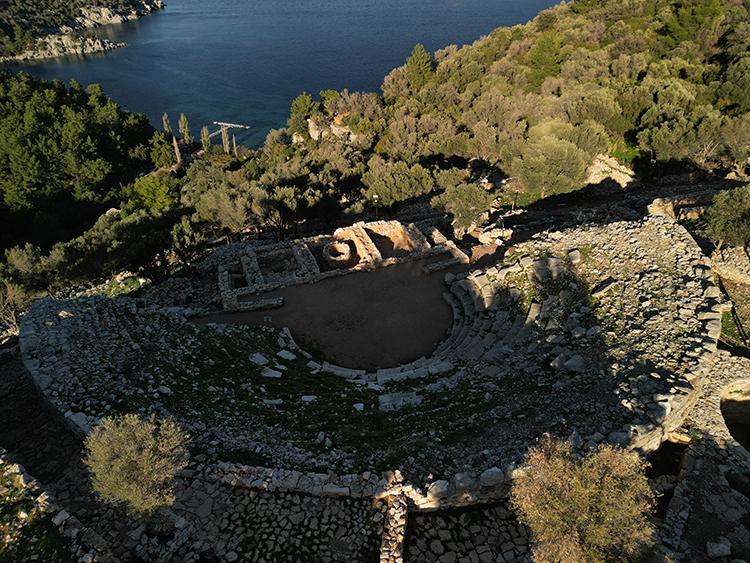
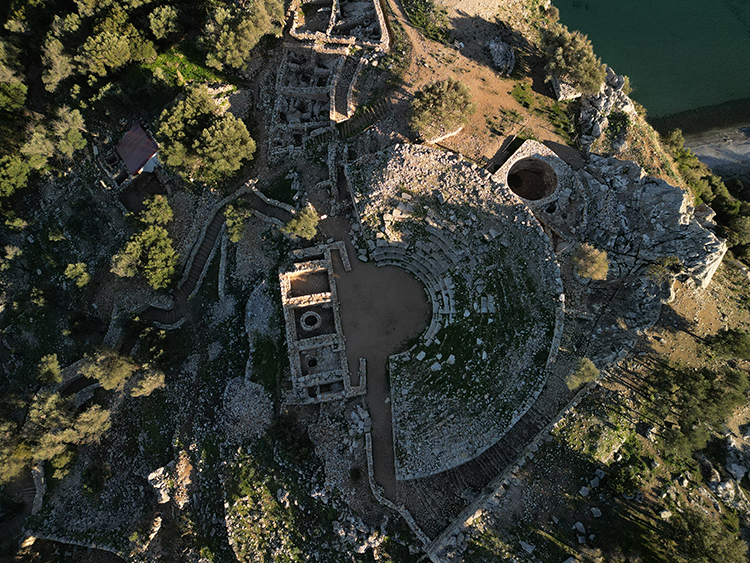
Archaeological work at Amos has continued steadily throughout 2025. Current investigations include documentation and landscaping in the orchestra area of the ancient theater, research within sectors of civilian housing, and extensive clearing around the Temple of Apollo Samnaios, where vegetation and debris had obscured architectural remains.
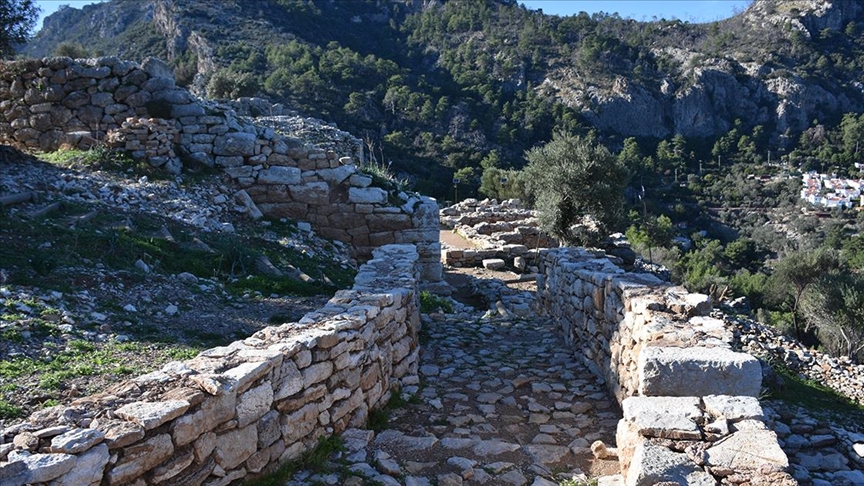
The site first entered scholarly literature in 1948, when initial excavations were conducted by George E. Bean. His work brought Amos to international attention through the discovery of inscriptions related to land-lease contracts, revealing aspects of the city’s organized economic life. The newly uncovered silver pendant now adds a different dimension to that picture, highlighting Amos not only as an economic center but also as a crossroads of belief and symbolism.
A small object with wide implications
While modest in size, the Ishtar-decorated pendant underscores how personal objects can illuminate large historical processes. Its presence at Amos speaks to the movement of ideas across seas and cultures, reminding us that ancient port cities were places where religions, symbols, and identities met and mingled. For researchers, it is another piece of evidence that southwestern Anatolia was deeply embedded in the cultural dynamics of the ancient Near East.
- A 1700-year-old statue of Pan unearthed during the excavations at Polyeuktos in İstanbul
- The granary was found in the ancient city of Sebaste, founded by the first Roman emperor Augustus
- Donalar Kale Kapı Rock Tomb or Donalar Rock Tomb
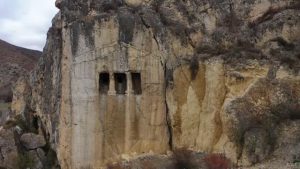
- Theater emerges as works continue in ancient city of Perinthos
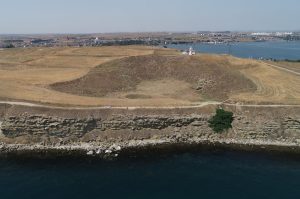
- Urartian King Argishti’s bronze shield revealed the name of an unknown country
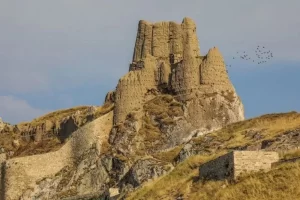
- The religious center of Lycia, the ancient city of Letoon
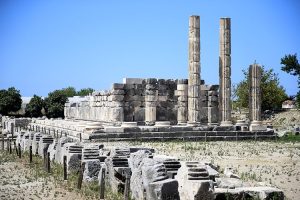
- Who were the Luwians?
- A new study brings a fresh perspective on the Anatolian origin of the Indo-European languages

- Perhaps the oldest thermal treatment center in the world, which has been in continuous use for 2000 years -Basilica Therma Roman Bath or King’s Daughter-
- The largest synagogue of the ancient world, located in the ancient city of Sardis, is being restored
Leave a Reply