
Forgotten Crafts Revived in Restored Ottoman Shops at Stratonikeia
For decades, visitors have come to Stratonikeia for its marble streets, its vast gymnasium, and the memory of gladiators who once fought in its arena. Soon, they may also come for the sound of a hammer striking copper, or the smell of fresh bread from a village oven.
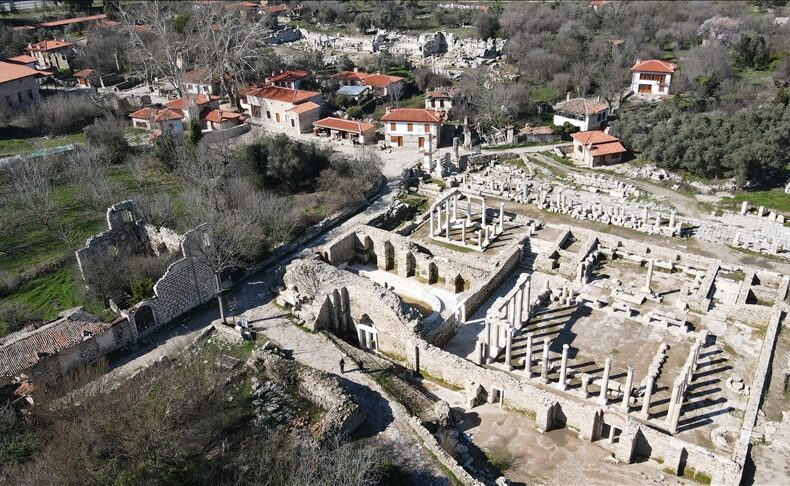
At the entrance of the ancient city in southwestern Türkiye, recently restored Ottoman-era shops are being prepared to host traditional crafts that are on the verge of disappearing. The initiative forms part of the long-running excavation and conservation program at Stratonikeia, a site included on UNESCO’s World Heritage Tentative List.
A City Where Periods Overlap, Not Replace Each Other
Excavations and restoration at Stratonikeia have continued year-round since 1977. Known as one of the largest marble-built cities in the ancient world, the site preserves layers from the Hellenistic, Roman, and Byzantine periods. What makes it unusual, however, is that later phases—Menteşe Beylik, Ottoman, and even Republican-era houses—were never erased. They remain physically embedded in the archaeological landscape.
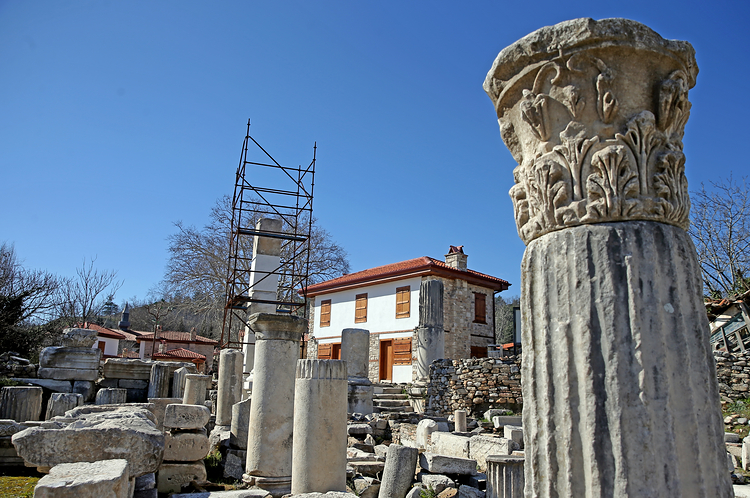
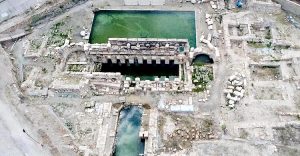
Professor Bilal Söğüt, head of the Stratonikeia and Lagina excavations, emphasizes that the site is protected as a continuous whole rather than as isolated monuments. The West Street, Roman Bath, Bouleuterion (Council House), Ottoman mansions, and early 20th-century dwellings coexist within walking distance of one another.
📣 Our WhatsApp channel is now LIVE! Stay up-to-date with the latest news and updates, just click here to follow us on WhatsApp and never miss a thing!!
The village square, in particular, represents one of the clearest expressions of this layered continuity.
Reviving Craft Within a Protected Landscape
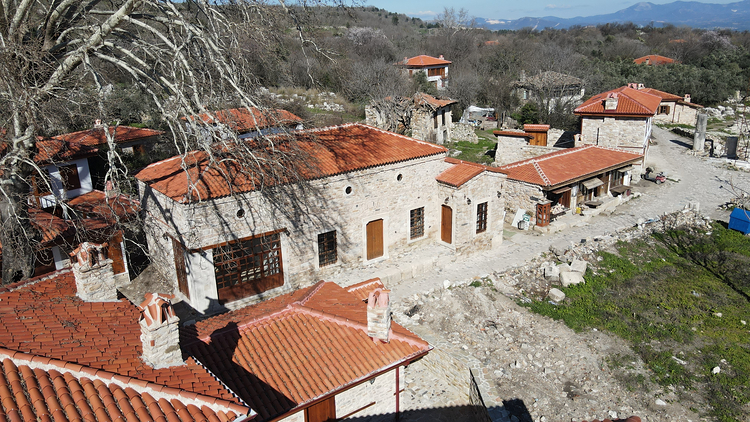
Previous conservation campaigns focused on the mosque and bath in the square. In 2025, attention shifted to houses and small commercial structures. Rather than converting them into static exhibition spaces, the team chose a different path: reactivating them.
One restored bakery, once operated by Sami Akdeniz, will again function as a working oven. Other shops—associated with local names such as Mehmet Eskişar and Hasan Arık—are being reopened in a way that preserves both their architectural integrity and their memory. A coppersmith is already active in one of the units, and shoemakers and additional artisans are expected to follow.
The strategy, Söğüt explains, is grounded in the principle of “conservation through use.” Preserving walls alone is not enough; maintaining the social rhythm of the square is equally important. Visitors should be able to rest under the plane tree, walk along Ottoman stone-paved streets, and encounter living craftsmanship within the same spatial frame as ancient ruins.
Beyond the “City of Gladiators”
Stratonikeia earned its nickname as the “City of Gladiators” because of inscriptions and evidence linked to Roman-era combat culture. Yet the current restoration program highlights a broader narrative. This is not simply a Roman marble city frozen in time. It is a settlement that evolved, adapted, and remained inhabited across centuries.
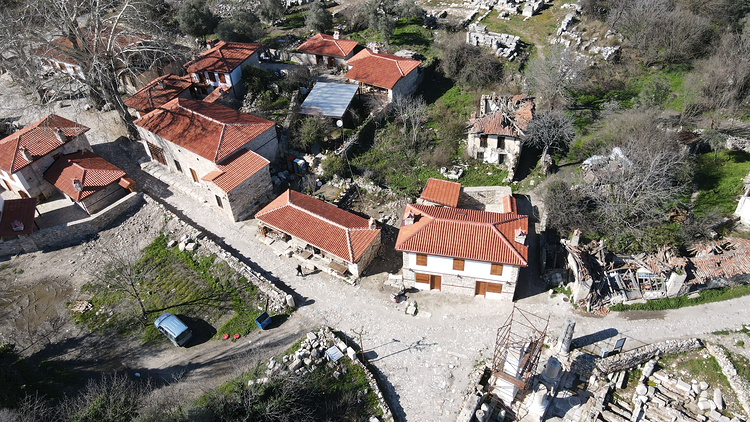
The ongoing work, carried out under Türkiye’s “Heritage for the Future” framework, will continue into 2026. Each phase aims to strengthen the balance between protection and public engagement without compromising authenticity.
Walking through Stratonikeia today means moving across eras without clear borders. A Roman colonnade may frame an Ottoman façade; a Republican-era house may stand beside a Hellenistic foundation. Soon, the ring of metalwork and the presence of traditional trades will add another layer—one that does not reconstruct the past artificially, but allows it to breathe again within its original setting.
- A 1700-year-old statue of Pan unearthed during the excavations at Polyeuktos in İstanbul
- The granary was found in the ancient city of Sebaste, founded by the first Roman emperor Augustus
- Donalar Kale Kapı Rock Tomb or Donalar Rock Tomb
- Theater emerges as works continue in ancient city of Perinthos
- Urartian King Argishti’s bronze shield revealed the name of an unknown country
- The religious center of Lycia, the ancient city of Letoon
- Who were the Luwians?
- A new study brings a fresh perspective on the Anatolian origin of the Indo-European languages
- Perhaps the oldest thermal treatment center in the world, which has been in continuous use for 2000 years -Basilica Therma Roman Bath or King’s Daughter-
- The largest synagogue of the ancient world, located in the ancient city of Sardis, is being restored
Leave a Reply