
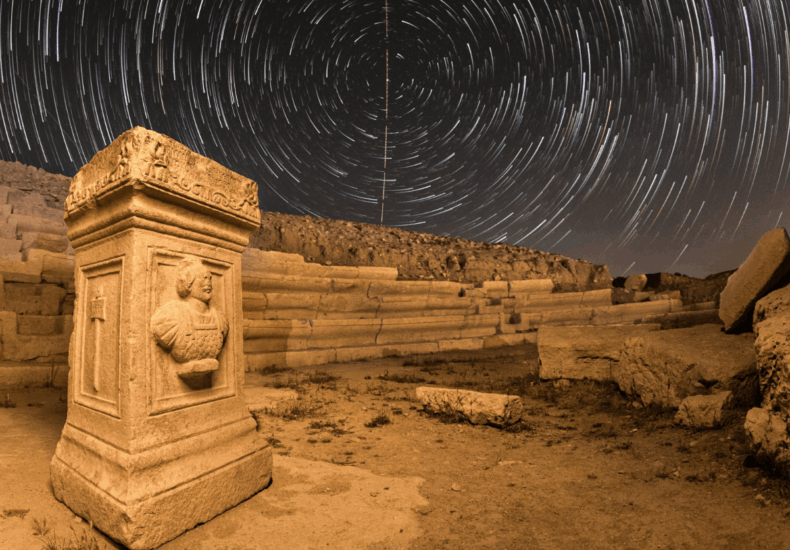
Savatra Ancient City Photograph Wins “Photo of the Year” at 2026 Current Archaeology Awards
A remarkable photograph taken at the ancient city of Savatra in central Anatolia has been selected as “Photo of the Year” at the 2026 Current Archaeology Awards, one of the most recognized international honors in the field of archaeology. Captured by Turkish photographer Tahir Ceylan, the award-winning image presents the ruins of Savatra beneath a
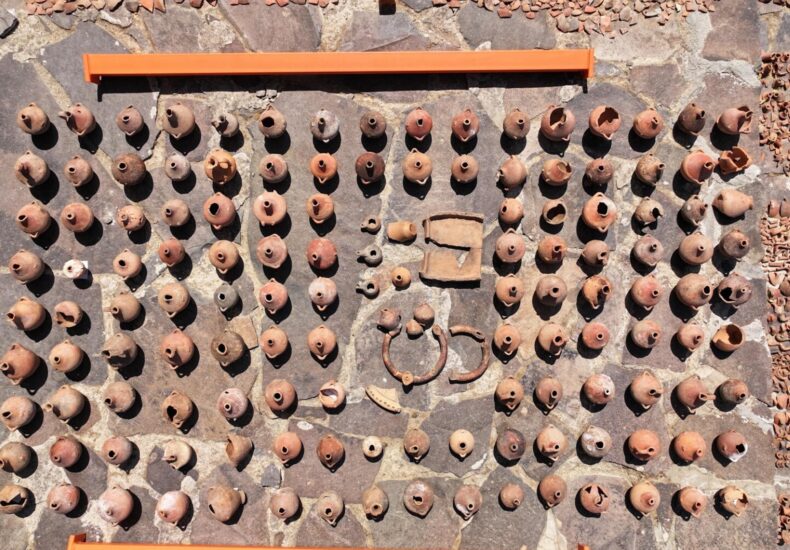
3,000 Ritual Hydriskoi Discovered at Demeter–Kore Temple in Aigai, Western Türkiye
A quiet sanctuary overlooking the rugged slopes of Yuntdağı has revealed an extraordinary testimony to ancient ritual life. Archaeologists working at the Demeter–Kore Temple in Aigai have uncovered approximately 3,000 small terracotta water vessels known as hydriskoi — one of the most substantial votive accumulations ever documented at the site. The excavation, conducted for the

New Study Reassesses Mount Ararat’s Role in the Noah Ark Tradition Across Three Faiths
Mount Ararat is often presented as a question. Did the Ark land there — or not? But a new academic study suggests we may have been asking the wrong question all along. Instead of searching for frozen timber beneath glaciers, the 2025 research turns to something more complex: how one mountain carries three different sacred
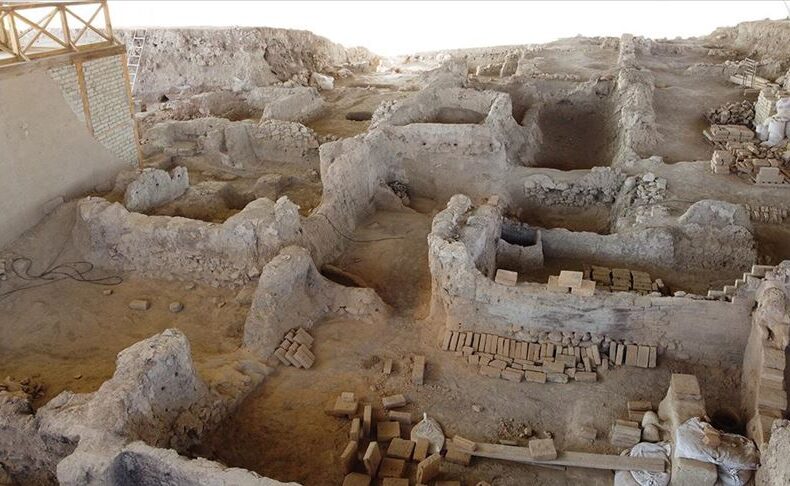
Bronze Age Breakthrough in Anatolia: 3,900-Year-Old Indigo Textile and Single-Needle Knitting Unearthed at Beycesultan
A charred scrap of fabric from western Anatolia is forcing archaeologists to rethink the technological sophistication of the Bronze Age. At Beycesultan Höyük, a major mound settlement in inland western Türkiye, researchers have identified the earliest known indigo-dyed textile in Bronze Age Anatolia—alongside the region’s first evidence of a complex single-needle knitting technique known as
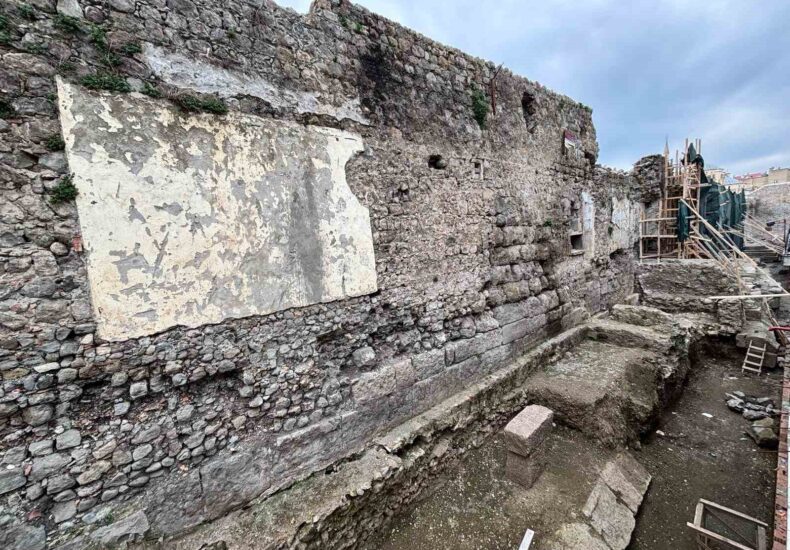
Beneath a Modern Market in Trabzon, a Rare Roman-Era River Harbor Emerges
For years, the Pazarkapı district in Trabzon was simply a marketplace. Few suspected that beneath the demolished Kadınlar Hali building lay a structure that would quietly redefine how we understand Black Sea commerce. Recent archaeological and conservation work has identified the remains as a river harbor connected to the Kuzgundere Stream — and, according to
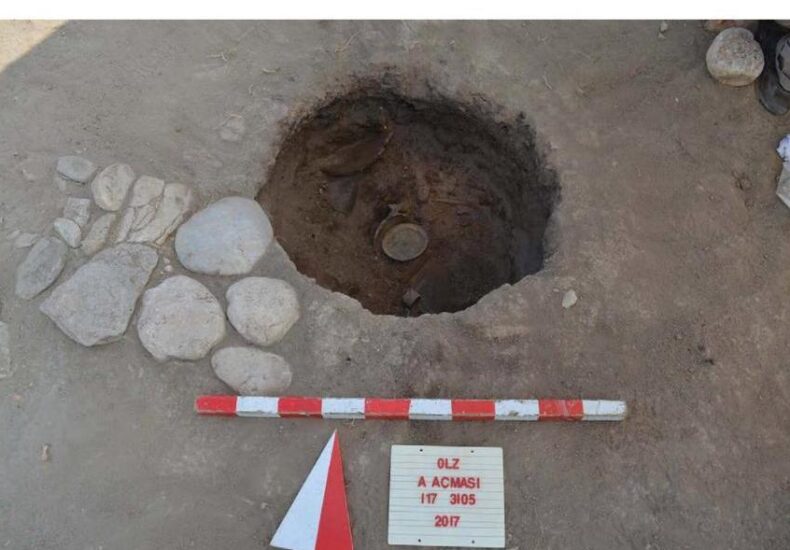
Ancient Ritual Pit at Oluz Höyük May Represent Anatolia’s Earliest Evidence of Zoroastrian Worship
Across central Anatolia, layers of earth sometimes preserve turning points in religious history. At Oluz Höyük, an archaeological mound near modern Amasya in northern Türkiye, researchers have identified a ritual installation that may represent the earliest archaeological evidence of Zoroastrian ceremonial practice in Anatolia. The interpretation is based on a detailed academic study examining a
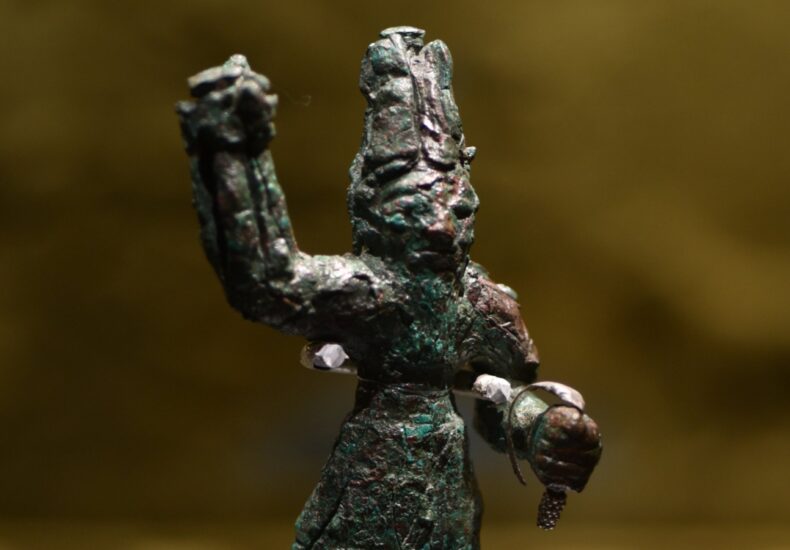
Carchemish, the Hittites’ Frontier City on the Euphrates, Introduced Through a New Exhibition in Ankara
One of the most strategically important cities of the Hittite world has returned to public view—this time not on the banks of the Euphrates, but in the heart of Türkiye’s capital. A new exhibition titled “Carchemish of the Hittites on the Banks of the Euphrates: New Discoveries and New Perspectives” has opened at the Museum
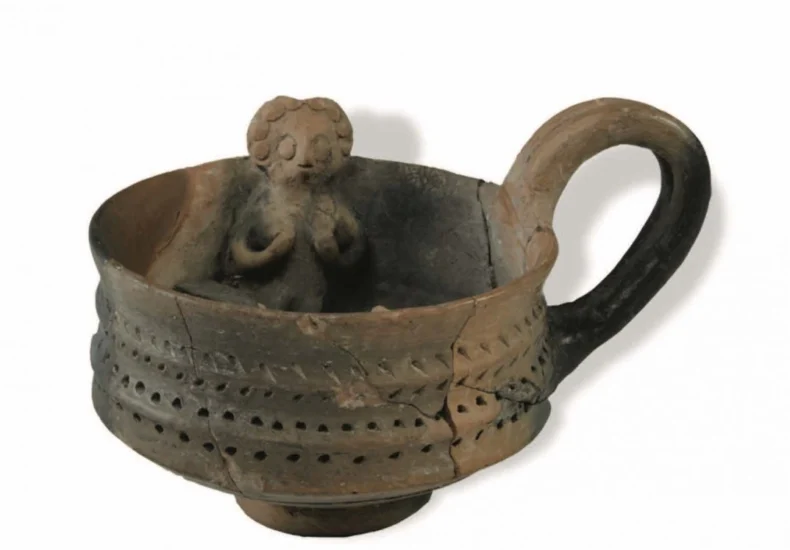
A Hittite Goddess Vessel from Eskiyapar and the Ritual of “Drinking the God”
The Hittites were among the earliest state-forming societies of Anatolia, shaping their political power alongside an exceptionally complex religious system. Their rituals, preserved on thousands of cuneiform tablets, describe ceremonies rich in symbolism—many of which have long remained difficult to visualize. A small ceramic vessel unearthed at Eskiyapar now offers a rare and tangible glimpse
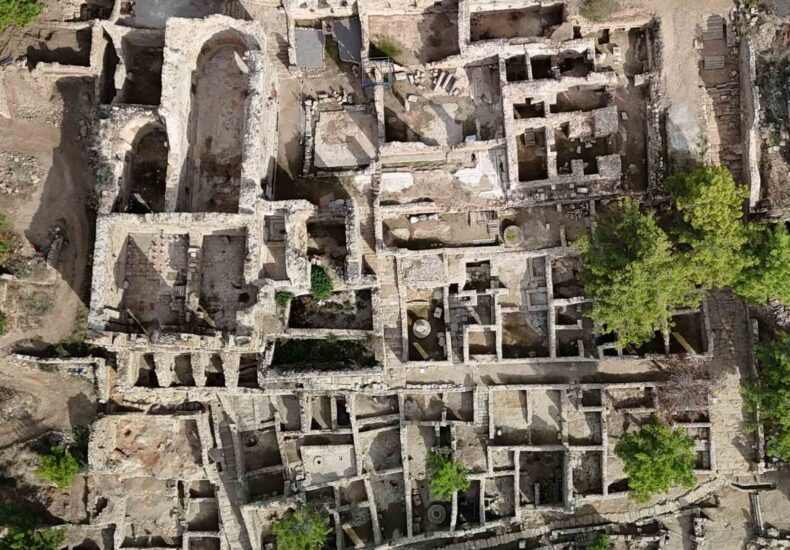
International Research Grant Brings Syedra Ancient City’s Theater into the Global Archaeological Spotlight
A major international academic partnership has elevated archaeological research at Syedra, as a joint Turkish–French project led by Alanya Alaaddin Keykubat University receives competitive bilateral funding under the Bosphorus Programme.The project is notably the first international bilateral research initiative in the university’s history—marking a milestone for both the institution and the archaeological study of southern

Scientific Study Reveals: The Hittites Practiced an Advanced Hygiene Culture 3,000 Years Ago
Long before modern concepts of sanitation emerged, the Hittites appear to have developed a surprisingly structured and disciplined approach to cleanliness. A new scientific study demonstrates that hygiene in Hittite society was not a marginal habit, but a core element shaping daily life, religious practice, and social order in Late Bronze Age Anatolia. The research,