
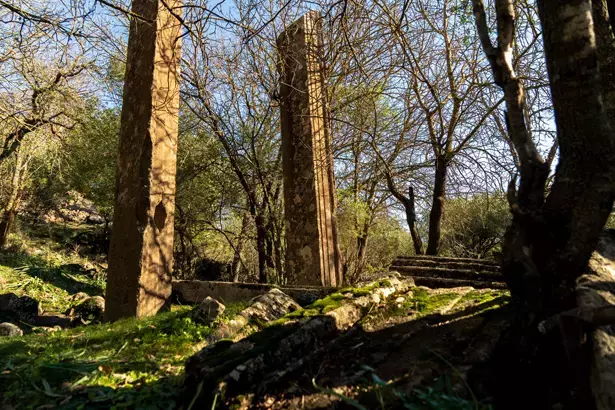
The Most Important Oracle of the Aiolis Region: The 2,300-Year-Old Temple of Apollo Khresterios at Aigai
Hidden deep within a rural valley of western Türkiye, far from modern roads and urban pressure, the Temple of Apollo Khresterios stands as one of the most intact and enigmatic oracle centers of the ancient world. Located near the ancient city of Aigai, the sanctuary played a central role in the religious life of the Aiolis region for centuries—and may have been closely linked to one of antiquity’s most renowned seers.
The ancient city of Aigai lies within the modern district of Yunusemre. While the city itself was built on a high hilltop, its oracle sanctuary was deliberately established around 2.5 kilometers away, inside the fertile Kocaçay Valley, where natural water sources flow alongside the riverbank. Archaeological evidence shows that the Temple of Apollo Khresterios was constructed in the early Hellenistic period, around 280 BC.
A Sanctuary Shaped by Landscape and Belief
The temple’s location was not accidental. In the ancient Mediterranean belief system, oracle sanctuaries were often placed near springs, rivers, or underground water sources—spaces thought to facilitate communication between gods and humans.
According to Prof. Dr. Yusuf Sezgin, excavation director of Aigai and coordinator of the Pergamon region, the sanctuary’s setting reflects this sacred logic:
📣 Our WhatsApp channel is now LIVE! Stay up-to-date with the latest news and updates, just click here to follow us on WhatsApp and never miss a thing!!
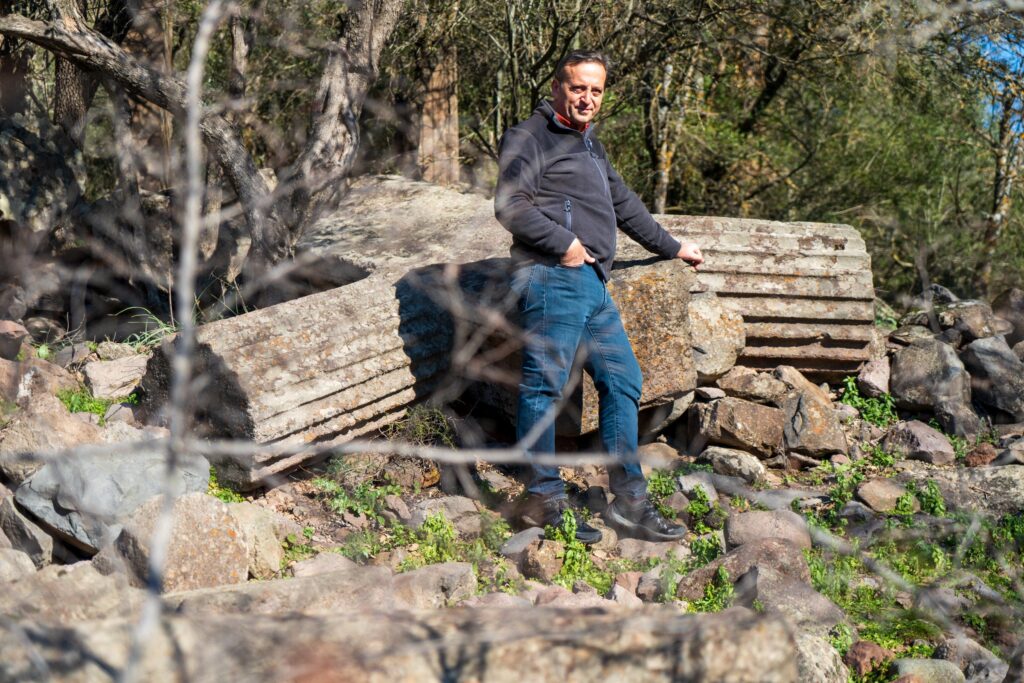
“The ancient city of Aigai was established on a high hill, but this sanctuary lies down in the valley, beside the stream. It is a sacred area and, more specifically, an oracle center dedicated to Apollo,” Sezgin explains.
In antiquity, divination was not a marginal ritual. Oracle consultations shaped political decisions, military campaigns, agricultural planning, and personal life choices. Sanctuaries like Apollo Khresterios functioned as institutional centers of foresight.
The Principal Oracle of Aiolis
Within the ancient region known as Aiolis, the Temple of Apollo Khresterios held exceptional status. Sezgin places the site among Anatolia’s most significant oracle centers:
“There were only a few major oracle centers in Anatolia. Didyma was the most prominent, followed by Klaros. But in the Aiolis region, this sanctuary at Aigai was likely the most important oracle center,” he says.
This positions Aigai within the same religious tradition as Didyma and Klaros, both famed for their Apollo cults.
Apollo as Khresterios: The God as Oracle
The sanctuary’s original name—Apollo Khresterios—directly refers to Apollo’s prophetic function. The term Khresterios derives from ancient Greek concepts of divination and prophecy.
“Khresterios means ‘one who gives prophecies’ or ‘oracle-bearing,’” Sezgin notes. “Here, Apollo was worshipped specifically in his role as a prophetic deity.”
This distinction clarifies the temple’s function: it was not simply a place of worship, but a center where divine messages were believed to be delivered to humanity.
A Major Roman Restoration
The sanctuary retained its importance well into the Roman period. In the 1st century BC, it underwent a large-scale reconstruction funded by the Roman governor Publius Servilius Isauricus.
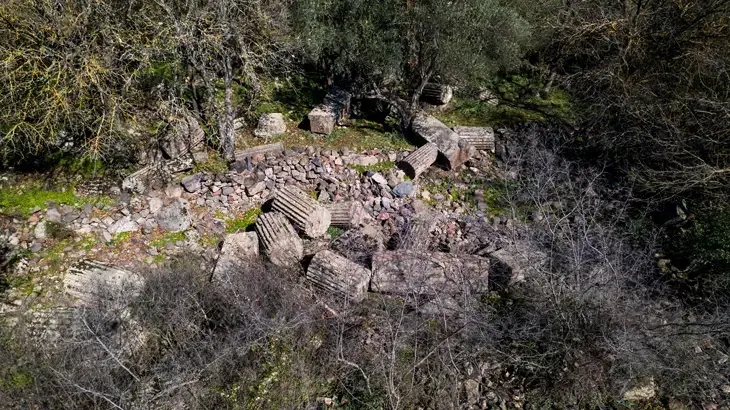
“The temple was originally built in the Hellenistic period, around 280 BC,” Sezgin explains. “But in the 1st century BC, it was completely renewed by Publius Servilius Isauricus. Most of the columns and architectural blocks visible today belong to that Roman phase.”
Notably, the absence of a modern access road has helped preserve much of the original stonework in situ.
Preservation Through Isolation
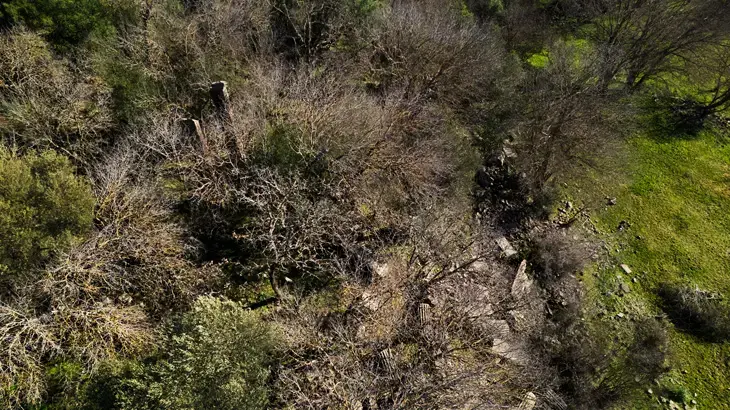
Reaching the sanctuary today requires a long walk through rugged terrain—a challenge that has proven to be a blessing in disguise.
“There is no modern road leading here,” Sezgin says. “Because of this isolation, a large portion of the temple’s architectural elements remain on site. With future work, it may be possible to restore up to 70 or even 80 percent of the structure using its original blocks.”
The Oracle Pollees of Aigai
One of the most intriguing aspects of the site is its potential connection to a famous ancient oracle known as Pollees of Aigai. His name appears in a Byzantine-era lexicon dated to the 10th century AD, which explicitly refers to him as an Aigai-born seer.
“We know the name of a very important oracle associated with Apollo: Pollees, who lived in Aigai,” Sezgin explains. “Although he likely lived in the Hellenistic period, his reputation endured for centuries.”
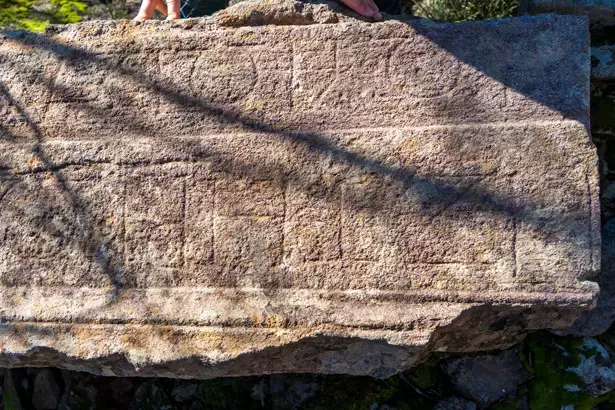
Ancient sources attribute to Pollees treatises on divination through birds and the interpretation of animal entrails. His fame was such that a phrase emerged in antiquity—‘to be like Pollees’—used for people believed to possess extraordinary foresight.
“That kind of expression only develops when someone is exceptionally well known,” Sezgin adds. “It strongly suggests that Pollees was a major oracle figure.”
Archaeologists believe his prophetic activity may have been directly connected to the Temple of Apollo Khresterios.
Sacred Roads, Rituals, and Sacrifice
A stone-paved sacred road once linked Aigai directly to the sanctuary, large portions of which are still visible today. This road would have carried pilgrims during festivals and ceremonial processions.
“Despite being 2.5 kilometers from the city, this was clearly Aigai’s sanctuary,” Sezgin notes. “People walked this road to reach the temple, where bulls were sacrificed to Apollo during festivals and sacred occasions.”
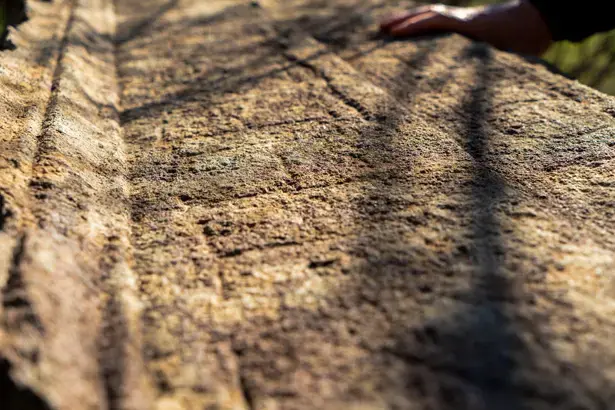
Water, Gases, and Divine Communication
The sanctuary lies beside the Kocaçay River, known in antiquity as Titnaios or Pytikos. Natural springs along its banks were likely central to the oracle’s rituals.
“Apollo’s oracle centers were intentionally established near water sources,” Sezgin explains. “Gases rising from underground, combined with spring water, were believed to enable the priestesses to communicate with the god and transmit his prophecies.”
Damage and Layered Heritage
The site has not escaped modern damage. In 2005, looters destroyed part of the temple’s monumental doorway, breaking a lintel that once rested atop two columns. In later periods, stones from the abandoned sanctuary were reused to build a nearby mill—just 20 meters from the temple—revealing the area’s layered and complex cultural history.
- A 1700-year-old statue of Pan unearthed during the excavations at Polyeuktos in İstanbul
- The granary was found in the ancient city of Sebaste, founded by the first Roman emperor Augustus
- Donalar Kale Kapı Rock Tomb or Donalar Rock Tomb
- Theater emerges as works continue in ancient city of Perinthos
- Urartian King Argishti’s bronze shield revealed the name of an unknown country
- The religious center of Lycia, the ancient city of Letoon
- Who were the Luwians?
- A new study brings a fresh perspective on the Anatolian origin of the Indo-European languages
- Perhaps the oldest thermal treatment center in the world, which has been in continuous use for 2000 years -Basilica Therma Roman Bath or King’s Daughter-
- The largest synagogue of the ancient world, located in the ancient city of Sardis, is being restored
Leave a Reply