
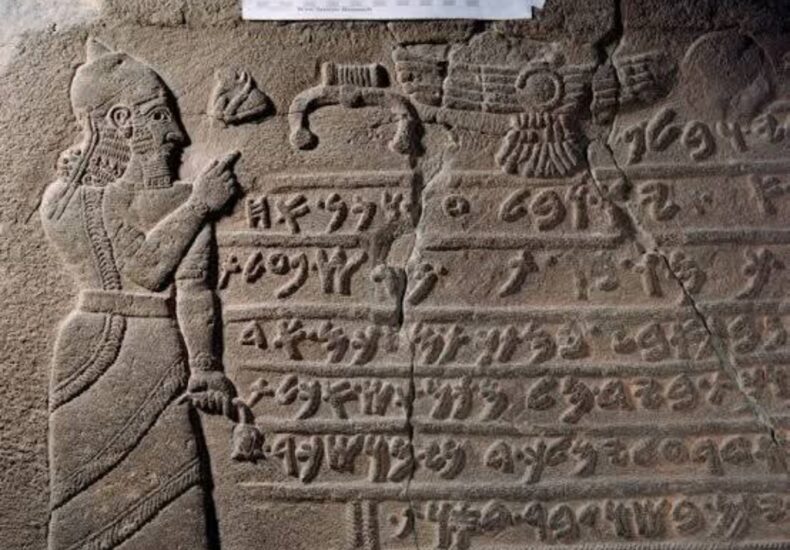
The Kilamuwa Stele from Zincirli Höyük Reveals How a Neo-Hittite King Wrote His Own Power into Stone
At Zincirli Höyük, located in today’s Gaziantep province in southern Türkiye, archaeologists uncovered one of the most explicit royal inscriptions of the Iron Age Near East. Known as the Kilamuwa Stele, this monument was erected in the 9th century BCE by King Kilamuwa, ruler of the Neo-Hittite kingdom of Bit-Gabbari. More than a historical record,

DNA from Çayönü Tepesi Reveals How Anatolia Shaped the World’s First Farming Societies
New genetic research conducted on human remains from Çayönü Tepesi is providing fresh evidence for Anatolia’s central position in the formation of early sedentary societies. The findings suggest that Neolithic communities in southeastern Anatolia were part of a wide interaction sphere linking the Near East, the Caucasus, and inner Anatolia. Scientific Analysis of Human Remains
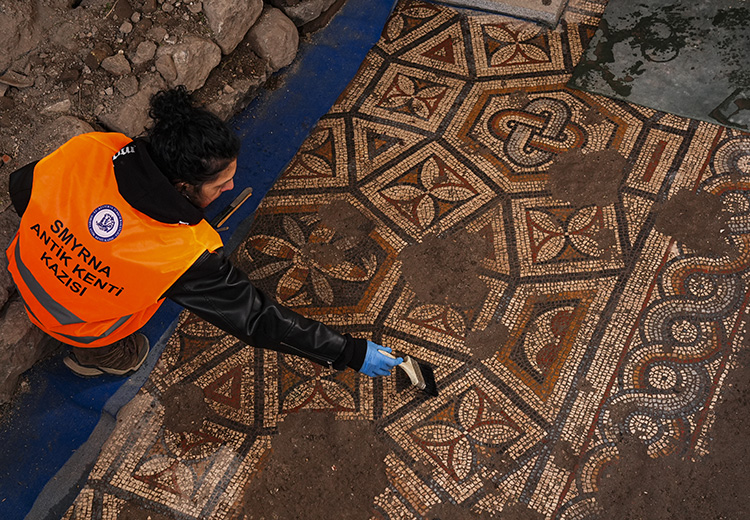
Late Roman Mosaic with Protective “Solomon’s Knot” Discovered at Ancient Smyrna
Archaeologists working in the center of modern İzmir have uncovered a rare Late Roman mosaic floor featuring the Solomon’s knot, a symbol long associated with protection against misfortune and the evil eye. The discovery was made during ongoing excavations at Smyrna, one of western Anatolia’s most important Greco-Roman urban centers. Found along Smyrna’s main ancient