
5,000-Year-Old Bread Discovered at Küllüoba Reveals Early Recipe and Ritual Use in Bronze Age Anatolia
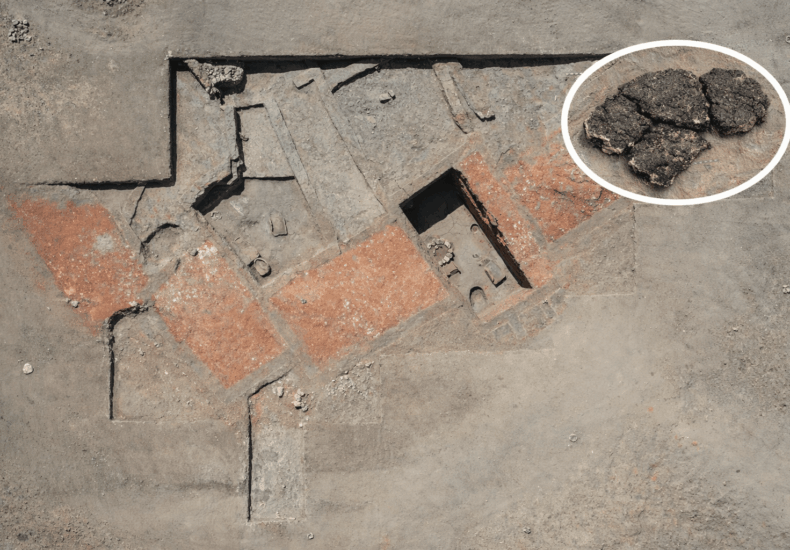
A charred piece of bread unearthed at Küllüoba Höyük, near Eskişehir in western Türkiye, is offering an unusually intimate glimpse into daily life—and symbolic practices—during the Early Bronze Age.
Dating back roughly 5,000 years, the find stands out not only for its preservation, but for where it was discovered: placed near the threshold of a building. This detail alone suggests that the bread was more than a simple food item—it may have carried a deeper, ritual meaning.
A Deliberate Placement at the Threshold
Archaeological evidence leaves little doubt that the bread was not discarded casually.
The fragment appears to have been intentionally burned and then left in place, where it was eventually buried and preserved over millennia. Its location—right beside the doorway threshold—is particularly significant. In many prehistoric Anatolian settlements, thresholds were not merely architectural features; they marked symbolic boundaries between spaces.
📣 Our WhatsApp channel is now LIVE! Stay up-to-date with the latest news and updates, just click here to follow us on WhatsApp and never miss a thing!!
Such areas are often associated with rituals tied to construction, abandonment, or transformation of buildings. The Küllüoba bread fits well within this broader cultural pattern.
What the Bread Reveals About Early Food Production
Scientific analyses provide a surprisingly detailed picture of how this bread was made.
Researchers found that it was primarily produced using einkorn wheat, one of the earliest domesticated grains in Anatolia. Small amounts of legumes were also added, suggesting a mixed recipe rather than a single-ingredient product.
The flour itself was coarsely ground and likely used without sieving. Yet despite this simplicity, the internal structure of the bread—visible through air pockets—indicates that the dough underwent some form of preparation, possibly involving kneading or fermentation.
This points to a level of culinary knowledge that goes beyond basic subsistence.
A Conscious Approach to Nutrition
The inclusion of legumes is particularly telling.
Rather than being accidental, this combination of cereals and legumes reflects a deliberate effort to enhance nutritional value. Laboratory analyses detected traces consistent with both carbohydrates and proteins, reinforcing the idea of a balanced food composition.
Interestingly, although barley was present at the site, it was not used in this particular bread. This suggests that ingredient selection was intentional, possibly influenced by taste, function, or even symbolic considerations.
Where Food Meets Ritual
Perhaps the most compelling aspect of the discovery lies in its interpretation.
Taken together—the burning, the placement, and the context—the evidence strongly suggests that this bread was not meant for consumption. Instead, it may have been part of a ritual practice.
In Anatolia, there are parallels where food items were deposited during the abandonment or transformation of buildings. These acts may have carried symbolic meanings, such as marking closure, protection, or renewal.
The Küllüoba bread adds a rare, tangible example to this tradition, showing that food could serve both practical and ceremonial roles.
Organized Production Within the Settlement
Küllüoba Höyük itself provides an important backdrop to this discovery.
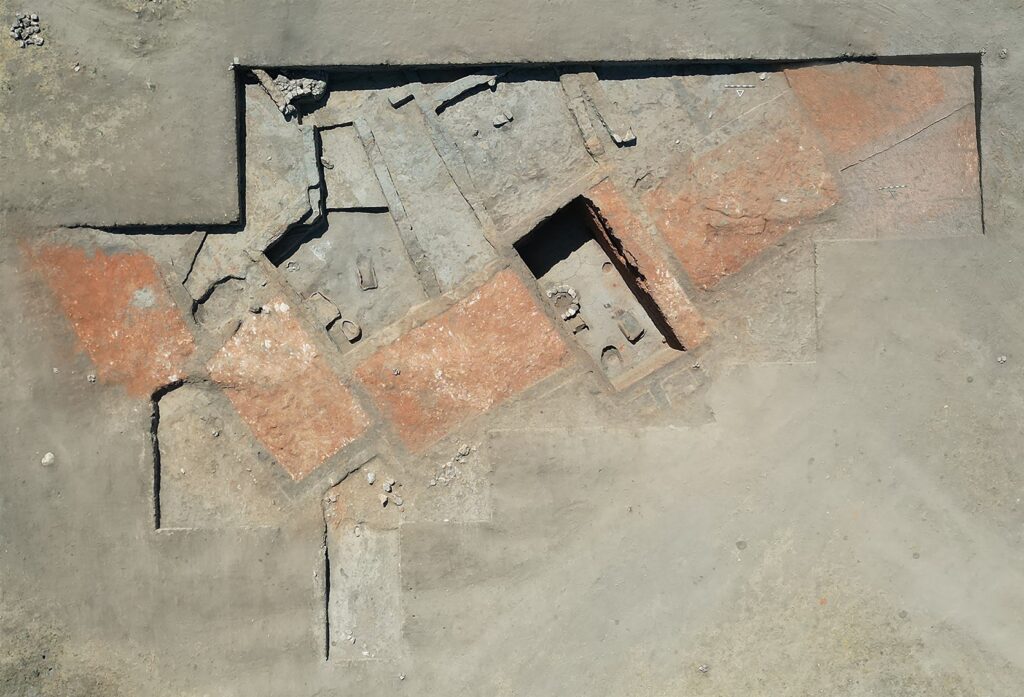
The site is known for its well-planned layout and long-term occupation. Within the structure where the bread was found, archaeologists identified multiple ovens, indicating that food production was not random but spatially organized.
Archaeobotanical evidence further confirms a diverse and sustained agricultural system, suggesting that the community maintained a structured approach to both cultivation and food preparation.
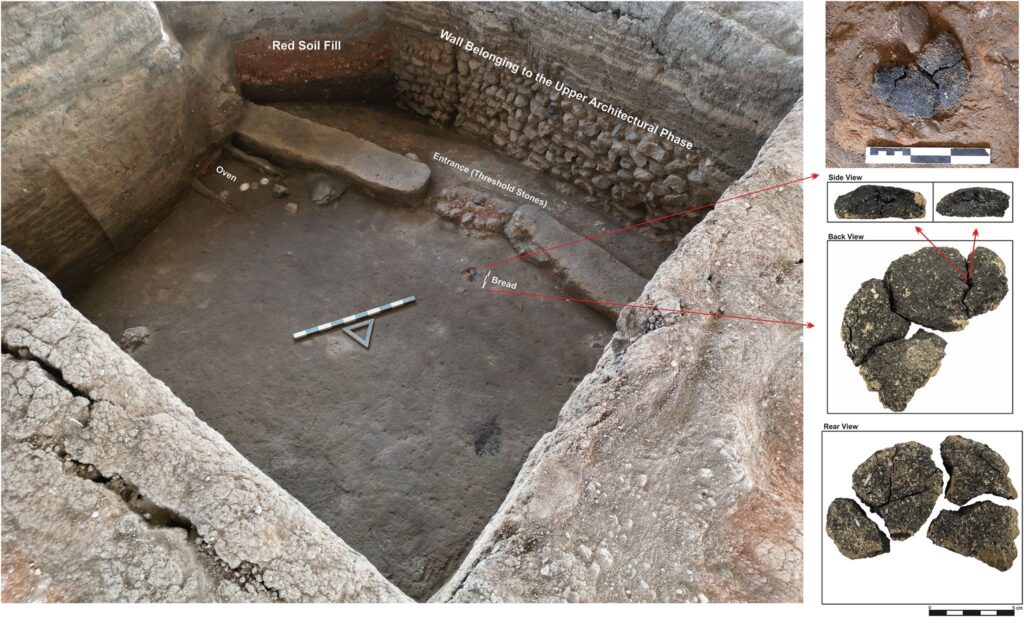
Photo: Küllüoba excavation team
Why This Discovery Matters
The Küllüoba bread stands out as a rare convergence of everyday life and symbolic behavior.
It demonstrates that Early Bronze Age communities in Anatolia possessed not only practical knowledge of food production, but also a nuanced understanding of how food could function within social and ritual contexts.
In a single fragment, it captures three key dimensions of ancient life:
advanced culinary practices, conscious nutritional choices, and the integration of ritual into daily existence.
Kavak S, Tuna Y, Eker YR, Akyol Ş, Özcan AC, Türkteki M. (2026). Archaeometric analysis of Early Bronze Age bread from Küllüoba Höyük. PLOS ONE, 21(3): e0344705.
https://doi.org/10.1371/journal.pone.0344705
- A 1700-year-old statue of Pan unearthed during the excavations at Polyeuktos in İstanbul
- The granary was found in the ancient city of Sebaste, founded by the first Roman emperor Augustus
- Donalar Kale Kapı Rock Tomb or Donalar Rock Tomb
- Theater emerges as works continue in ancient city of Perinthos
- Urartian King Argishti’s bronze shield revealed the name of an unknown country
- The religious center of Lycia, the ancient city of Letoon
- Who were the Luwians?
- A new study brings a fresh perspective on the Anatolian origin of the Indo-European languages

- Perhaps the oldest thermal treatment center in the world, which has been in continuous use for 2000 years -Basilica Therma Roman Bath or King’s Daughter-
- The largest synagogue of the ancient world, located in the ancient city of Sardis, is being restored
Leave a Reply