7,500-Year-Old Stone Seal Unearthed at Tadım Höyük in Eastern Anatolia
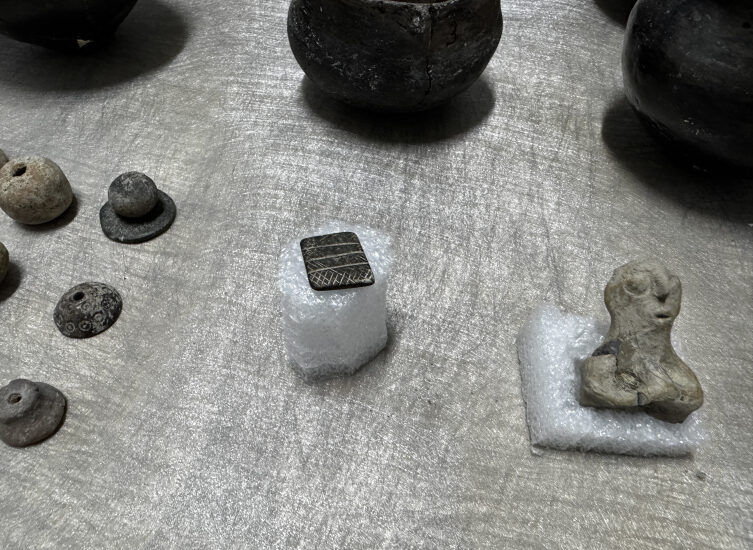
Archaeologists excavating Tadım Höyük, a multi-layered settlement mound in eastern Anatolia, have uncovered a rare stone seal dating back approximately 7,500 years, offering new insight into early social organization along the Upper Euphrates Basin. The discovery reinforces the region’s role as one of Anatolia’s earliest and most enduring centers of human settlement.
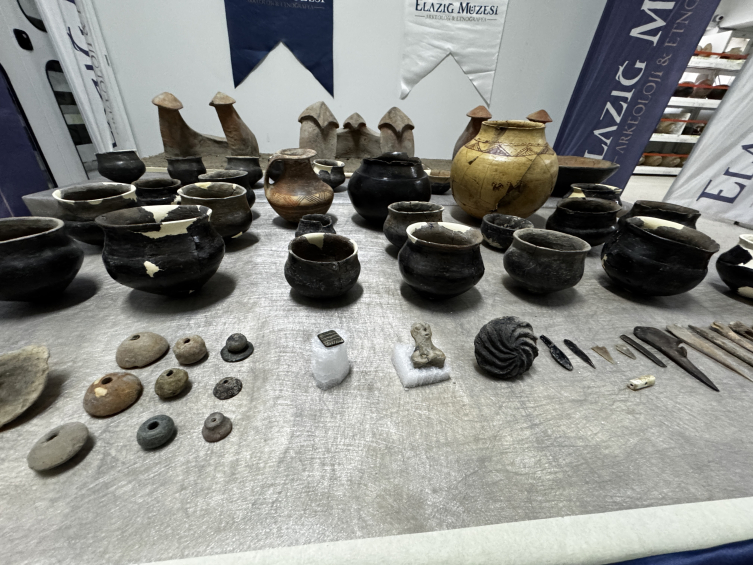
The excavations are being carried out near the modern city of Elazığ, under the coordination of the Elazığ Museum Directorate, with the support of the Ministry of Culture and Tourism of Türkiye as part of the national Heritage for the Future Project. Archaeological layers at Tadım Höyük span from the Ottoman and Seljuk periods back to the Neolithic era, reflecting uninterrupted occupation over millennia.

A Seal Linked to Ownership, Identity, and Early Administration
The newly discovered stone seal stands out as one of the most significant artifacts recovered at the site to date. According to local authorities, the object may have played a role in marking ownership, identifying households, or regulating early economic practices within prehistoric communities.
Elazığ Governor Numan Hatipoğlu emphasized the importance of the find:
📣 Our WhatsApp channel is now LIVE! Stay up-to-date with the latest news and updates, just click here to follow us on WhatsApp and never miss a thing!!
“Among the artifacts uncovered at Tadım Höyük, this stone seal is unlike anything previously documented in our region. It may have been used to indicate ownership or identity. Ongoing research suggests that settled life here dates back to around 7500 BCE, demonstrating that Elazığ has been a center of civilization since prehistoric times.”
The seal is currently preserved at the Elazığ Archaeology and Ethnography Museum, where specialists are conducting detailed studies to better understand its function, symbolism, and potential administrative role.
Evidence of Emerging Social Structure in Prehistoric Anatolia
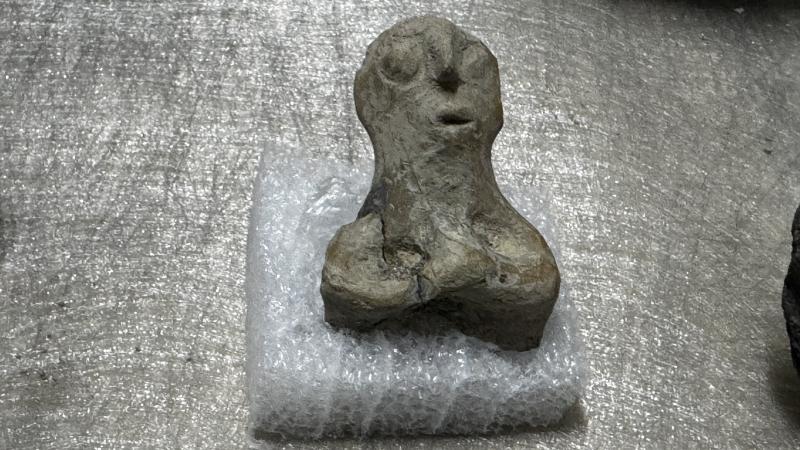
Stone seals from this early period are often interpreted as indicators of proto-bureaucratic behavior, associated with grain storage, exchange systems, or household management. Their appearance marks a crucial transition from loosely organized communities to societies developing structured economic and social systems.
Within this context, the Tadım Höyük seal provides rare material evidence that communities in the Upper Euphrates Basin were already experimenting with resource control, identity expression, and communal regulation long before the emergence of writing.
Ritual Life Beyond Domestic Settlement
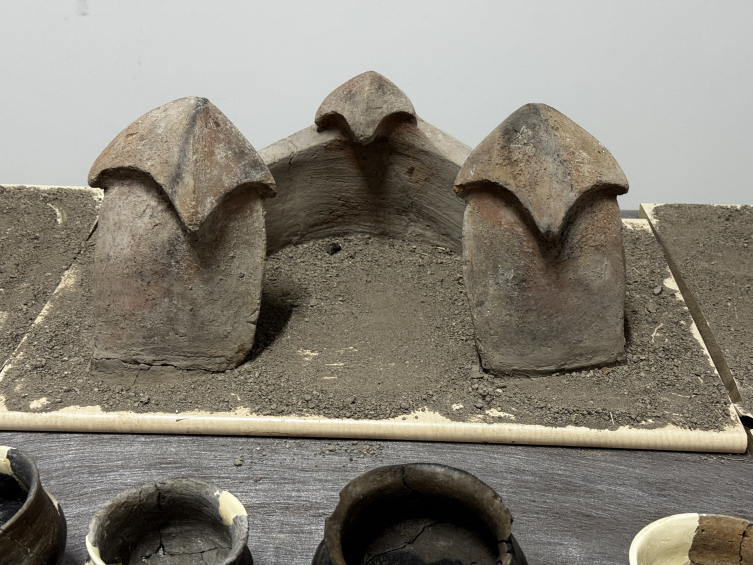
Excavations at Tadım Höyük have also revealed that the site was not solely residential. Among the most striking discoveries is a bull-headed stone altar measuring 160 by 130 centimeters, dated to the Late Chalcolithic and Early Bronze Age.
Bull imagery in the ancient Near East is widely associated with power, fertility, and communal ritual, suggesting that Tadım Höyük functioned as a ceremonial center as well as a settlement. Ritual hearths and stylized figurines found nearby further support interpretations that daily life and spiritual practice were deeply intertwined at the site.
A Strategic Hub in the Upper Euphrates Basin
Located along ancient routes connecting Mesopotamia, the Caucasus, and Central Anatolia, Tadım Höyük occupies a strategic position within long-distance networks of movement and exchange. Earlier excavation seasons have produced Karaz-type ceramics, geometric pottery, stone tools, arrowheads, and stamp seals, indicating cross-regional cultural interaction with areas such as Erzurum and Nakhchivan.
Archaeologists believe the settlement may have played a role in early agricultural organization and regional trade, a hypothesis now strengthened by the discovery of the stone seal.
Strengthening Anatolia’s Archaeological Landscape
Excavation and conservation work at Tadım Höyük continues year-round, while parallel projects across Elazığ — including investigations at Harput Castle and Palu Castle — have revealed Roman-period baths and animal-figure mosaics. These discoveries collectively underline Elazığ’s growing importance within Anatolia’s archaeological landscape.
Governor Hatipoğlu highlighted the broader significance of the ongoing work:
“As we continue excavating layer by layer, we expect even more significant archaeological results for our province.”
A Key Reference Site for Early Anatolian Societies
With its deep stratigraphy and rare material culture, Tadım Höyük is increasingly recognized as a key reference site for understanding the origins of organized settlement in Anatolia. The 7,500-year-old stone seal marks a milestone in this research, illuminating how early communities managed resources, expressed identity, and laid the foundations of complex social life.
As excavations progress, Tadım Höyük is expected to continue reshaping our understanding of prehistoric Anatolia — firmly establishing the Upper Euphrates Basin as one of the cradles of early civilization.
- A 1700-year-old statue of Pan unearthed during the excavations at Polyeuktos in İstanbul
- The granary was found in the ancient city of Sebaste, founded by the first Roman emperor Augustus
- Donalar Kale Kapı Rock Tomb or Donalar Rock Tomb
- Theater emerges as works continue in ancient city of Perinthos
- Urartian King Argishti’s bronze shield revealed the name of an unknown country
- The religious center of Lycia, the ancient city of Letoon
- Who were the Luwians?
- A new study brings a fresh perspective on the Anatolian origin of the Indo-European languages

- Perhaps the oldest thermal treatment center in the world, which has been in continuous use for 2000 years -Basilica Therma Roman Bath or King’s Daughter-
- The largest synagogue of the ancient world, located in the ancient city of Sardis, is being restored
Leave a Reply