
8,700 Early Turkish Akıncı Graves Unearthed at Gallipoli, Illuminating Europe’s 14th-Century Frontier
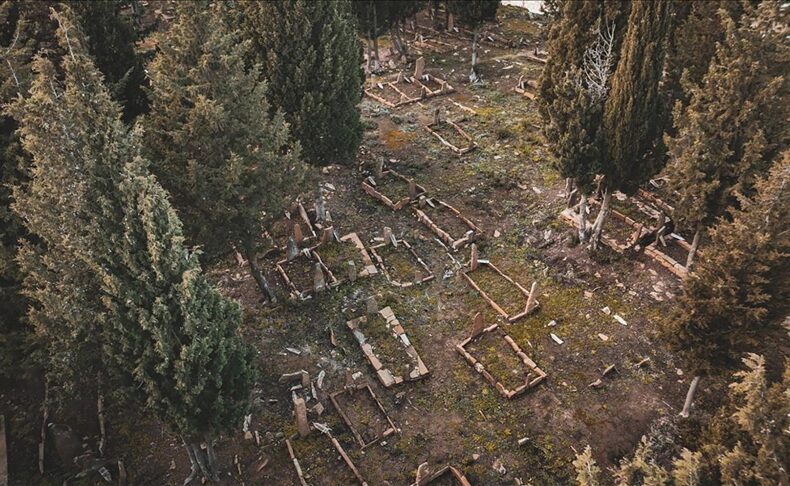
Archaeological research on the Gelibolu (Gallipoli) Peninsula has revealed a discovery of exceptional historical weight: a vast cemetery belonging to the first Turkish raiders who crossed from Anatolia into Rumelia during the early 14th century. Identified near Küçükanafarta village in the Eceabat district, the burial ground documents the earliest known physical footprint of Turks in southeastern Europe.
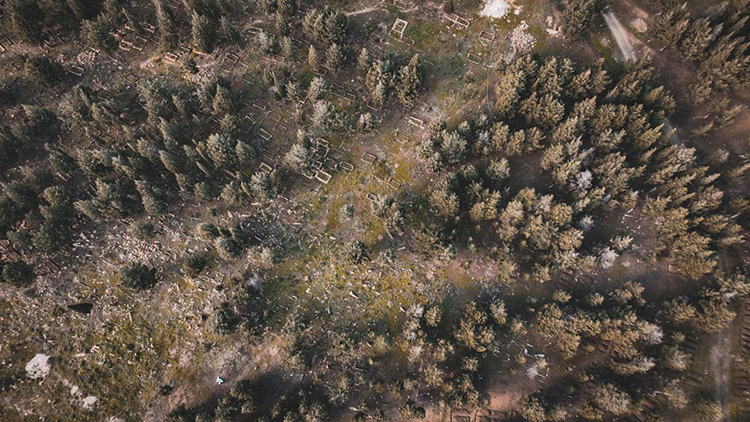
Covering an area of nearly 100 hectares, the Küçükanafarta Historic Turkish Cemetery contains 8,731 graves, making it one of the largest early Turkish burial landscapes ever identified west of Anatolia.
A new chapter in early Turkish and Balkan history
The site was documented under the coordination of the Gallipoli Historical Site Directorate, following years of systematic survey and scientific assessment. The cemetery is attributed to akıncı groups—frontier warriors and settlers—who entered Thrace at a time when Ottoman authority in the Balkans was still in its formative phase.
Speaking on the significance of the discovery, Gallipoli Historical Site President İsmail Kaşdemir underscored its historical implications:
📣 Our WhatsApp channel is now LIVE! Stay up-to-date with the latest news and updates, just click here to follow us on WhatsApp and never miss a thing!!
“With the identification of this cemetery, we are opening an entirely new chapter in Turkish history. These graves belong to the first Turks who crossed into Rumelia, and they constitute a permanent historical record of that presence.”
The graves are dated to the 1300s, predating the institutional consolidation of Ottoman rule in the region and offering rare material evidence for early Turkish settlement beyond Anatolia.
Burial traditions rooted in Central Asian heritage
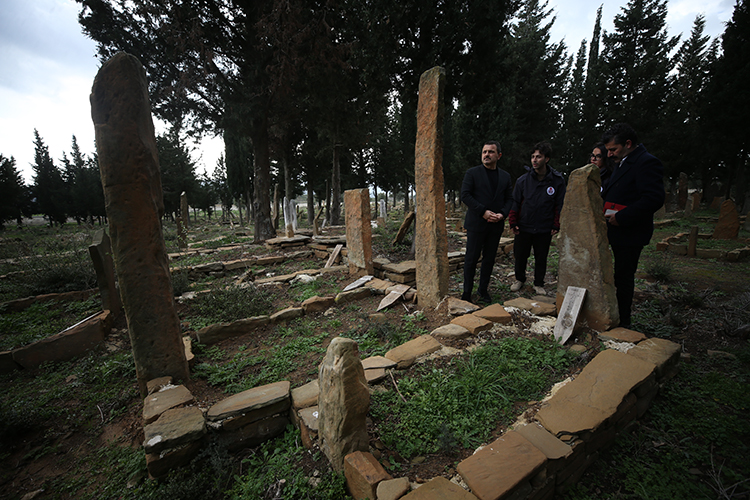
What distinguishes Küçükanafarta from later Ottoman-era cemeteries is the form and symbolism of its graves. Many tomb markers rise prominently above ground, echoing funerary traditions associated with Central Asian Turkic cultures, where vertical stone markers carried both memorial and territorial meaning.
Art historians examining the site have noted strong typological parallels with early Turkic-Islamic burial practices across Anatolia and Central Asia, reinforcing the interpretation that these graves reflect a transitional frontier society rather than a fully established imperial system.
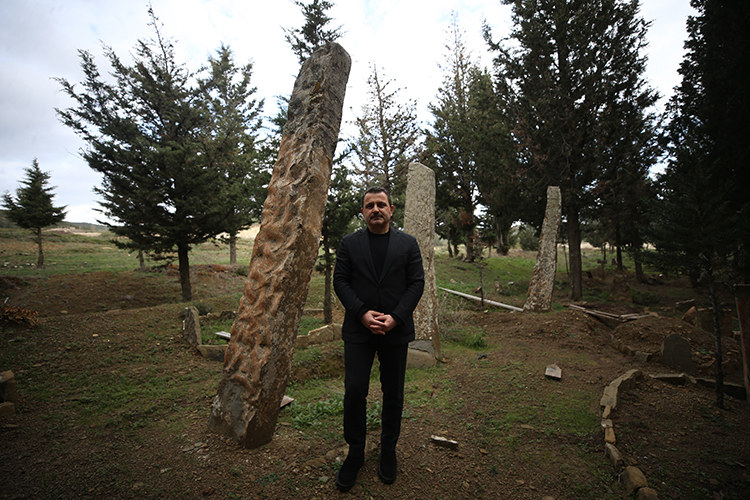
Photo: Çiğdem Münibe Alyanak / Anadolu Agency (AA)
“Ahlat of Rumelia”: a defining comparison
Kaşdemir emphasized the broader symbolic role of the cemetery by comparing it to one of Anatolia’s most iconic Turkish burial landscapes:
“Just as the Ahlat cemetery represents the foundation of Turkish presence in Anatolia, Küçükanafarta carries the same meaning for Rumelia, the Balkans, and Europe.”
This comparison situates Küçükanafarta not merely as a regional archaeological site, but as a continental reference point—a marker of cultural expansion and long-term settlement that reshapes how the early phases of Turkish movement into Europe are understood.
Scientific verification and cautious interpretation
Before the discovery was announced publicly, the cemetery underwent extensive interdisciplinary evaluation. Carbon-14 dating, stratigraphic analysis, and comparative studies of burial forms were carried out in collaboration with historians, archaeologists, and art historians from multiple universities.
One of the most prominent graves examined rises between three and four meters above ground, with an additional depth of nearly two meters below the surface. Its scale and construction are consistent with early Turkic funerary traditions and played a key role in confirming the site’s chronology.
From archaeological site to historical landmark
Approximately three-quarters of the cemetery has now been documented and conserved. Once restoration and landscape rehabilitation are completed, Küçükanafarta is expected to become a major historical destination within the Gallipoli Historical Area—alongside the peninsula’s well-known modern war memorials.
Unlike later martyrdom sites, this cemetery tells a deeper story of migration, settlement, and cultural imprint, capturing the moment when Turkish communities first established a lasting presence on European soil.
A landscape that rewrites early frontier history
With thousands of graves silently marking the transition from Anatolia to Rumelia, Küçükanafarta stands as more than an archaeological discovery. It functions as a historical document embedded in the landscape, offering new insight into frontier societies, early Ottoman history, and the cultural geography of the Balkans.
As research continues, the site is set to become a cornerstone for future studies on early Turkish expansion into Europe.
- A 1700-year-old statue of Pan unearthed during the excavations at Polyeuktos in İstanbul
- The granary was found in the ancient city of Sebaste, founded by the first Roman emperor Augustus
- Donalar Kale Kapı Rock Tomb or Donalar Rock Tomb
- Theater emerges as works continue in ancient city of Perinthos
- Urartian King Argishti’s bronze shield revealed the name of an unknown country
- The religious center of Lycia, the ancient city of Letoon
- Who were the Luwians?

- A new study brings a fresh perspective on the Anatolian origin of the Indo-European languages

- Perhaps the oldest thermal treatment center in the world, which has been in continuous use for 2000 years -Basilica Therma Roman Bath or King’s Daughter-
- The largest synagogue of the ancient world, located in the ancient city of Sardis, is being restored
Leave a Reply