
A Newly Identified Boar Piglet Engraving Emerges from Sefertepe’s 2025 Excavations
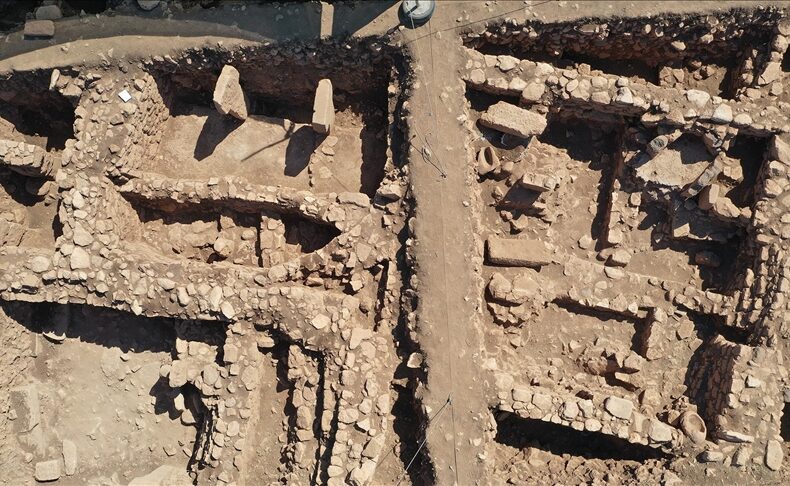
The 2025 excavation season at Sefertepe, a rapidly emerging Neolithic site within the broader Taş Tepeler landscape of southeastern Türkiye, has brought to light a striking example of early symbolic expression. During ongoing fieldwork directed by Assoc. Prof. Dr. Emre Güldoğan of Istanbul University’s Department of Prehistoric Archaeology, researchers identified a finely incised depiction of a wild boar piglet engraved onto the reverse side of a heavily used lower grinding stone.
Early Neolithic Context of the Sefertepe Settlement
Situated in the Viranşehir district of Şanlıurfa, Sefertepe occupies a key position within the constellation of early communal sites that includes Karahantepe, Sayburç, Çakmaktepe, Harbetsuvan Tepesi and Göbeklitepe. Although still in a relatively early phase of excavation compared to its regionally famous neighbors, Sefertepe has already produced architectural signatures characteristic of Taş Tepeler: limestone-built circular structures, terrazzo-like floors, stone-crafted activity areas, and evidence for specialized tasks such as lithic production. These findings increasingly suggest that the settlement hosted a mix of domestic, ritual, and artisanal activities during the early 10th millennium BCE.
The Discovery of the Boar Piglet Engraving
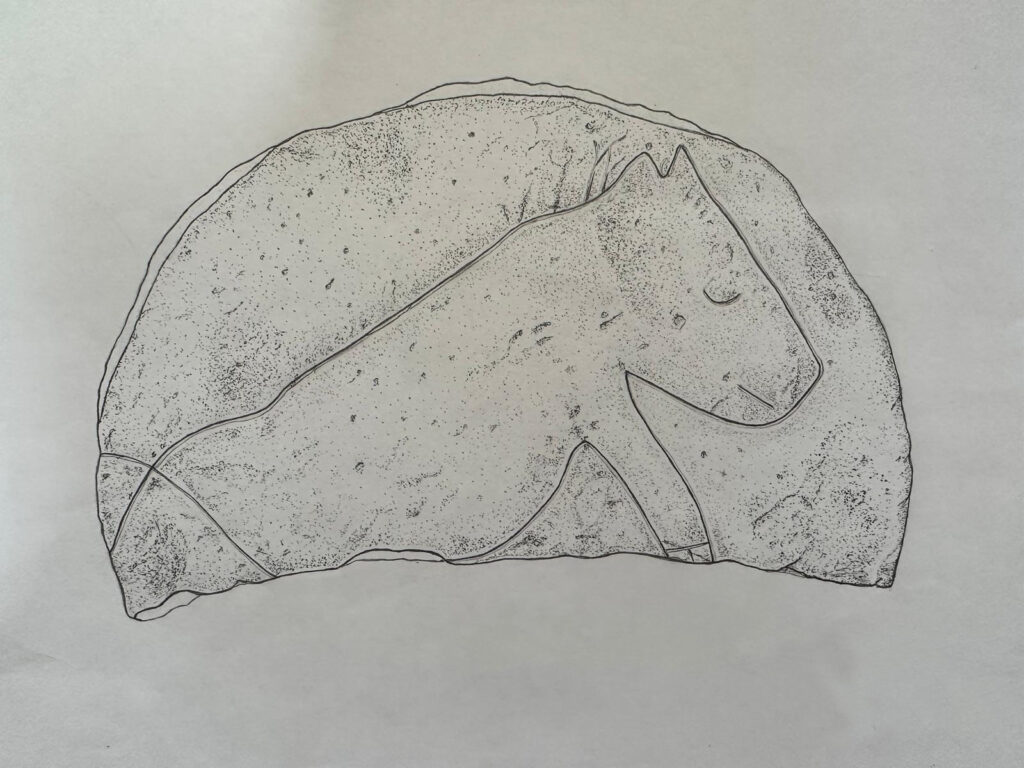
It was within this archaeological context that the engraved grinding stone emerged. According to excavation director Emre Güldoğan, the team encountered the artwork unexpectedly while studying the worn surface of a groundstone tool. “On the back of a lower grinding stone, which shows extensive signs of use, we identified a finely incised representation of a boar piglet,” he explained. “The rear face appears to have been intentionally treated as a miniature canvas. The head is rendered with remarkable detail; the front legs and cloven hoofs are clearly distinguishable, and we can observe the animal’s eyes, mouth, ears and mane with notable precision.”
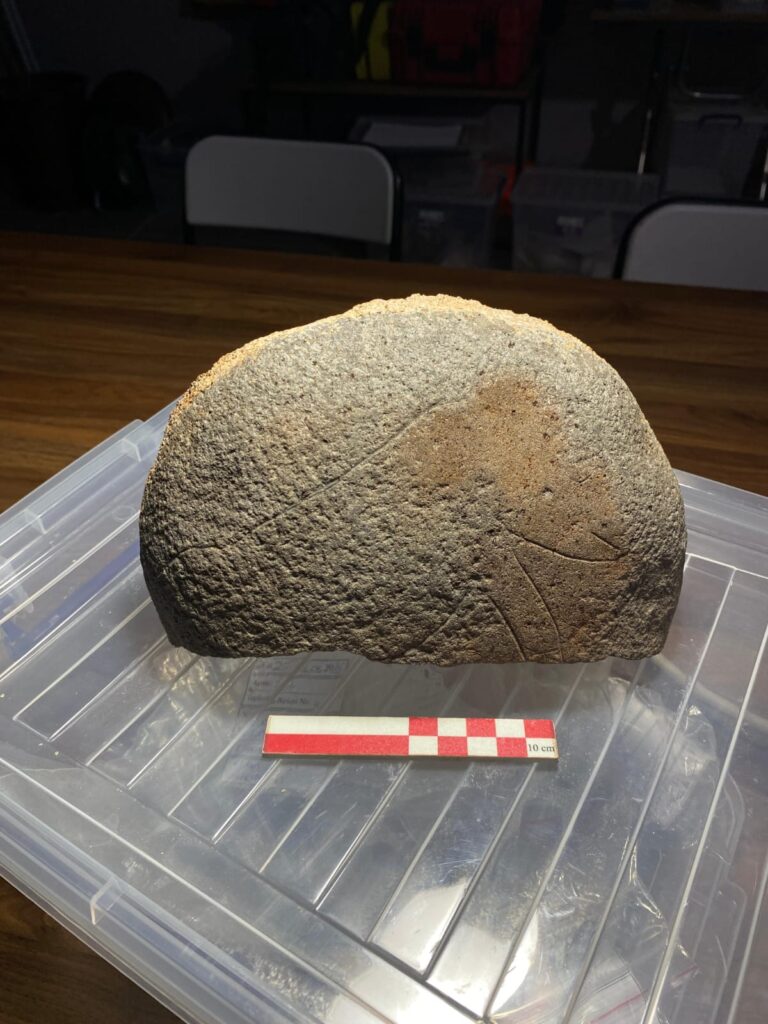
The boar’s torso occupies almost the entire surface of the stone’s reverse, while the hindquarters—including the tail—were engraved in a more stylized manner. The choice to embellish a utilitarian tool rather than an architectural block or ritual object adds to the significance of the find. It suggests that the boundaries between symbolic communication and daily work were fluid in Sefertepe’s early Neolithic community.
📣 Our WhatsApp channel is now LIVE! Stay up-to-date with the latest news and updates, just click here to follow us on WhatsApp and never miss a thing!!
A Shared Symbolic Tradition Across the Taş Tepeler Sites
Comparative stylistic analysis conducted by the team indicates that the engraving technique closely resembles that of the wild ass depiction discovered at Karahantepe in recent seasons. Both artworks employ similarly shallow, deliberate linear incisions, hinting at a shared engraving tradition or artisan network operating across neighboring Taş Tepeler settlements. Such parallels reinforce the broader hypothesis that symbolic motifs circulated widely among early communities of the Şanlıurfa Plateau.
At this stage of research, ArkeolojiHaber’s exclusive reporting confirms that Sefertepe has, over the past two years, yielded additional evidence for structured economic activity: stone-working zones, obsidian microlith workshops, and storage-like units indicating organized daily routines. Faunal studies conducted on-site reveal a high concentration of wild boar, gazelle, and raptor remains—species that frequently appear in the symbolic repertoire of Taş Tepeler. The newly discovered piglet engraving therefore aligns with a wider visual tradition in which local fauna carried layered social or cosmological significance.
Interpreting Symbolism in Everyday Tools
Grinding stones, typically used for plant processing and other subsistence tasks, rarely bear detailed iconography. The decision to engrave an animal on such an object may indicate a personal, ritual, or mnemonic function now lost to time. Alternatively, it may reflect an intentional blending of symbolic meaning with practical tools, a phenomenon increasingly recognized across early Neolithic sites of Upper Mesopotamia.
What the 2025 Season Means for Sefertepe’s Future Research
As the 2025 field season progresses, researchers expect further discoveries that will clarify Sefertepe’s role within the early monumental landscape of southeastern Türkiye. Each new find contributes to a more nuanced understanding of how the region’s earliest settled communities navigated work, symbolism, memory, and identity at the dawn of the Holocene.
- A 1700-year-old statue of Pan unearthed during the excavations at Polyeuktos in İstanbul
- The granary was found in the ancient city of Sebaste, founded by the first Roman emperor Augustus
- Donalar Kale Kapı Rock Tomb or Donalar Rock Tomb
- Theater emerges as works continue in ancient city of Perinthos
- Urartian King Argishti’s bronze shield revealed the name of an unknown country
- The religious center of Lycia, the ancient city of Letoon
- Who were the Luwians?
- A new study brings a fresh perspective on the Anatolian origin of the Indo-European languages

- Perhaps the oldest thermal treatment center in the world, which has been in continuous use for 2000 years -Basilica Therma Roman Bath or King’s Daughter-
- The largest synagogue of the ancient world, located in the ancient city of Sardis, is being restored
Leave a Reply