
A 2,000-Year-Old Incense Burner Depicting the Egyptian God Serapis Discovered in Ephesus
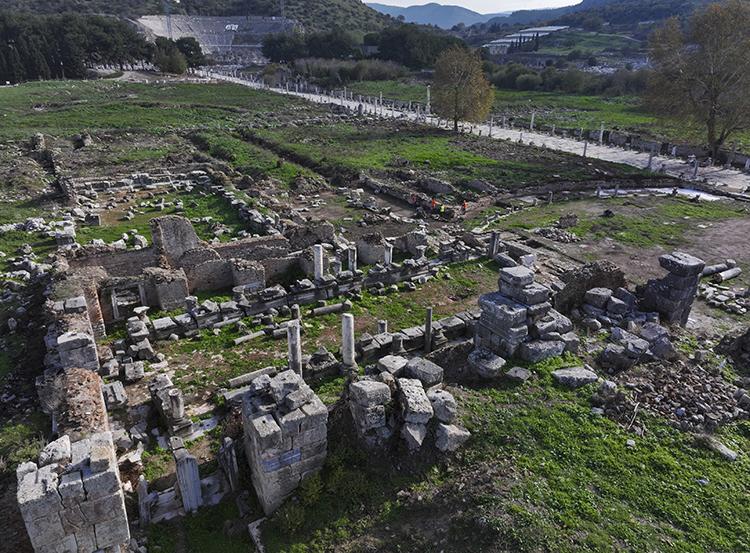
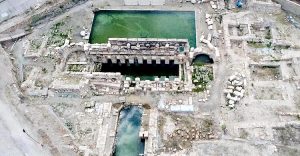
Archaeologists in the ancient city of Ephesus have uncovered a finely modeled terracotta incense burner carved with the likeness of the Egyptian god Serapis, adding a striking new piece to the puzzle of cultural exchange in Roman Anatolia. The artifact was unearthed during ongoing excavations at the monumental Harbor Bath complex on the city’s 570-meter-long Harbor Street, part of Türkiye’s year-round “Endless Ephesus” heritage program.
A Remarkable Find from the Harbor Bath Excavations
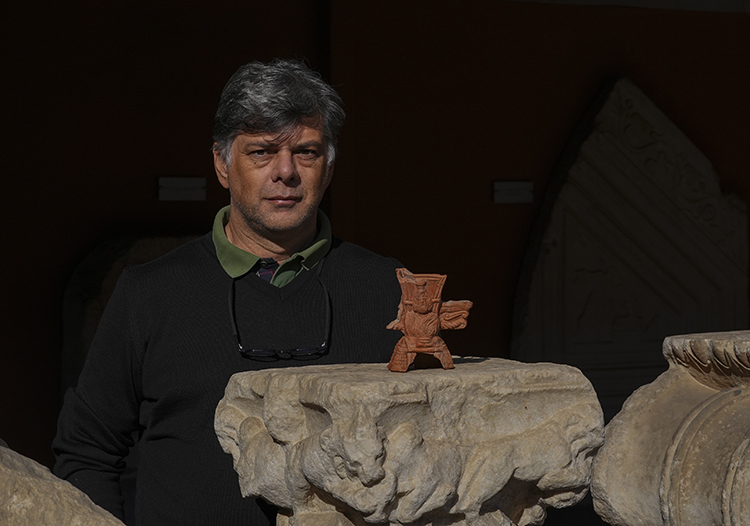
Work at the Harbor Bath currently focuses on the oval hall, courtyard, latrine spaces, and pool rooms—areas that once greeted visitors arriving from the city’s bustling port. Project coordinator Prof. Serdar Aybek explains that the team aims to fully expose the scale and architectural logic of this vast Roman complex, which covers roughly 70,000 square meters and has yielded a steady stream of marble ornamentation, bronze statues, and structural fragments.
Among these discoveries, the newly found incense burner stands out as one of the most telling objects of the season.
The Serapis Incense Burner: Echoes of an Iconic Egyptian Image
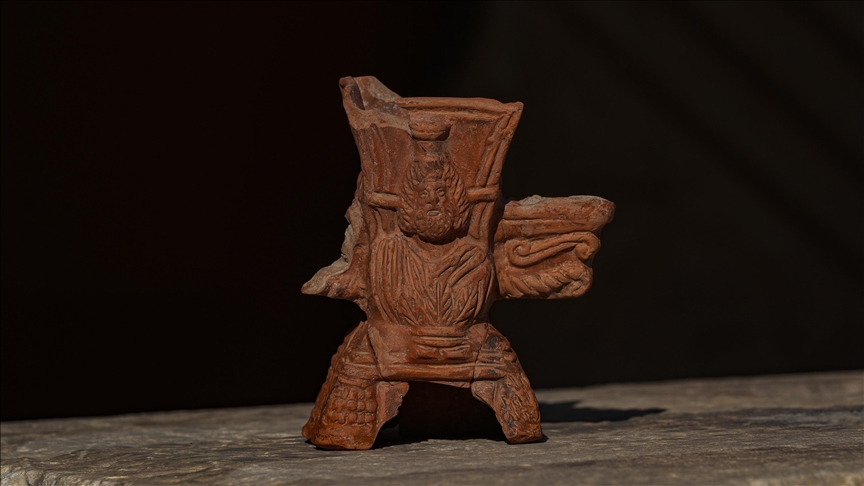
The burner’s front panel features a relief representation of Serapis modeled after the celebrated statue attributed to the Hellenistic sculptor Bryaxis. The deity appears as a heavily bearded figure with voluminous curls, crowned with his characteristic high modius, and placed upon a spool-shaped base. This instantly recognizable iconography circulated widely throughout the Roman world, marking Serapis as a key figure associated with Egyptian identity, long-distance trade, and blended religious traditions.
📣 Our WhatsApp channel is now LIVE! Stay up-to-date with the latest news and updates, just click here to follow us on WhatsApp and never miss a thing!!
A brief inscription on the back of the vessel amplifies the artifact’s significance. This marking allowed archaeologists to directly connect the burner to a similar piece previously discovered in the Terrace Houses (Yamaç Evler), suggesting the presence of either a specialized local workshop or a networked trade system that regularly brought standardized ritual vessels into the city.
Serapis in Ephesus: A Mediterranean Cult Finds a Home
Although rooted in Ptolemaic Egypt, the cult of Serapis expanded across the Roman Empire, and Ephesus became one of its strongest Anatolian centers. The city was home to a monumental Serapis Temple built in the 2nd century CE—likely commissioned by Egyptian merchants active in maritime exchange.
Inscriptions, graffiti, and small votive objects bearing his image appear frequently throughout the archaeological record of Ephesus. The newly discovered incense burner adds a more intimate dimension to this evidence, revealing how Egyptian religious practices operated not only at the level of major temples but also within the everyday rituals of the city’s inhabitants.
A New Addition to the Ephesus Museum
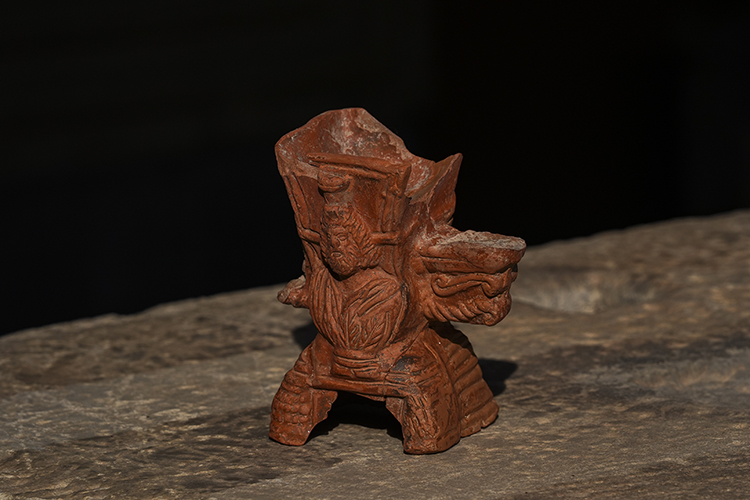
According to Prof. Aybek, the reappearance of similar artifacts across multiple excavation seasons underscores the city’s highly organized craft production and vibrant commercial landscape. Each new find helps refine the broader understanding of Ephesus as a major node of religious pluralism and Mediterranean exchange.
Following conservation, the Serapis incense burner will join the Ephesus Museum collection, enriching public interpretation of ritual life in the Roman East.
- A 1700-year-old statue of Pan unearthed during the excavations at Polyeuktos in İstanbul
- The granary was found in the ancient city of Sebaste, founded by the first Roman emperor Augustus
- Donalar Kale Kapı Rock Tomb or Donalar Rock Tomb
- Theater emerges as works continue in ancient city of Perinthos
- Urartian King Argishti’s bronze shield revealed the name of an unknown country
- The religious center of Lycia, the ancient city of Letoon
- Who were the Luwians?
- A new study brings a fresh perspective on the Anatolian origin of the Indo-European languages

- Perhaps the oldest thermal treatment center in the world, which has been in continuous use for 2000 years -Basilica Therma Roman Bath or King’s Daughter-
- The largest synagogue of the ancient world, located in the ancient city of Sardis, is being restored
Leave a Reply