

Noted by an English Traveler in 1835, Burdur’s Serençay Canyon Preserves Late Roman Settlement
In the rugged interior of southwestern Anatolia, a narrow canyon carved by nature also carries the marks of human survival and belief. Serençay Canyon, located in Türkiye’s Burdur province, was already attracting attention in the early 19th century, when an English traveler recorded its rock-cut landscape in 1835. Nearly two centuries later, the same canyon continues to offer valuable insights into Late Roman and Early Christian settlement patterns in inland Anatolia.
A Canyon Between Villages and Centuries
Serençay Canyon lies between the modern villages of Günalan and Askeriye, cutting a long corridor through the limestone terrain of Burdur. The name of the canyon is thought to derive from a local term meaning “long,” reflecting both its physical form and its extended presence in regional memory.
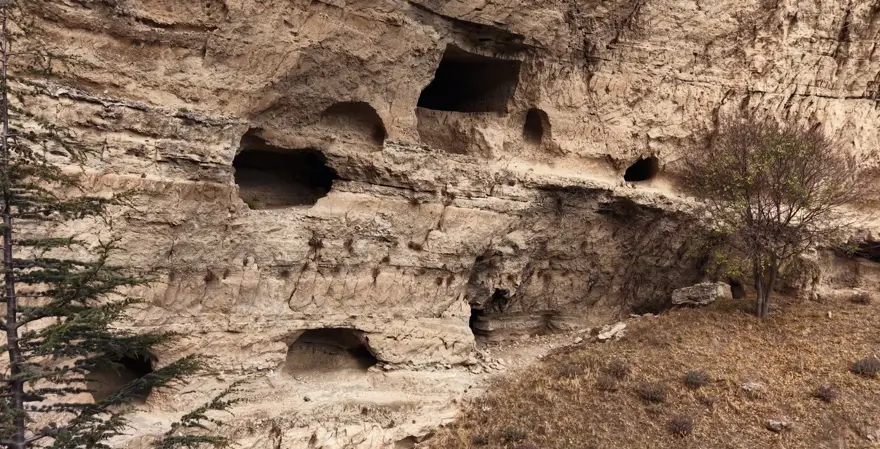
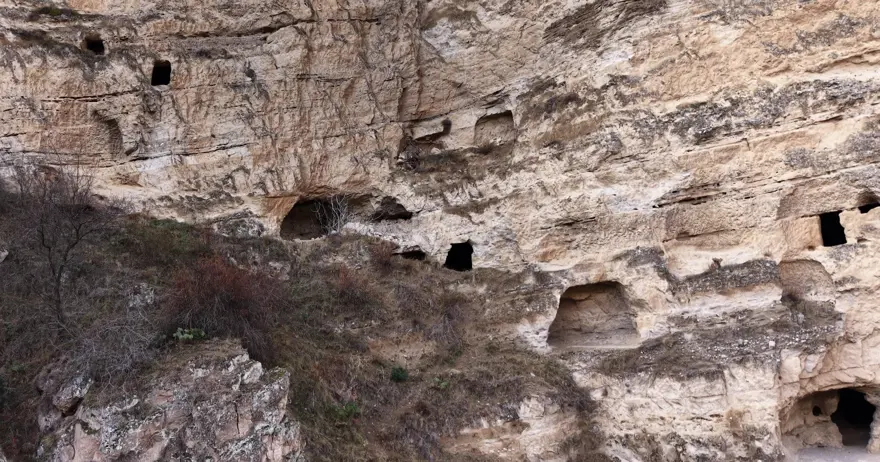
Along both sides of the canyon, clusters of rock-cut spaces are visible at varying heights. These carved chambers, arranged in groups rather than isolation, indicate sustained habitation rather than temporary use. Archaeological assessments associate the settlement with the Late Roman to Early Christian period, broadly dated between the 4th and 6th centuries CE.
Tekke Sarayı and the Logic of the Landscape
Adjacent to the canyon is a rock settlement locally known as Tekke Sarayı. According to oral tradition, shepherds once used these caves to shelter their goat herds during harsh weather. The term tekke, referring to the leading male goat, is believed to have gradually become attached to the site.
📣 Our WhatsApp channel is now LIVE! Stay up-to-date with the latest news and updates, just click here to follow us on WhatsApp and never miss a thing!!
The geology of the area played a decisive role in its use. The soft rock could be carved with relative ease, allowing the creation of rooms, corridors, and storage spaces. This characteristic later gave rise to another local name—“Kadife Kale,” or “Velvet Castle”—a reference not to military strength, but to the pliability of the stone itself.
Late Roman and Early Christian Use of the Caves
Research conducted in the area suggests that the rock-cut settlement belongs to the Late Roman or Early Christian architectural tradition. The internal organization of the caves points to domestic use, while certain sections are interpreted as burial areas.
Osman Koçibay, Deputy Director of Burdur’s Provincial Directorate of Culture and Tourism, notes that the site may be connected to the wider history of religious transformation in the Roman Empire. During periods when early Christian communities faced pressure and persecution, remote landscapes such as Serençay Canyon may have offered refuge. Local accounts maintain that some of the caves were used both for habitation and burial during this transitional era.
An English Traveler’s Record from 1835
The historical visibility of Serençay Canyon extends beyond archaeology. In 1835, the English traveler William John Hamilton visited the region and documented the rock settlement known today as Kadife Kale. His writings represent one of the earliest known external descriptions of the site, recorded at a time when much of inland Anatolia remained poorly documented in European scholarship.
Hamilton’s observations later gained additional importance as academic interest in the region grew. By 1940, the area had already become the subject of a doctoral study, highlighting its archaeological and historical value well before systematic excavation campaigns were introduced.
A Preserved Landscape of Anatolian Continuity
Today, Serençay Canyon and Tekke Sarayı remain largely outside major tourist routes, preserving a landscape where natural formation and human adaptation remain closely intertwined. The site reflects a long continuum—from Late Roman domestic life and early Christian refuge practices to 19th-century travel literature and modern archaeological interest.
For Anatolian archaeology, Serençay Canyon stands as a reminder that significant historical landscapes are not always monumental or urban. Sometimes, they are carved quietly into cliffs, waiting centuries to be read again—first by an English traveler, and now by archaeology.
- A 1700-year-old statue of Pan unearthed during the excavations at Polyeuktos in İstanbul
- The granary was found in the ancient city of Sebaste, founded by the first Roman emperor Augustus
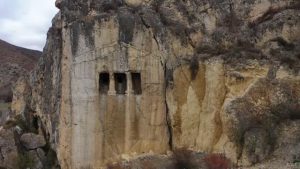
- Donalar Kale Kapı Rock Tomb or Donalar Rock Tomb
- Theater emerges as works continue in ancient city of Perinthos
- Urartian King Argishti’s bronze shield revealed the name of an unknown country
- The religious center of Lycia, the ancient city of Letoon
- Who were the Luwians?
- A new study brings a fresh perspective on the Anatolian origin of the Indo-European languages
- Perhaps the oldest thermal treatment center in the world, which has been in continuous use for 2000 years -Basilica Therma Roman Bath or King’s Daughter-
- The largest synagogue of the ancient world, located in the ancient city of Sardis, is being restored
Leave a Reply