Myra’s Monumental Roman Theatre Set for Restoration as Archaeologists Call the City “Anatolia’s Pompeii”
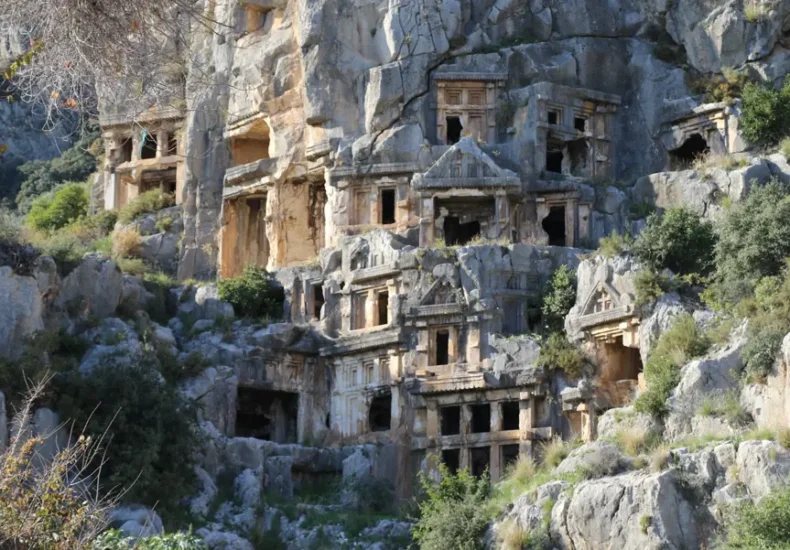
Archaeological excavations and conservation projects at Myra Ancient City and its ancient harbor, Andriake, on Türkiye’s Mediterranean coast have entered a decisive new phase. Officials have confirmed that restoration of Myra’s monumental Roman theatre is scheduled to begin in 2026, while a selection of exceptionally rare artifacts uncovered during recent excavations is now being displayed at the Turkish Presidency.
Located near the modern town of Demre, Myra was one of the principal cities of ancient Lycia and later flourished under Roman rule. According to excavation director Nevzat Çevik, the site’s extraordinary state of preservation places it among the most promising archaeological landscapes in the eastern Mediterranean.
A flagship project: restoring Myra’s Roman theatre
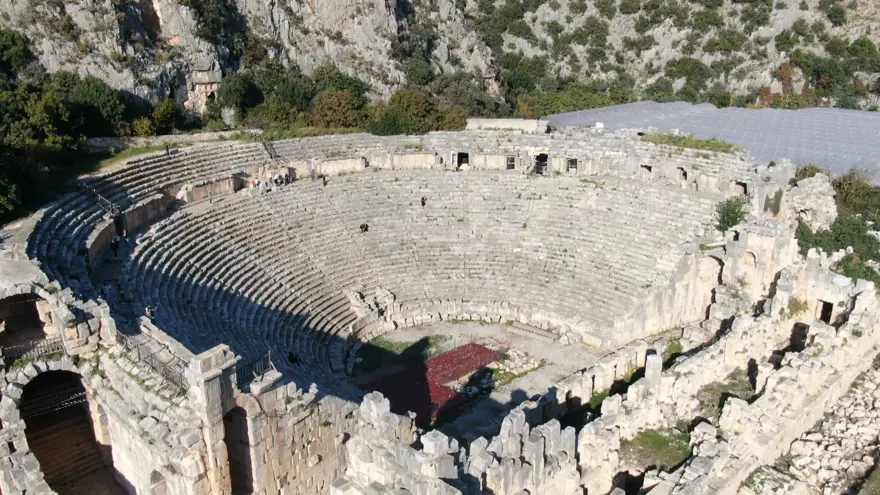
The focal point of current work is Myra’s vast Roman theatre, which dominates the urban core of the ancient city. Çevik confirmed that all architectural documentation — including survey, restitution, and restoration projects — has been completed and approved by regional conservation authorities. The Ministry of Culture and Tourism has now incorporated the project into its 2026 budget, clearing the way for on-site restoration to begin next year.
With a seating capacity of approximately 11,000 spectators, the theatre is the largest known example in the region and represents a “pure” Roman design rather than a modified Hellenistic structure. What makes it especially significant, Çevik explained, is the survival of an unusually large number of original architectural elements. Over sixteen years of excavation, teams have recovered architraves, lintels, door jambs, column capitals, and other components that once formed the theatre’s superstructure.
📣 Our WhatsApp channel is now LIVE! Stay up-to-date with the latest news and updates, just click here to follow us on WhatsApp and never miss a thing!!
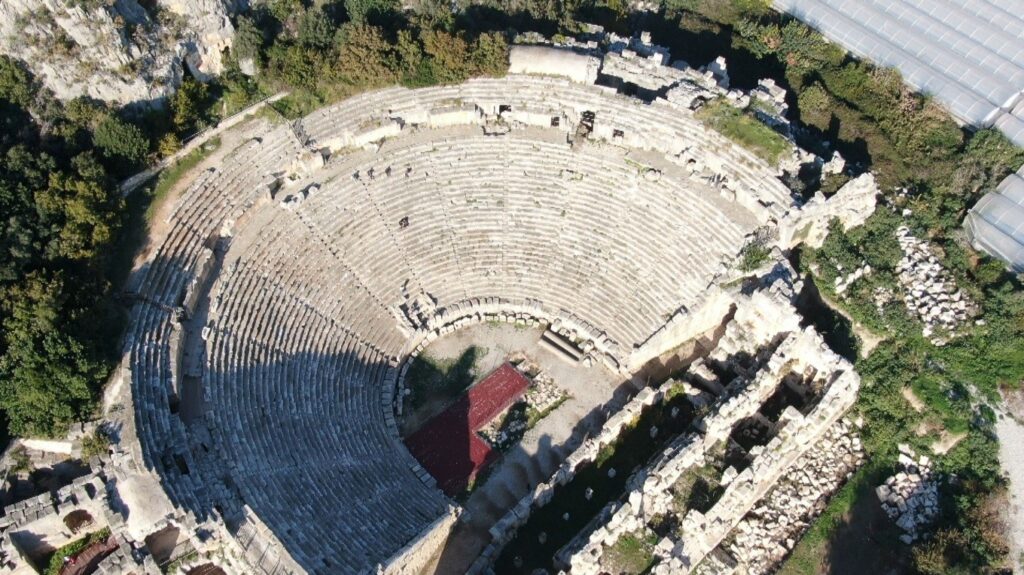
The goal of the restoration, he stressed, is not spectacle but preservation. The project is expected to take three to four years and will focus on stabilizing and reassembling original material wherever possible, ultimately returning much of the stage building to a standing, protected state.
“Anatolia’s Pompeii,” buried but intact
Describing Myra as “Anatolia’s Pompeii,” Çevik pointed to the unique geological conditions that have safeguarded the ancient city. Over centuries, thick layers of alluvial deposits gradually buried large parts of Myra, sealing them from later disturbance. In some areas, the vertical difference between today’s ground level and the deepest ancient strata reaches 9.5 meters.
Beneath modern Demre, he noted, lies a metropolis more than 1.5 kilometers in diameter. Extensive private ownership currently limits the scope of excavations, confining research to selected zones such as the theatre. Even so, Çevik believes that future generations — perhaps a century from now — may uncover a remarkably intact ancient city, preserved not by volcanic ash like Pompeii, but by river-borne sediments.
Andriake: a harbor city and museum reborn
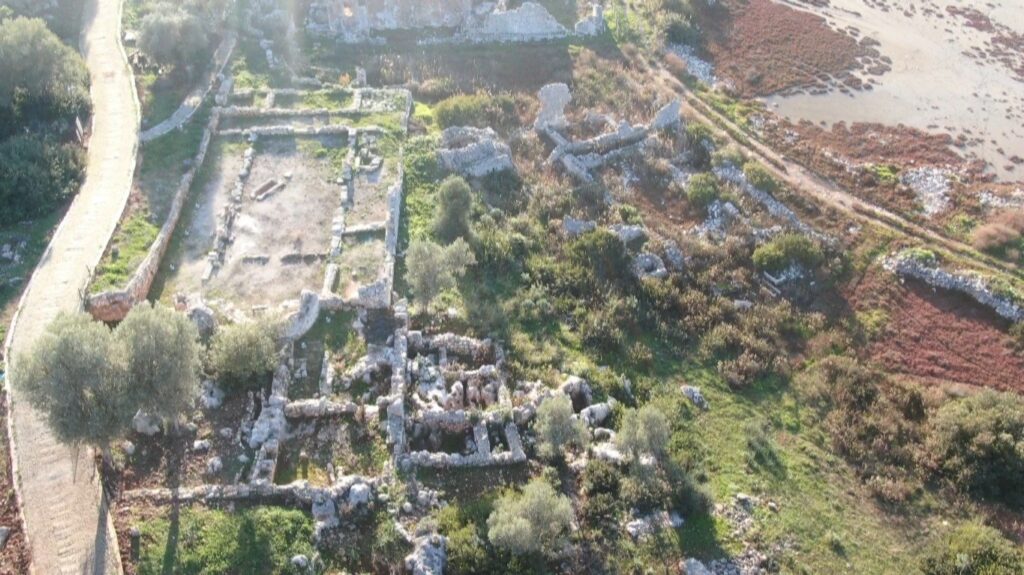
Parallel to the work at Myra, excavations at Andriake, the city’s ancient port, have continued uninterrupted for sixteen years. The most prominent structure at the site is a colossal Roman granary dating to the reign of Emperor Hadrian, one of the largest known examples in the Mediterranean world. Converted into the Museum of Lycian Civilizations, the building is itself a major archaeological monument.
The museum has been temporarily closed for nearly a year while its exhibition layout underwent comprehensive revision. According to Çevik, these works are now nearing completion, and the museum is expected to reopen within the next few months with a renewed display concept and newly added artifacts.
Small finds, large historical impact
Beyond monumental architecture, the excavations have yielded thousands of small finds that illuminate everyday life in ancient Myra. Ceramics, glass vessels, metal tools, domestic wares, and personal ornaments — particularly women’s jewelry — form a dense material record of daily activity across centuries.
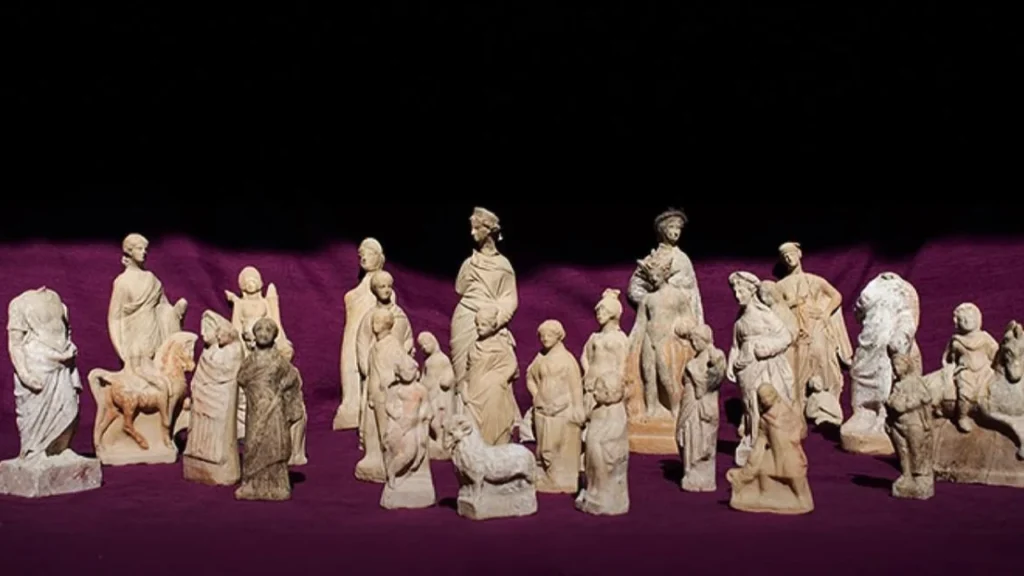
During the 2025 season alone, more than 170 museum-quality objects were formally accessioned, alongside thousands of study pieces. Among the most striking discoveries are millefiori glass fragments and detailed evidence of wall-decoration systems. Twenty especially rare artifacts from this group are currently on public display at the Turkish Presidency, underscoring Myra’s exceptional contribution to Anatolian archaeology.
As restoration plans move forward and museum doors prepare to reopen, Myra and Andriake are increasingly emerging not only as key sites of Lycian and Roman history, but as long-term reservoirs of archaeological knowledge — much of which, for now, still lies quietly preserved beneath the soil.
- A 1700-year-old statue of Pan unearthed during the excavations at Polyeuktos in İstanbul
- The granary was found in the ancient city of Sebaste, founded by the first Roman emperor Augustus
- Donalar Kale Kapı Rock Tomb or Donalar Rock Tomb
- Theater emerges as works continue in ancient city of Perinthos
- Urartian King Argishti’s bronze shield revealed the name of an unknown country
- The religious center of Lycia, the ancient city of Letoon
- Who were the Luwians?
- A new study brings a fresh perspective on the Anatolian origin of the Indo-European languages

- Perhaps the oldest thermal treatment center in the world, which has been in continuous use for 2000 years -Basilica Therma Roman Bath or King’s Daughter-
- The largest synagogue of the ancient world, located in the ancient city of Sardis, is being restored
Leave a Reply