
The Kilamuwa Stele from Zincirli Höyük Reveals How a Neo-Hittite King Wrote His Own Power into Stone
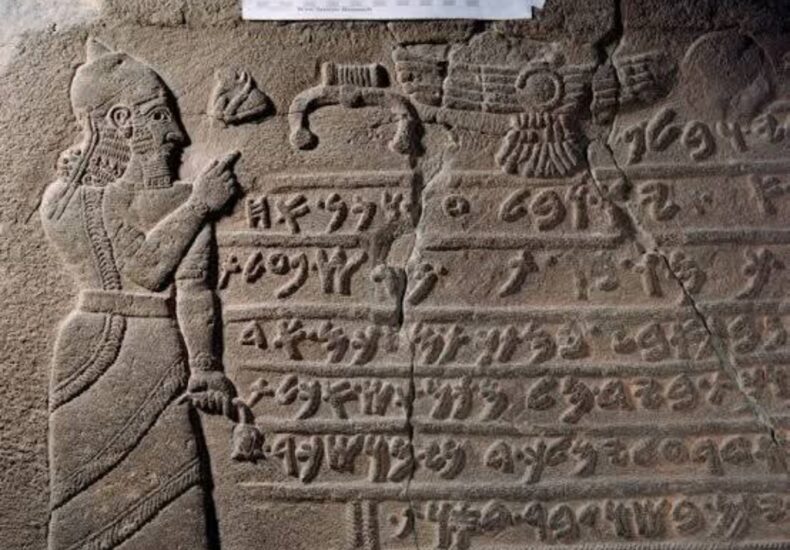
At Zincirli Höyük, located in today’s Gaziantep province in southern Türkiye, archaeologists uncovered one of the most explicit royal inscriptions of the Iron Age Near East. Known as the Kilamuwa Stele, this monument was erected in the 9th century BCE by King Kilamuwa, ruler of the Neo-Hittite kingdom of Bit-Gabbari.
More than a historical record, the stele is a carefully crafted political statement. In it, a king openly discredits his predecessors, celebrates his own achievements, and anchors his authority in divine approval.
Language, Script, and Political Identity
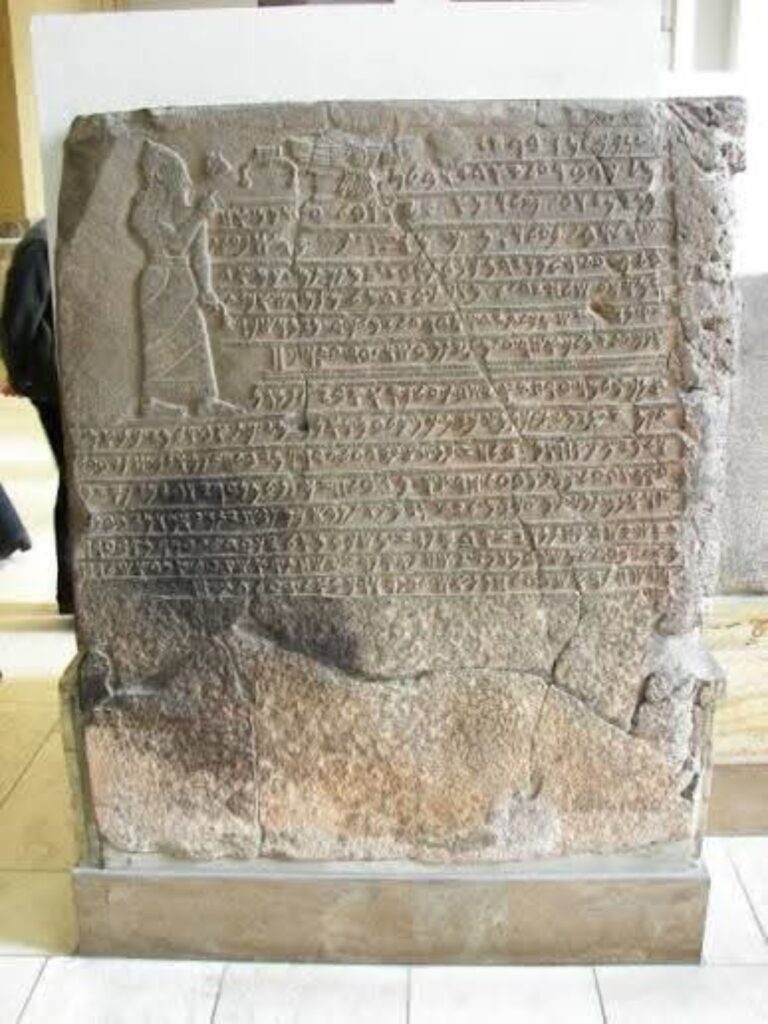
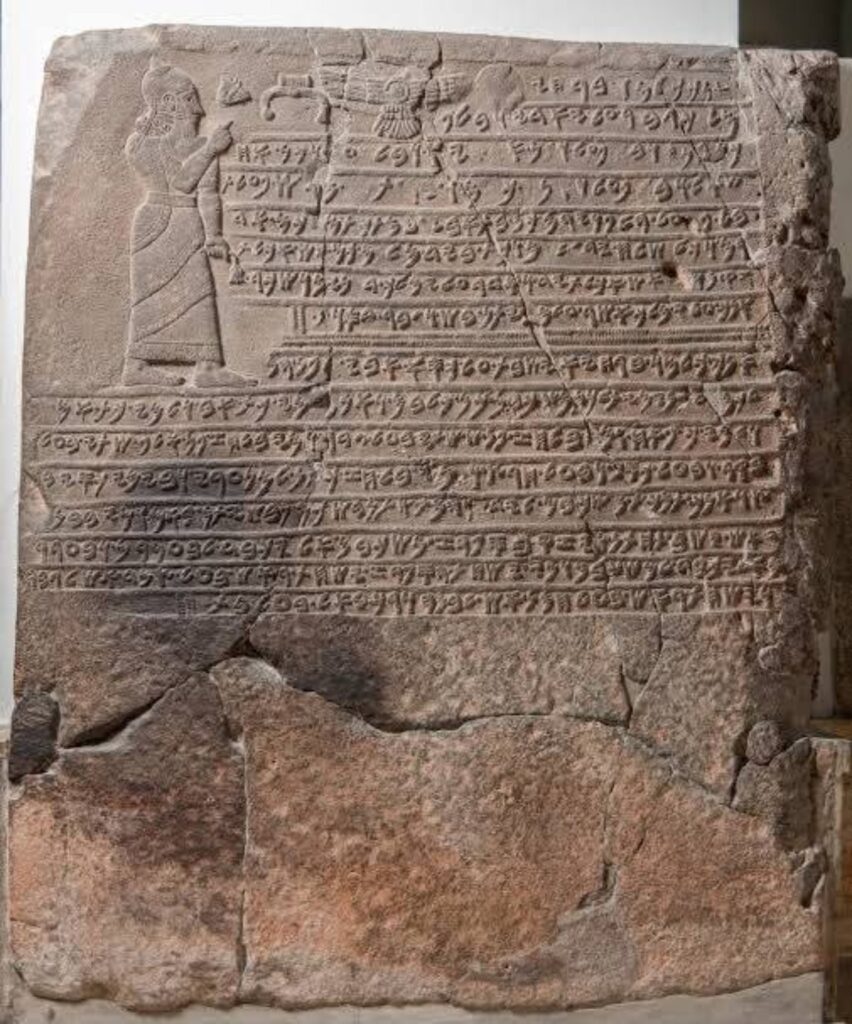
The inscription consists of sixteen lines written in Phoenician, but rendered in an Old Aramaic letter form. This hybrid script reflects Samal’s position at the cultural crossroads of Anatolia, northern Syria, and the Levant. When it was discovered, the Kilamuwa Stele was considered the only known Phoenician inscription from Samal and the northernmost example of Phoenician writing in the region.
One formula dominates the text: “bal paal”, meaning “he did nothing”. Repeated again and again, it is used to describe Kilamuwa’s predecessors, reducing earlier reigns to failure. The consistent use of the Phoenician letter bet in this phrase is not accidental. It signals a conscious preservation of Phoenician linguistic identity, even within an Aramaic-influenced environment.
📣 Our WhatsApp channel is now LIVE! Stay up-to-date with the latest news and updates, just click here to follow us on WhatsApp and never miss a thing!!
The Royal Image in Stone
In the relief, Kilamuwa is shown standing upright, dressed in royal garments and wearing a cap. His right arm is raised in a gesture known as ubanu tarrasu, meaning “you are my god”. This pose is borrowed from Mesopotamian royal iconography and directed toward a group of gods.
In his left hand, the king holds a withered lotus flower, widely interpreted as a symbol of death and mortality. Together, the imagery and the text present a ruler who claims divine favor while openly acknowledging the fragility of human life. This combination creates an unusually complex visual language for a Neo-Hittite monument.
Discovery and Current Location
The stele was uncovered during German excavations at Samal between 1888 and 1902, led by Felix von Luschan and Robert Koldewey on behalf of the German Oriental Society. Today, the monument is housed in the Vorderasiatisches Museum Berlin, where it remains one of the key inscriptions for understanding Iron Age kingship in Anatolia.
Comparison with the Mesha Stele
The influential American archaeologist William F. Albright famously compared the Kilamuwa Stele to the Mesha Stele, one of the most important inscriptions in biblical archaeology. According to Albright, both monuments are striking for their first-person royal voice, in which kings narrate their own achievements with direct and unapologetic clarity.
In both cases, political authority is legitimized through a close relationship with the divine. Military success, internal stability, and prosperity are presented not merely as human accomplishments but as outcomes enabled by divine support. The king appears as the chosen intermediary between gods and people, transforming the inscription into a declaration of sacred kingship.
This parallel reveals a shared ideological framework across Anatolia and the Levant in the first millennium BCE. Royal inscriptions of this period were not neutral records. They were instruments of power, carefully designed to fuse history, theology, and kingship into a single authoritative narrative.
The Text of the Kilamuwa Stele
“I am Kilamuwa, son of King Chaya.
Gabar ruled over Yadiya,
but he did nothing.
Then Bamah ruled,
and he did nothing.
Then my father Chaya ruled,
and he did nothing.
Then my brother Shail ruled,
and he did nothing.
But I, Kilamuwa,
achieved what my predecessors did not.
My father’s house stood among mighty kings;
each one stretched out his hand against it.
But I was like a consuming fire among kings.
The king of the Danunians defeated me,
but I set the king of Assyria against him.
They gave me a concubine for the price of a sheep,
and a man for the price of a garment.
I, Kilamuwa son of Chaya,
sat upon my father’s throne.
Formerly the MSKBM wailed like dogs;
but I became a father to some,
a mother to others,
and a brother to others.
Those who had never seen sheep
I made owners of flocks.
Those who had never seen cattle
I made owners of herds, silver, and gold.
Those who had never worn linen
I clothed in byssus in my days.
I took the MSKBM by the hand;
they clung to me like orphans to their mother.
Whoever of my sons sits in my place
and damages this inscription,
may he not honor the MSKBM.
And whoever destroys this inscription,
may Baal-Semed crush his head,
may Baal-Hammon crush his head,
and may Rakkabel, lord of the dynasty,
crush his head.”
- A 1700-year-old statue of Pan unearthed during the excavations at Polyeuktos in İstanbul
- The granary was found in the ancient city of Sebaste, founded by the first Roman emperor Augustus
- Donalar Kale Kapı Rock Tomb or Donalar Rock Tomb
- Theater emerges as works continue in ancient city of Perinthos
- Urartian King Argishti’s bronze shield revealed the name of an unknown country
- The religious center of Lycia, the ancient city of Letoon
- Who were the Luwians?
- A new study brings a fresh perspective on the Anatolian origin of the Indo-European languages
- Perhaps the oldest thermal treatment center in the world, which has been in continuous use for 2000 years -Basilica Therma Roman Bath or King’s Daughter-
- The largest synagogue of the ancient world, located in the ancient city of Sardis, is being restored
Leave a Reply