Over 100 Olive Oil Workshops Reveal Syedra’s Role as a Late Antique Production Hub
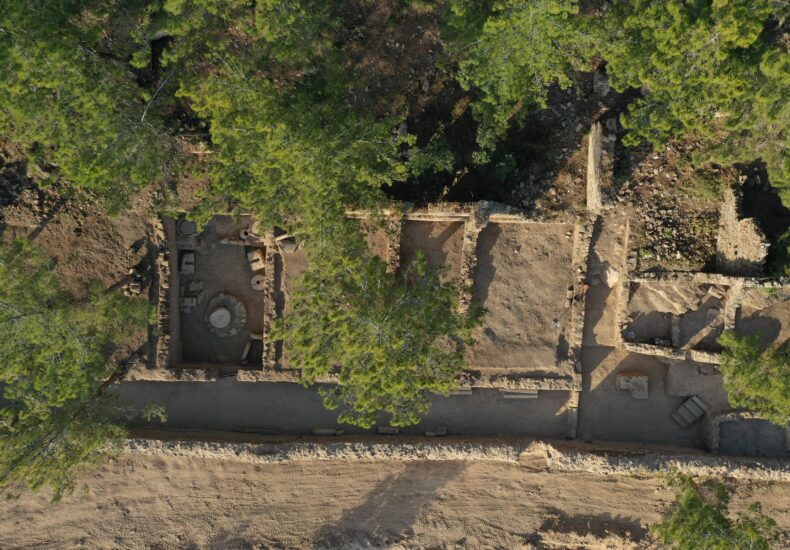
In the steep coastal hills of southern Türkiye, the ancient city of Syedra Ancient City is revealing a side of urban life rarely seen so clearly in Late Antiquity. Archaeological excavations have identified more than 100 olive oil workshops dating to the 5th–6th centuries AD, indicating that Syedra was not merely a residential settlement but a highly organized center of olive oil production.
The discoveries are reshaping how scholars understand the economic structure of the city during the Late Roman and Early Byzantine periods.
Olive Oil at the Heart of Urban Life
According to excavation director Assoc. Prof. Dr. Ertuğ Ergürer, olive oil workshops are among the most frequently encountered architectural elements across the city. Nearly twenty have been fully excavated so far, while surface surveys and architectural traces suggest that the total number exceeds one hundred.
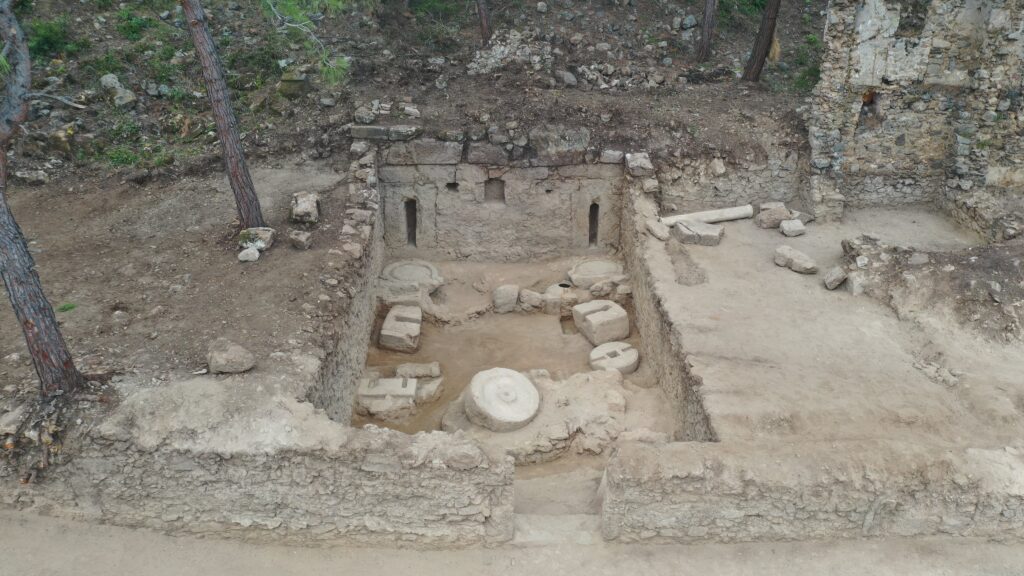
What makes Syedra exceptional is not only the scale of production but its location within the urban fabric. Unlike the common pattern in antiquity—where industrial activities were pushed beyond city walls—Syedra’s workshops were integrated directly beneath residential buildings.
📣 Our WhatsApp channel is now LIVE! Stay up-to-date with the latest news and updates, just click here to follow us on WhatsApp and never miss a thing!!
This arrangement suggests a dense, production-oriented city in which daily life and economic activity were tightly intertwined.
A Multi-Level City of Production and Residence
Excavations show that many buildings followed a consistent pattern: workshops and shops at street level, with two- or three-story residential units above. In effect, Syedra functioned as a vertically organized production city, where olive oil manufacturing took place literally under the homes of its inhabitants.
Such an urban layout points to olive oil not as a secondary commodity, but as a core economic driver. The density of installations implies production well beyond local household needs, likely intended for regional trade along the Mediterranean coast.
A Workshop Preserved in Place
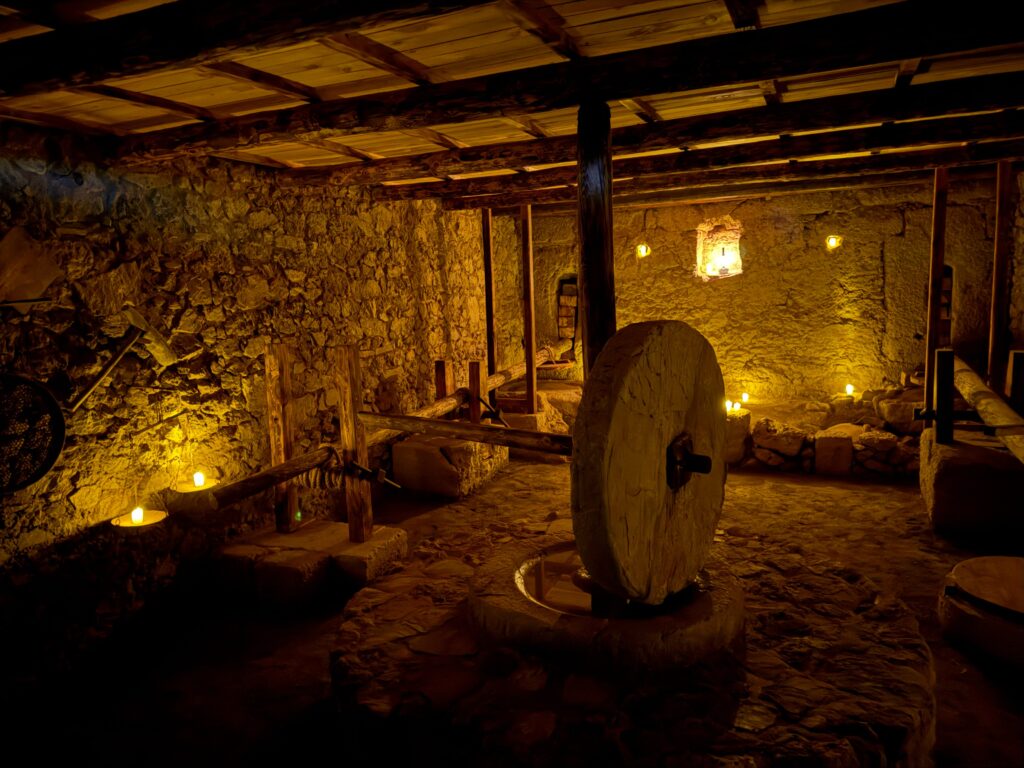
One of the most striking finds emerged in 2024 along the city’s southwestern street. Archaeologists uncovered an olive oil workshop with nearly all architectural elements preserved in their original positions. Most notably, a large storage vessel—known in antiquity as a pithos—was found exactly where it had stood when the facility was last in use.
Following detailed documentation submitted to the Ministry of Culture and Tourism, the team undertook a careful reconstruction to allow visitors to understand the full production sequence. The process begins with olives being crushed in stone installations, then transferred to a pressing area where oil was extracted using wooden levers and mechanical systems. The oil was collected in containers and later transferred to secondary storage vessels.
Reconstructing a Late Antique Economy
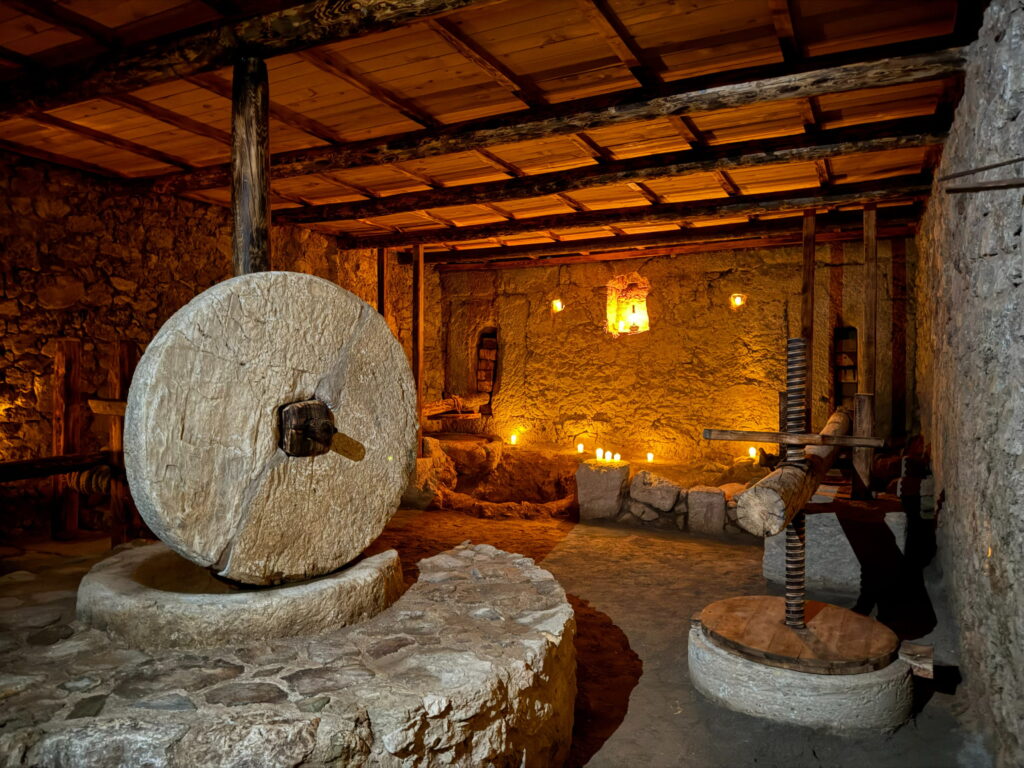
The scale and integration of these workshops suggest that Syedra’s economy was structured around continuous, intensive olive oil production during Late Antiquity. Rather than isolated industrial zones, production was embedded into everyday urban life—an arrangement that reflects both economic specialization and architectural planning.
Conducted under Türkiye’s “Heritage for the Future” (Geleceğe Miras) program, the excavations continue to refine our understanding of how Mediterranean cities adapted their urban spaces to meet economic demands in the centuries following the Roman Empire.
As research progresses, Syedra is emerging not only as a coastal city with monumental architecture, but as a rare archaeological case study of a city built around olive oil.
- A 1700-year-old statue of Pan unearthed during the excavations at Polyeuktos in İstanbul
- The granary was found in the ancient city of Sebaste, founded by the first Roman emperor Augustus
- Donalar Kale Kapı Rock Tomb or Donalar Rock Tomb
- Theater emerges as works continue in ancient city of Perinthos
- Urartian King Argishti’s bronze shield revealed the name of an unknown country
- The religious center of Lycia, the ancient city of Letoon
- Who were the Luwians?
- A new study brings a fresh perspective on the Anatolian origin of the Indo-European languages
- Perhaps the oldest thermal treatment center in the world, which has been in continuous use for 2000 years -Basilica Therma Roman Bath or King’s Daughter-
- The largest synagogue of the ancient world, located in the ancient city of Sardis, is being restored
Leave a Reply