Excavations at Alalakh Are Shaping a New Late Bronze Age Cuneiform Archive
At Alalakh, archaeologists have identified the remains of a new Late Bronze Age cuneiform tablet archive during the 2025 excavation season. The discovery offers a rare, context-rich view of how administration functioned in one of the Levant’s key ancient cities.
The work forms part of the long-running Tell Atchana excavations in Hatay, Türkiye, carried out under the direction of Murat Akar. The project brings together the Turkish Ministry of Culture and Tourism, Mustafa Kemal University, and is supported by the American Society of Overseas Research (ASOR).
From Earthquake Restoration to New Evidence
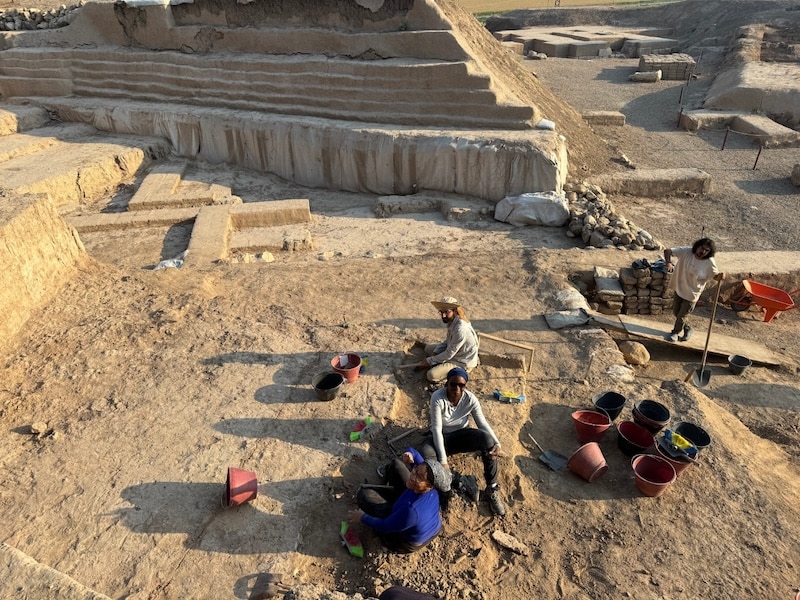
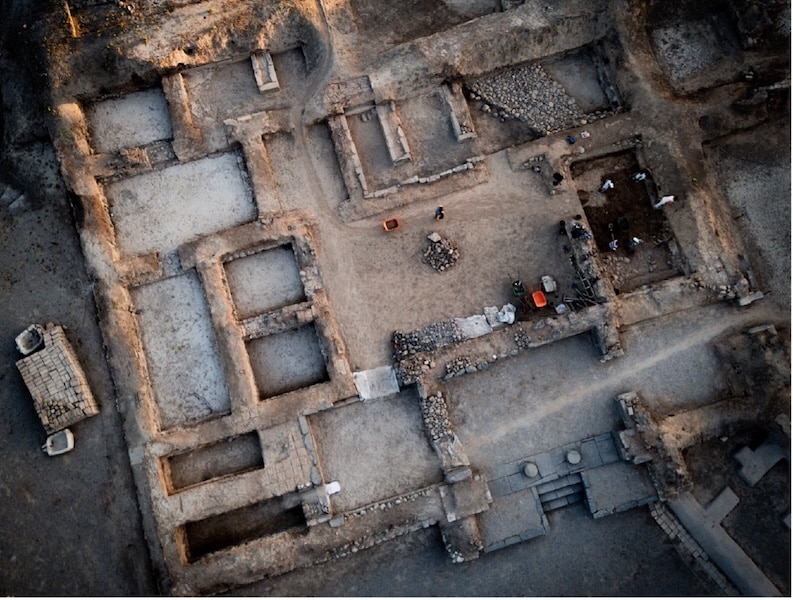
Following the devastating earthquakes of 2023, excavation efforts have focused on stabilizing and restoring major Bronze Age monuments first excavated by Leonard Woolley in the 1930s and 1940s. These works centered on the Level IV Palace and adjacent administrative and fortification complexes.
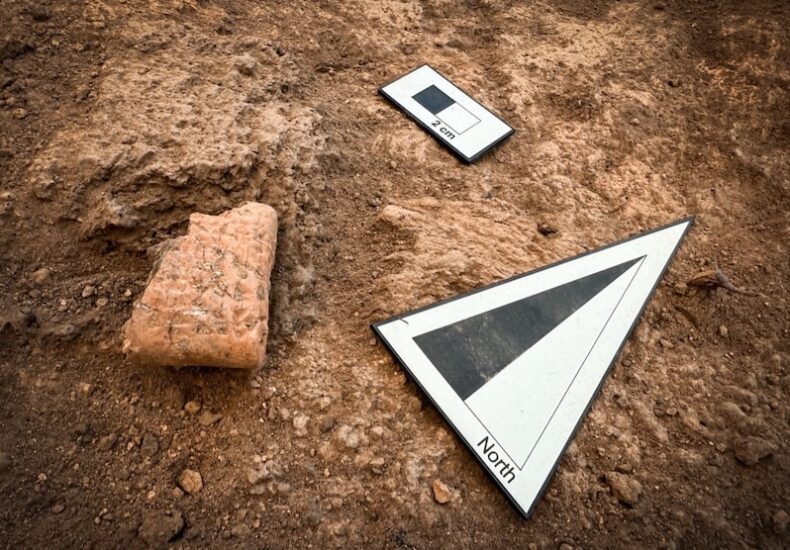
During cleaning and stabilization in the 2024 season, four cuneiform tablets were discovered in a heavily burned deposit in the southern part of Square 32.54. The tablets were identified by field supervisor Baran Kerim Ecer, sealed beneath the foundations of the later Hittite Fortress.
📣 Our WhatsApp channel is now LIVE! Stay up-to-date with the latest news and updates, just click here to follow us on WhatsApp and never miss a thing!!
Targeted Excavation in 2025
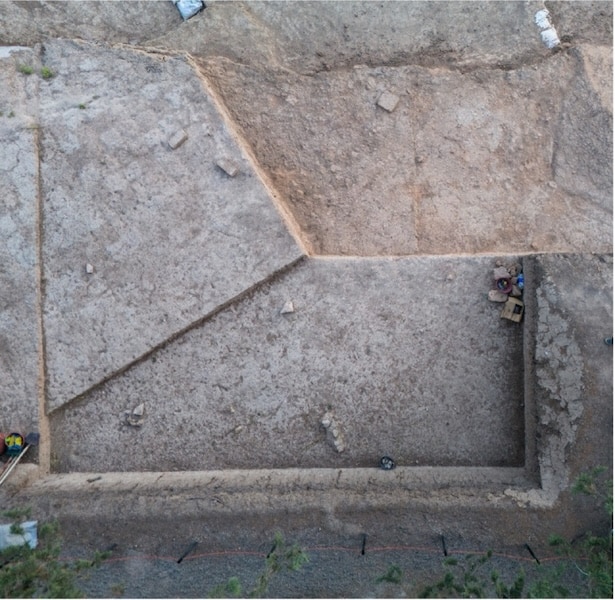
These finds shaped the strategy for the 2025 season. Excavations expanded into Square 32.64, immediately south of the earlier discoveries—an area previously explored only on a limited scale.
With funding provided through the ASOR Charles Harris Project Grant, along with support from the Turkish Ministry of Culture and Tourism, the team carried out sixteen weeks of intensive fieldwork. The first phase clarified the stratigraphic relationship between the Hittite Fortress (Levels II–III) and the burned Level IV deposit beneath it, led by Arman Alp of Mustafa Kemal University.
Students at the Core of the Discovery
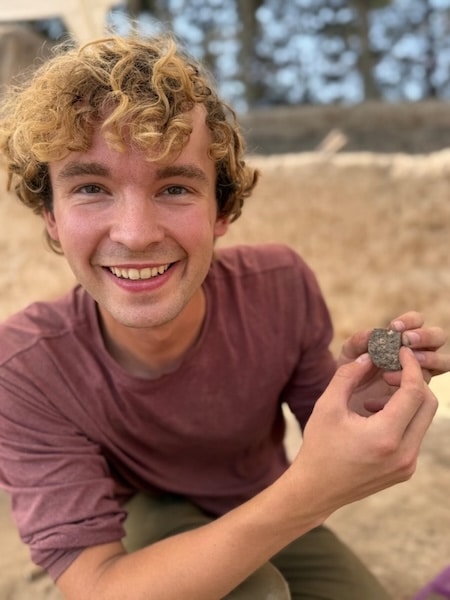
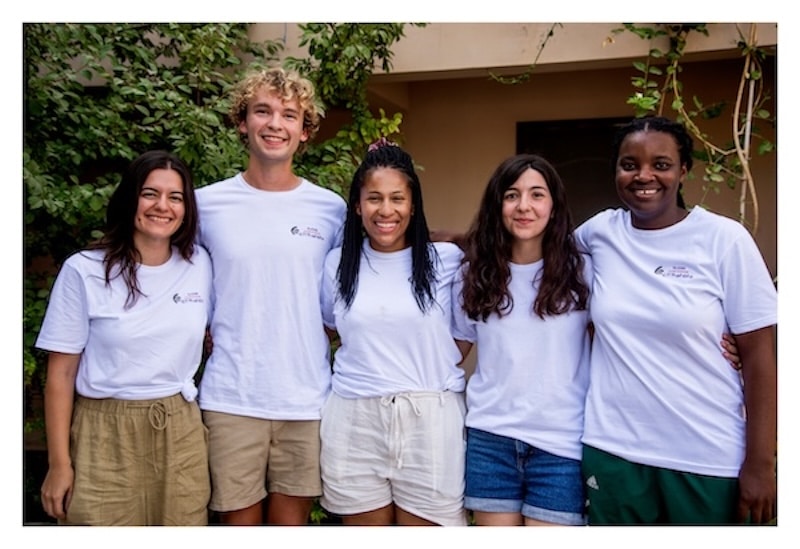
In July, PhD students from Johns Hopkins University joined the excavation. Each was trained both in field archaeology and in reading Akkadian cuneiform—an essential combination for recovering and documenting an archive of this kind.
Given the fragility of the context, excavation was limited to a small team of experienced archaeologists, assisted directly by archaeology students. This cautious approach proved decisive.
An Active Administrative Context
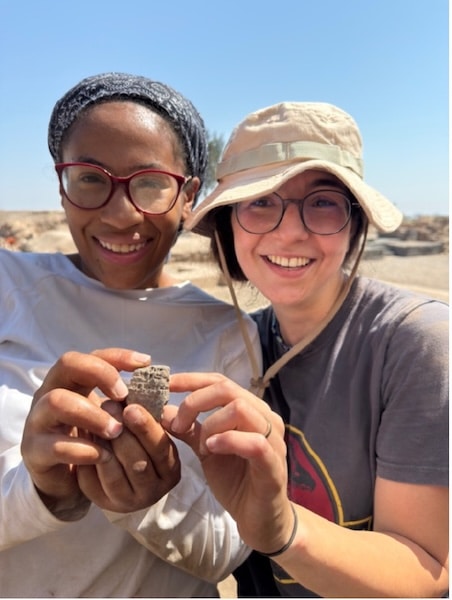
Within a relatively small exposure in Square 32.64, excavators recovered more than a dozen cuneiform tablets and fragments, along with seal impressions and sealing materials. Many were embedded in a thick destruction layer containing collapsed mudbrick, dense carbon deposits, pottery concentrations, and ornaments made of gold and faience.
The deposit remains only partially exposed, and associated floor levels have not yet been reached. Excavations continue to clarify the architectural layout and the distribution of the finds.
Context Preserved, Not Lost
Most of Alalakh’s tablets were excavated nearly a century ago, often without precise contextual documentation. In contrast, the archive identified during the 2025 season was recorded in situ. Each tablet was documented in three-dimensional space, with organic materials collected for radiocarbon analysis and all excavated soil systematically sifted.
Cleaning and conservation were carried out by Hatice Nur Aydın, followed by high-resolution photographic documentation and epigraphic study.
A Broader Administrative Landscape
Parallel work in the Level IV Palace led to the recovery of additional tablets contemporary with those from Square 32.64. Together, the finds suggest a broader administrative complex, possibly including a previously unrecognized bureaucratic building adjacent to the palace.
What the Tablets Reveal
Preliminary assessments indicate that most texts are administrative—recording personnel, the distribution of goods, and furniture inventories—while two appear to be legal documents. Both content and context point to an archive actively used within the palace–castle complex of Late Bronze Age Alalakh.
Looking Ahead
Excavations will continue in 2026 to clarify the extent of the archive and the nature of the space in which it was stored. The international team—working closely with the Hatay Archaeological Museum and with continued ASOR support—aims to preserve the material and share its significance with scholars and the local community.
What began as post-earthquake restoration has now revealed a new cuneiform tablet archive, among the most significant discoveries at Alalakh since excavations resumed more than two decades ago.
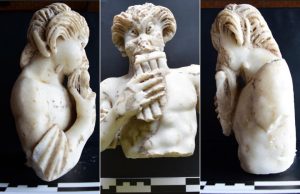
- A 1700-year-old statue of Pan unearthed during the excavations at Polyeuktos in İstanbul
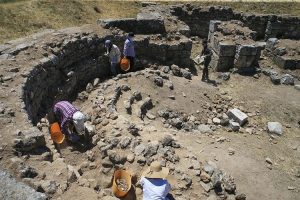
- The granary was found in the ancient city of Sebaste, founded by the first Roman emperor Augustus
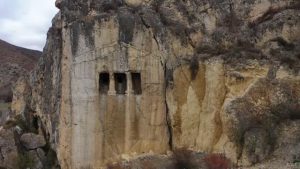
- Donalar Kale Kapı Rock Tomb or Donalar Rock Tomb
- Theater emerges as works continue in ancient city of Perinthos
- Urartian King Argishti’s bronze shield revealed the name of an unknown country
- The religious center of Lycia, the ancient city of Letoon
- Who were the Luwians?
- A new study brings a fresh perspective on the Anatolian origin of the Indo-European languages

- Perhaps the oldest thermal treatment center in the world, which has been in continuous use for 2000 years -Basilica Therma Roman Bath or King’s Daughter-
- The largest synagogue of the ancient world, located in the ancient city of Sardis, is being restored
Leave a Reply