Seljuk-Era Bronze Amulet Discovered at Ancient Lystra in Central Türkiye
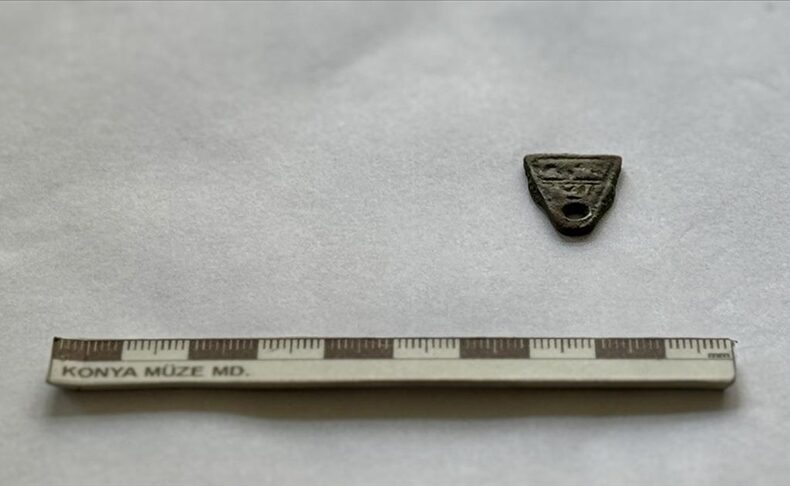
Archaeological excavations at ancient Lystra, near Konya in central Türkiye, have revealed a Seljuk-era bronze amulet, adding a new dimension to the city’s already layered history. The triangular pendant was uncovered inside what archaeologists believe to be a Seljuk-period residential structure — alongside material evidence linked to Christian communities living under Seljuk rule.
The excavations are conducted with permission from Türkiye’s Ministry of Culture and Tourism, supported by Necmettin Erbakan University and local municipalities. The project is led by Associate Professor İlker Mete Mimiroğlu of Necmettin Erbakan University.
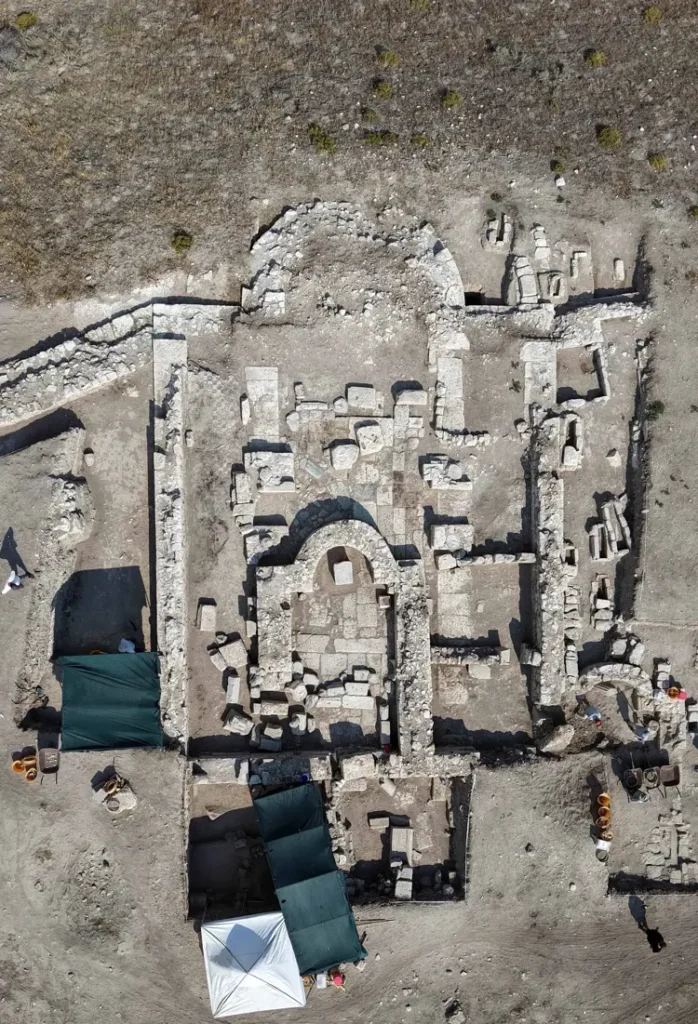
Lystra is not only significant for its medieval layers. Known from classical sources, the city was an important Roman settlement and is mentioned in the New Testament as one of the places visited by Saint Paul during his missionary journeys. This deep historical continuity — from Roman and Byzantine periods to the Seljuk and Ottoman eras — makes the site particularly valuable for understanding cultural and religious coexistence in Anatolia.
A Domestic Context, A Protective Object
According to Mimiroğlu, the bronze object was discovered within a Seljuk-era house. In the same space, archaeologists identified a green-glazed inkwell, a common writing instrument of the period, which helped establish the chronological context of the find.
📣 Our WhatsApp channel is now LIVE! Stay up-to-date with the latest news and updates, just click here to follow us on WhatsApp and never miss a thing!!
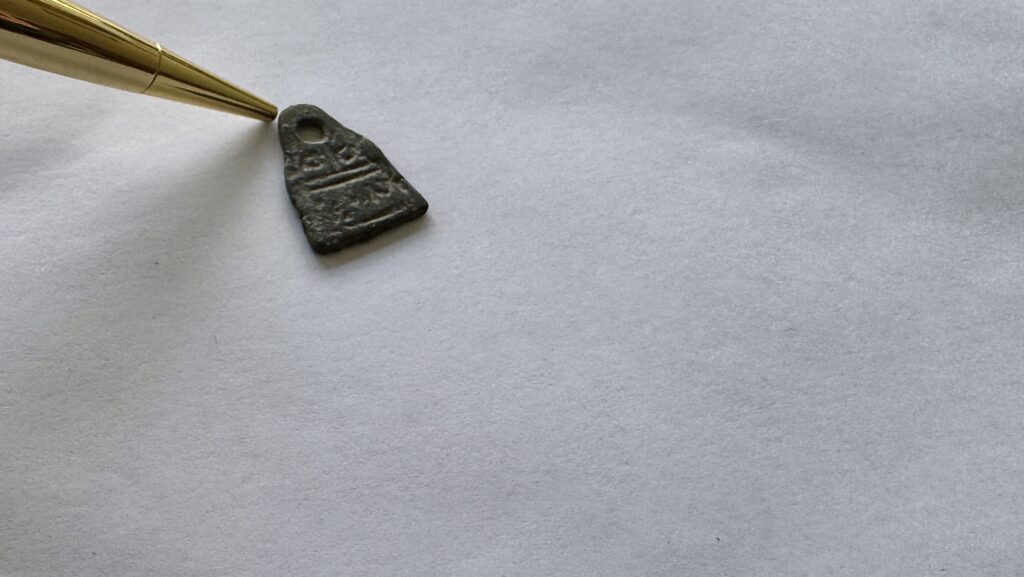
The amulet is described as a triangular bronze pendant, with two lines of inscription on each side, arranged in reverse orientation. Its form suggests that it functioned as a talisman worn as a necklace, likely intended for protection.
“It is a triangular bronze pendant with two lines of inscription on each face, written in reverse orientation,” Mimiroğlu explained. “We interpret it as a talismanic necklace. While such objects are not frequently encountered in Anatolia, parallels are known from Central Asia, where similar amulets were worn particularly by soldiers and travelers.”
The artifact is currently undergoing conservation. Once the inscriptions become legible, researchers expect to provide a more precise interpretation of its linguistic content and symbolic meaning.
Evidence of Religious Coexistence
The discovery gains additional importance because it was found in a context associated with Christian communities living during the Seljuk period. Previous excavations around the main church complex at Lystra have uncovered dozens of burials attributed to Christians who lived in the region under Seljuk rule.
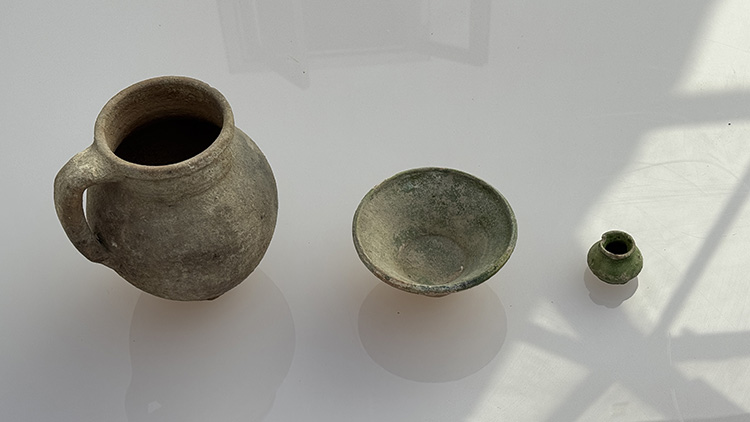
Although historical sources have long suggested the presence of Christian populations in medieval Anatolia, securely dated archaeological evidence from this period remains relatively rare. The amulet, therefore, contributes to a growing body of material culture illustrating daily life, belief systems, and cross-cultural interaction in central Anatolia.
The Seljuk bronze amulet from Lystra is more than a small personal ornament. It stands as material testimony to a city that continued to evolve across centuries — Roman, Byzantine, Seljuk, and Ottoman — without losing its strategic and spiritual significance.
Cover Image: Triangular Seljuk-era bronze amulet discovered at ancient Lystra in Konya, featuring two lines of reverse inscriptions on each side. Credit: Abdullah Doğan/AA
- A 1700-year-old statue of Pan unearthed during the excavations at Polyeuktos in İstanbul
- The granary was found in the ancient city of Sebaste, founded by the first Roman emperor Augustus
- Donalar Kale Kapı Rock Tomb or Donalar Rock Tomb
- Theater emerges as works continue in ancient city of Perinthos
- Urartian King Argishti’s bronze shield revealed the name of an unknown country
- The religious center of Lycia, the ancient city of Letoon
- Who were the Luwians?
- A new study brings a fresh perspective on the Anatolian origin of the Indo-European languages

- Perhaps the oldest thermal treatment center in the world, which has been in continuous use for 2000 years -Basilica Therma Roman Bath or King’s Daughter-
- The largest synagogue of the ancient world, located in the ancient city of Sardis, is being restored
Leave a Reply