
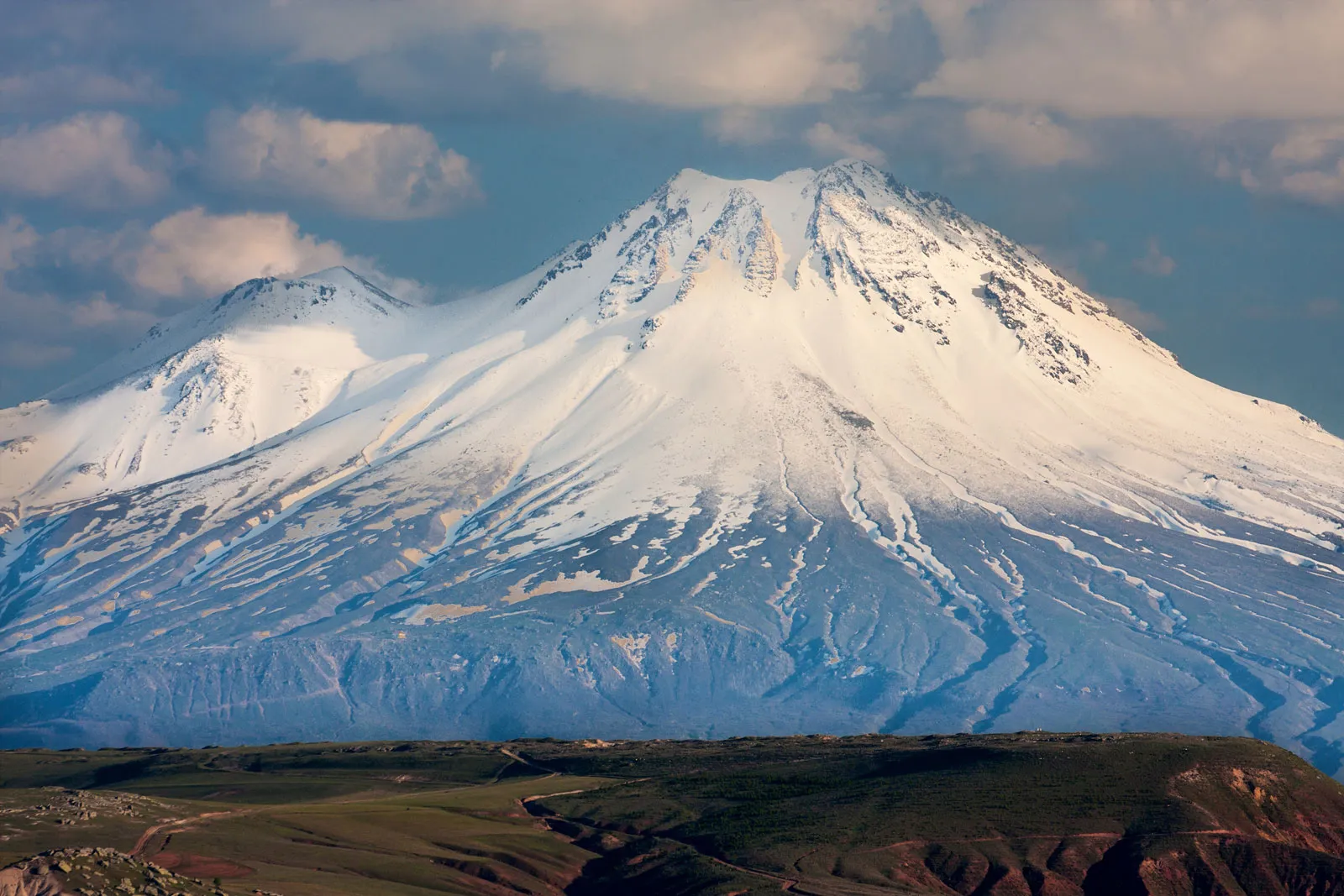
New Study Reassesses Mount Ararat’s Role in the Noah Ark Tradition Across Three Faiths
Mount Ararat is often presented as a question. Did the Ark land there — or not?
But a new academic study suggests we may have been asking the wrong question all along.
Instead of searching for frozen timber beneath glaciers, the 2025 research turns to something more complex: how one mountain carries three different sacred meanings at the same time. Christianity, Armenian historical memory, and Islamic theology approach Ararat from distinct angles — and none of them are identical.
The debate, it turns out, is less about archaeology and more about interpretation.
📣 Our WhatsApp channel is now LIVE! Stay up-to-date with the latest news and updates, just click here to follow us on WhatsApp and never miss a thing!!
Jewish Tradition and the “Mountains of Ararat”
Before later Christian associations narrowed the focus to a single volcanic peak, the Hebrew Bible described the Ark as coming to rest on the “mountains of Ararat” — a phrase widely understood as referring to a broader highland region linked to ancient Urartu.
Within Jewish interpretive tradition, the emphasis has historically centered less on identifying a specific summit and more on the theological meaning of the event itself. Rabbinic commentary approaches the flood narrative as a reflection on covenant, justice, and moral renewal. The Ark’s resting place functions as a marker of transition — from destruction to responsibility — rather than as a site for physical verification.
Unlike later exploratory movements in Christian history, Jewish tradition did not generate sustained expeditions to locate the Ark. The power of the narrative remained textual and ethical rather than geographical.
Scripture and the Geography of Belief
The Book of Genesis states that the Ark came to rest on the “mountains of Ararat.” Not the mountain — but a broader region historically linked to ancient Urartu.
Over centuries, however, the towering volcanic peak known today as Mount Ararat became the dominant identification within Christian tradition. The shift was gradual. Pilgrimage narratives, medieval chronicles, later expeditions — each reinforced the association.
Yet despite repeated searches, no verified archaeological evidence of a large wooden vessel has been documented.
Geology offers part of the explanation. Mount Ararat is a stratovolcano shaped by lava flows, tectonic movement, glaciation, and extreme climatic cycles. Preservation of organic material at such altitude would be exceptionally unlikely.
The study makes a careful point here: Christian theology does not stand or fall on physical debris. The mountain’s importance lies in what it represents — covenant after catastrophe.
Ararat in Armenian Consciousness
For Armenians, Ararat is not merely a biblical reference. It is visible from Yerevan. It appears on the national coat of arms. It lives in poetry and painting.
And yet, it lies beyond Armenia’s modern borders.
That tension — visibility without sovereignty — has shaped its meaning. In Armenian historiography, the Ark narrative intersects with ancestry. Medieval chroniclers traced Armenian lineage to Noah’s descendants, situating post-flood renewal on Ararat’s slopes.
Here, the mountain becomes more than sacred geography. It becomes a symbol of continuity.
Even without political possession, Ararat remains embedded in national identity — a constant presence on the horizon.
The Islamic Narrative and Al-Judi
The Qur’an recounts the flood story but names a different resting place: Al-Judi. Islamic scholarship has long debated its location, with some identifying it in southeastern Türkiye.
Yet the study emphasizes something often overlooked: Islamic theology does not prioritize the mountain itself.
The moral framework matters more. The narrative centers on perseverance, accountability, and individual belief. Notably, Noah’s own son does not survive — a powerful reminder that lineage alone offers no protection.
In this perspective, geography is secondary. Ethics is primary.
Archaeology, Absence, and Endurance
From a strictly archaeological standpoint, Mount Ararat presents formidable obstacles. Ice movement, avalanches, volcanic layers — all complicate systematic investigation. Claims of structural anomalies have never produced reproducible, peer-reviewed confirmation.
But here lies the paradox.
The absence of confirmed remains has not weakened the mountain’s influence. If anything, it has intensified its symbolic presence. Ararat continues to function as a shared reference point across traditions — Christian, Armenian, Islamic — without definitive material proof.
The new study does not attempt to resolve the Ark debate. Instead, it reframes it.
Mount Ararat is less a forensic puzzle and more a layered sacred landscape.
A place where theology, identity, and political memory converge.
A mountain shaped not only by tectonic force — but by narrative endurance.
And perhaps that explains why the question persists.
This article benefited from the academic study by A. Efe, “An Assessment of Mount Ararat’s Role in the Narrative of Noah’s Ark: Historical, Religious and Political Perspectives,” Ağrı İbrahim Çeçen Üniversitesi Sosyal Bilimler Enstitüsü Dergisi 11, no. 2 (2025): 261–290. https://doi.org/10.31463/aicusbed.1646109.
- A 1700-year-old statue of Pan unearthed during the excavations at Polyeuktos in İstanbul
- The granary was found in the ancient city of Sebaste, founded by the first Roman emperor Augustus
- Donalar Kale Kapı Rock Tomb or Donalar Rock Tomb
- Theater emerges as works continue in ancient city of Perinthos
- Urartian King Argishti’s bronze shield revealed the name of an unknown country
- The religious center of Lycia, the ancient city of Letoon
- Who were the Luwians?
- A new study brings a fresh perspective on the Anatolian origin of the Indo-European languages
- Perhaps the oldest thermal treatment center in the world, which has been in continuous use for 2000 years -Basilica Therma Roman Bath or King’s Daughter-
- The largest synagogue of the ancient world, located in the ancient city of Sardis, is being restored
Leave a Reply