
New Excavations Begin at Pessinus, One of Anatolia’s Most Important Ancient Religious Centers
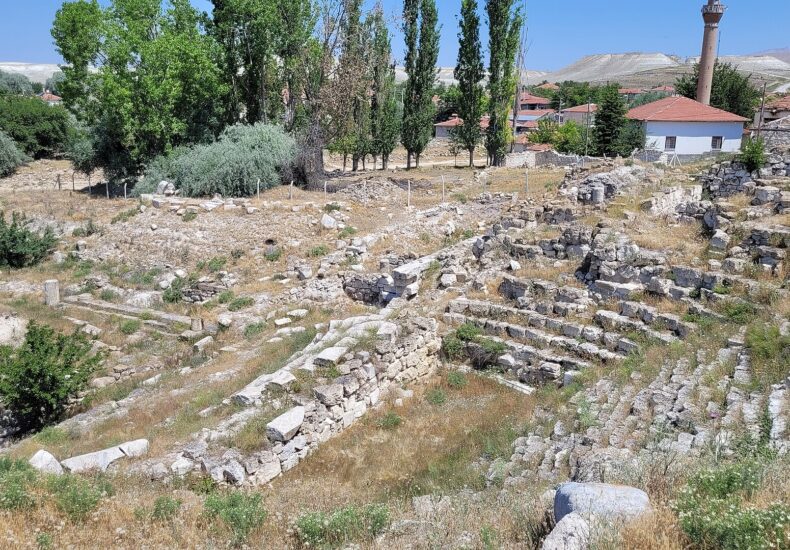
A new excavation season is beginning at Pessinus, a site long recognized as one of Anatolia’s key religious and cultural centers. The project will be carried out under the direction of Assoc. Prof. Dr. Adem Yurtsever of Anadolu University, following a recent reassignment of excavation leadership.
The transition reflects the standard practice within Turkish archaeology of periodically renewing excavation permits to introduce updated research frameworks and maintain continuity in fieldwork. With this new phase, attention is expected to shift toward both unresolved questions and the reassessment of earlier findings.
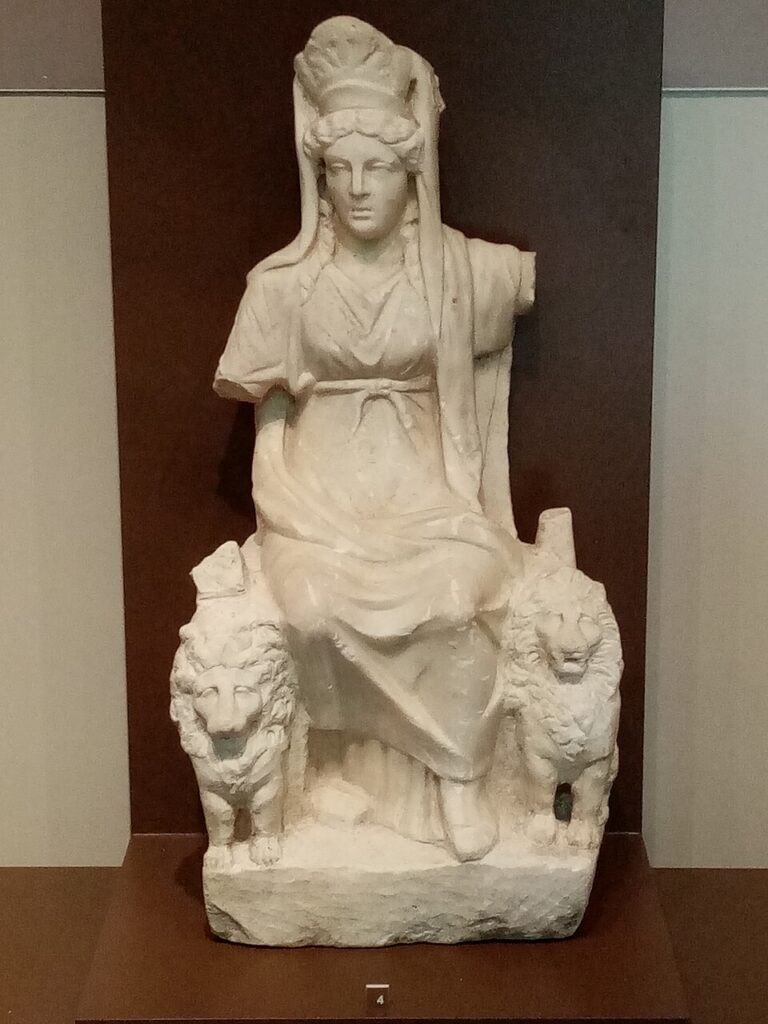
Pessinus occupies a central place in the historical geography of ancient Phrygia, primarily due to its association with the cult of Cybele, one of the most influential deities of the ancient Mediterranean world. Classical sources and archaeological data alike point to the city as a major sanctuary where religious authority intersected with regional politics.
Source: Wikipedia
The site gained wider recognition in antiquity when Cybele’s sacred stone was transferred to Rome during the Second Punic War, an event that elevated Pessinus from a regional cult center to a symbol within the Roman state religion.
📣 Our WhatsApp channel is now LIVE! Stay up-to-date with the latest news and updates, just click here to follow us on WhatsApp and never miss a thing!!
What the New Excavation Phase May Focus On
Despite decades of archaeological work, Pessinus still presents a number of open questions. Reliable academic studies suggest that key aspects of the site—particularly its earliest settlement phases and the organization of its sacred areas—remain only partially understood.
The new excavation campaign is therefore expected to prioritize:
- Reassessment of previously excavated architectural remains
- Clarification of the city’s early chronological layers
- Integration of newer analytical methods into legacy data
Rather than large-scale exposure alone, the emphasis is likely to be on interpretation and contextual analysis, reflecting current trends in Anatolian archaeology.
A Long Archaeological Record Behind the New Phase
The renewed excavation campaign builds on a well-established research history at Pessinus. Systematic work at the site began in 1967 under the direction of Ghent University, with Belgian teams conducting excavations—at intervals—until 2008. This long-term project played a decisive role in identifying the city’s urban layout and its monumental core.
Between 2009 and 2013, excavations were continued by researchers from University of Melbourne, further expanding knowledge of the site. These campaigns revealed not only the temple complex traditionally associated with Cybele, but also a diverse architectural landscape including workshops, domestic structures, and a church. In addition, key public buildings such as a theater, agora, and bouleuterion were documented, along with road remains in the surrounding area.
Finds recovered during these excavations are today displayed both in the open-air exhibition area at the site and in the Eskişehir Eti Archaeology Museum, offering a tangible record of the city’s long and complex history.
Cover Image: Wikipedia
- A 1700-year-old statue of Pan unearthed during the excavations at Polyeuktos in İstanbul
- The granary was found in the ancient city of Sebaste, founded by the first Roman emperor Augustus
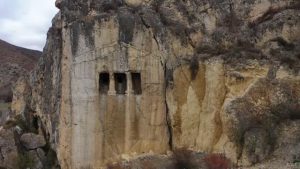
- Donalar Kale Kapı Rock Tomb or Donalar Rock Tomb
- Theater emerges as works continue in ancient city of Perinthos
- Urartian King Argishti’s bronze shield revealed the name of an unknown country
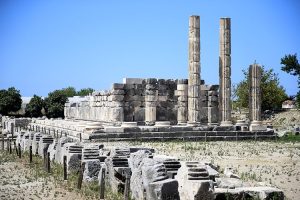
- The religious center of Lycia, the ancient city of Letoon
- Who were the Luwians?
- A new study brings a fresh perspective on the Anatolian origin of the Indo-European languages

- Perhaps the oldest thermal treatment center in the world, which has been in continuous use for 2000 years -Basilica Therma Roman Bath or King’s Daughter-
- The largest synagogue of the ancient world, located in the ancient city of Sardis, is being restored
Leave a Reply