
This 4th-Century Mosaic in Türkiye Reveals the Legendary Wealth of Troy
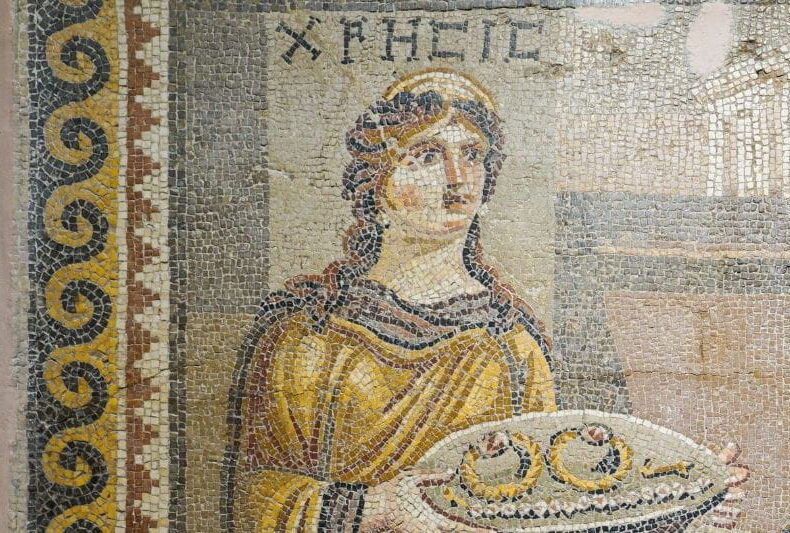
Discovered in the ancient city of Daphne (Harbiye) in southern Türkiye, the 4th-century Khresis Mosaic offers more than a decorative scene. It captures a moment where myth, wealth, and power intersect—rooted in the enduring memory of Troy’s legendary riches.
Today, the mosaic is displayed at the Hatay Necmi Asfuroğlu Archaeology Museum, where it stands out as one of the most intellectually striking works in the collection. At first glance, it appears as a refined example of Roman mosaic art. Look closer, and a deeper narrative begins to emerge.
A Name That Means More Than It Shows
At the center of the composition stands a female figure identified by an inscription above her: “KRESIS.” The name comes from Ancient Greek, meaning “acquired wealth.” That detail is not incidental.
In Late Antiquity, such figures were often used to embody abstract ideas. Here, Khresis is widely interpreted as the personification of wealth taken through conquest—a concept closely tied to the long-standing cultural memory of Troy and its fabled treasures.
📣 Our WhatsApp channel is now LIVE! Stay up-to-date with the latest news and updates, just click here to follow us on WhatsApp and never miss a thing!!
Ancient literary traditions add another layer. Khresis is associated with the Trojan War cycle, described as the daughter of a priest of Apollo and later taken captive by Agamemnon. In this light, the mosaic does not simply depict a figure—it reflects a story of capture, transfer, and possession.
Wealth, Displayed and Exchanged
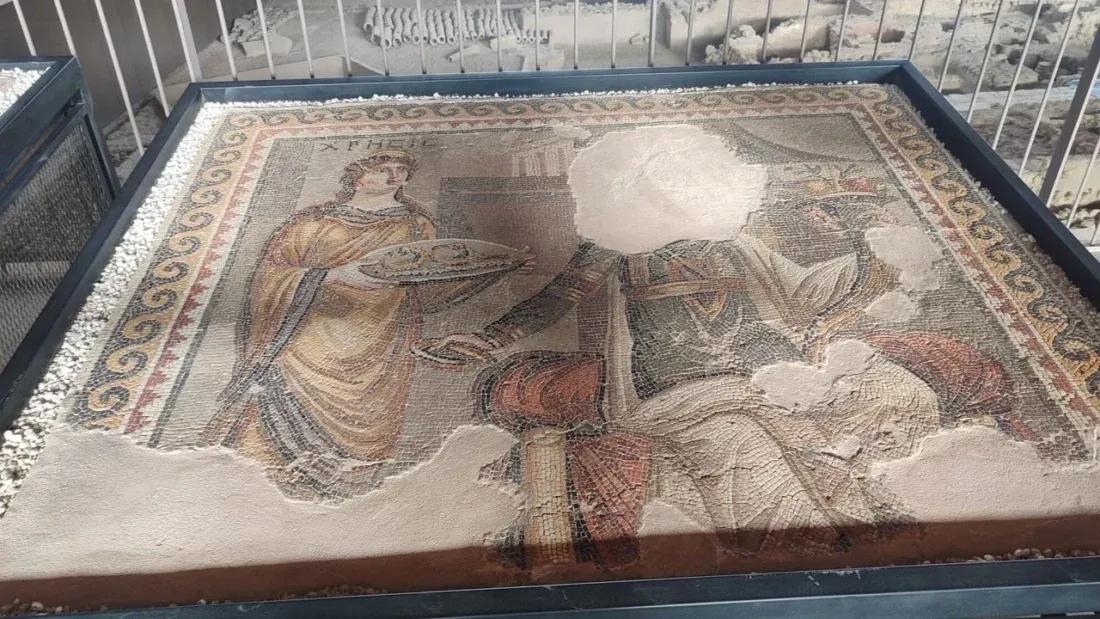
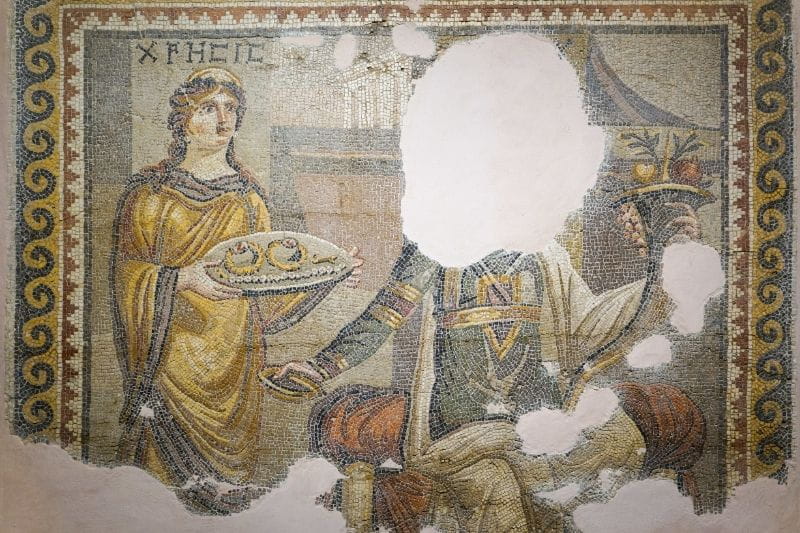
The visual language of the mosaic is deliberate. Khresis holds a tray filled with finely rendered jewelry—gold bracelets set with large stones, a pearl necklace, and a golden clasp. These are not random decorative elements. They function as symbols of status, value, and accumulated riches.
Opposite her sits a second figure, partially damaged but still legible through its attributes. In one hand, the figure holds a cornucopia, overflowing with fruits and grape clusters—a well-known emblem of abundance in Roman art. With the other, it extends a golden bowl toward Khresis.
This interaction is subtle but powerful. It suggests not just possession, but the circulation of wealth—an exchange shaped by power, ritual, and hierarchy.
Daphne and the World of Elite Roman Culture
The mosaic was uncovered in Hatay’s Defne district, part of ancient Daphne, a cultural extension of nearby Antioch, one of the most important cities of the eastern Roman Empire. Known for its luxury villas, gardens, and intellectual life, Daphne was a place where elite identity was expressed through art.
Within this context, the House of the Triumph of Dionysos—where the mosaic was found—was more than a residence. It was a space of display. Themes of abundance, celebration, and divine favor, often linked to Dionysos, would have resonated strongly in such settings.
The Khresis Mosaic fits naturally into this environment. It reflects a worldview in which wealth was not hidden, but staged—visually, symbolically, and socially.
A Surviving Fragment of Meaning
Despite partial damage, the mosaic remains remarkably well preserved. The craftsmanship, especially in the depiction of jewelry and symbolic objects, still carries a striking level of detail.
But perhaps its greatest value lies elsewhere.
This is not just a work of art. It is a coded narrative—one that speaks about how people in Late Antiquity understood wealth, conquest, and identity. Through Khresis, abstract ideas become visible. Through imagery, history becomes tangible.
- A 1700-year-old statue of Pan unearthed during the excavations at Polyeuktos in İstanbul
- The granary was found in the ancient city of Sebaste, founded by the first Roman emperor Augustus
- Donalar Kale Kapı Rock Tomb or Donalar Rock Tomb
- Theater emerges as works continue in ancient city of Perinthos

- Urartian King Argishti’s bronze shield revealed the name of an unknown country

- The religious center of Lycia, the ancient city of Letoon
- Who were the Luwians?
- A new study brings a fresh perspective on the Anatolian origin of the Indo-European languages

- Perhaps the oldest thermal treatment center in the world, which has been in continuous use for 2000 years -Basilica Therma Roman Bath or King’s Daughter-
- The largest synagogue of the ancient world, located in the ancient city of Sardis, is being restored
Leave a Reply