
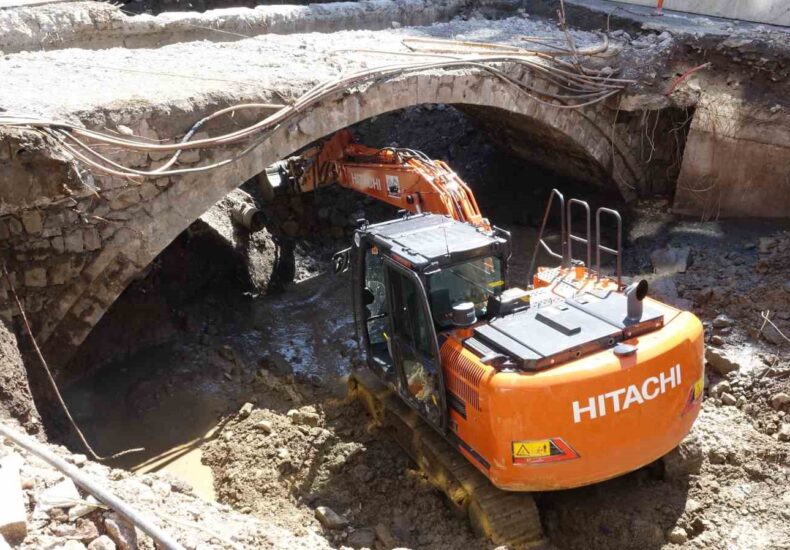
Roadworks in Rize Reveal a Hidden 19th-Century Stone Bridge Buried Beneath the City
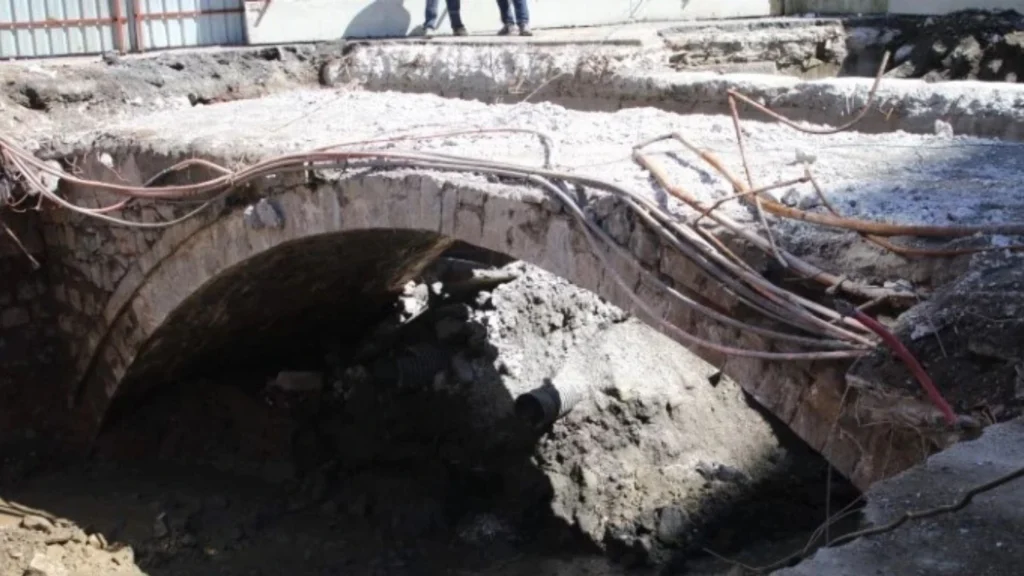
A historic stone arch bridge in Rize, long buried beneath layers of road construction, has re-emerged during ongoing urban redevelopment works. Dating back to 1826, the structure had remained hidden for decades—preserved beneath asphalt and fill—until recent excavations brought it back into view.
The bridge, locally known as the “Çitanın Bridge,” was uncovered along a route connecting central Rize to surrounding neighborhoods. While never entirely forgotten in local memory, it had effectively disappeared from the visible cityscape during mid-20th-century road expansions.
Buried by Urban Growth, Preserved by Chance
The structure was first partially covered in the 1940s, before being completely sealed beneath road layers in the 1960s as the city expanded and elevation levels shifted. Unlike many historical features lost during rapid urbanization, this bridge survived largely intact—its stonework shielded rather than destroyed.
Its rediscovery highlights a recurring phenomenon in historic cities: infrastructure projects do not always erase the past; sometimes, they simply conceal it.
📣 Our WhatsApp channel is now LIVE! Stay up-to-date with the latest news and updates, just click here to follow us on WhatsApp and never miss a thing!!
From Forgotten Structure to Public Landmark
Municipal authorities now plan to integrate the bridge into a controlled exhibition space rather than rebury it. The project envisions a purpose-built interior environment where the structure will be preserved and made accessible to visitors.
Transparent glass sections will allow pedestrians to observe the bridge from above, while stair access will lead beneath the arch, offering a closer look at its construction and materials. The site is also expected to include additional historical elements from the surrounding area, transforming it into a compact urban heritage point.
A Layered City, Revealed Again
What makes this discovery compelling is not only the bridge itself, but what it represents. For decades, it remained part of the city—just invisible. Now, reintroduced into public space, it offers a rare, tangible reminder of how cities evolve by building over their own past.
In Rize, the reappearance of this 19th-century bridge is less a discovery of something new than the recovery of something that was always there—waiting beneath the surface.
- A 1700-year-old statue of Pan unearthed during the excavations at Polyeuktos in İstanbul
- The granary was found in the ancient city of Sebaste, founded by the first Roman emperor Augustus
- Donalar Kale Kapı Rock Tomb or Donalar Rock Tomb
- Theater emerges as works continue in ancient city of Perinthos
- Urartian King Argishti’s bronze shield revealed the name of an unknown country
- The religious center of Lycia, the ancient city of Letoon
- Who were the Luwians?

- A new study brings a fresh perspective on the Anatolian origin of the Indo-European languages

- Perhaps the oldest thermal treatment center in the world, which has been in continuous use for 2000 years -Basilica Therma Roman Bath or King’s Daughter-
- The largest synagogue of the ancient world, located in the ancient city of Sardis, is being restored
Leave a Reply