
A Rare “Good Shepherd” Depiction Emerges from a Hypogeum Tomb in İznik
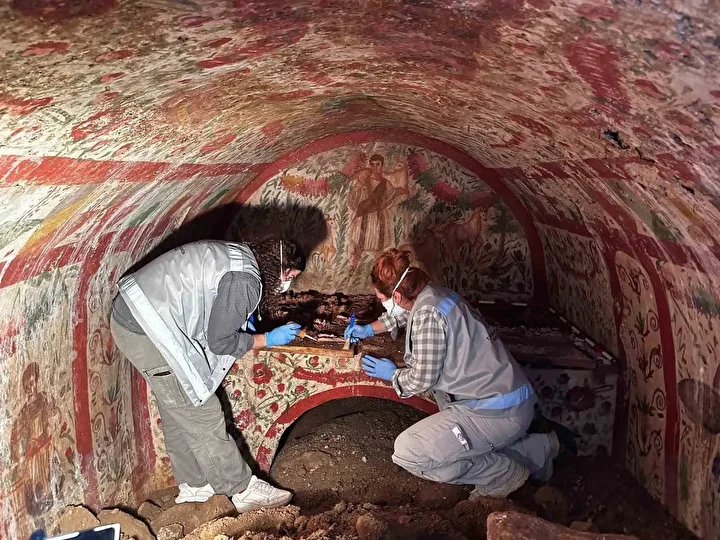
A quiet corner of Hisardere Nekropolü in İznik has produced a discovery that specialists are calling one of the most remarkable Early Christian finds in recent years: a painted “Good Shepherd” (Çoban İsa) figure, believed to be the only example of its kind ever documented in Anatolia. The scene was uncovered inside a carefully constructed hypogeum tomb, preserved well enough to transform current understandings of İznik’s funerary traditions.
The excavation is conducted under the permission of the Ministry of Culture and Tourism and directed by İznik Museum Director Tolga Koparal. Scientific coordination is led by Prof. Dr. Aygün Ekin Meriç of Dokuz Eylül University, with Dr. Gülşen Kutbay contributing to the interdisciplinary fieldwork.
A Painted Tomb Unlike Any Other in İznik
Archaeologists have long known that Hisardere Nekropolü served as a shared burial ground between the 2nd and 5th centuries CE, used both by elite local families and the wider community. Within this landscape, İznik is already notable for its distinctive terracotta-roofed chamber tombs. Yet the hypogeum opened in the 2025 season stands apart from anything found before.
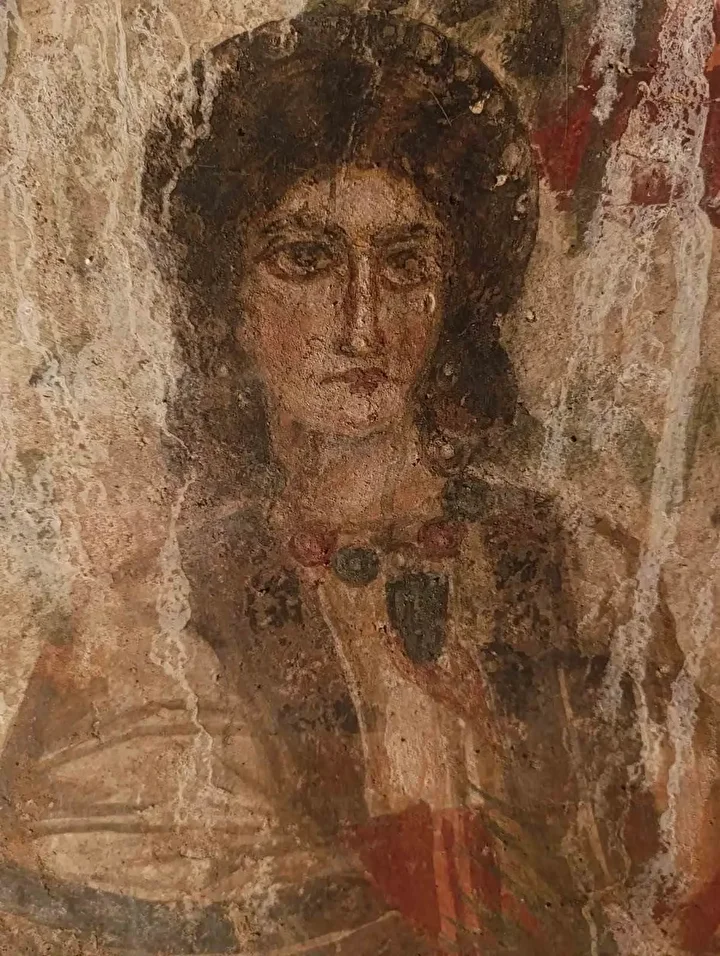
The tomb stretches on a north–south axis, its southern wall largely damaged, but its eastern, western, and northern walls survive with their frescoes almost entirely intact. These painted surfaces introduce an unexpected iconographic richness, differing from the more restrained decorative schemes typical of the region.
📣 Our WhatsApp channel is now LIVE! Stay up-to-date with the latest news and updates, just click here to follow us on WhatsApp and never miss a thing!!
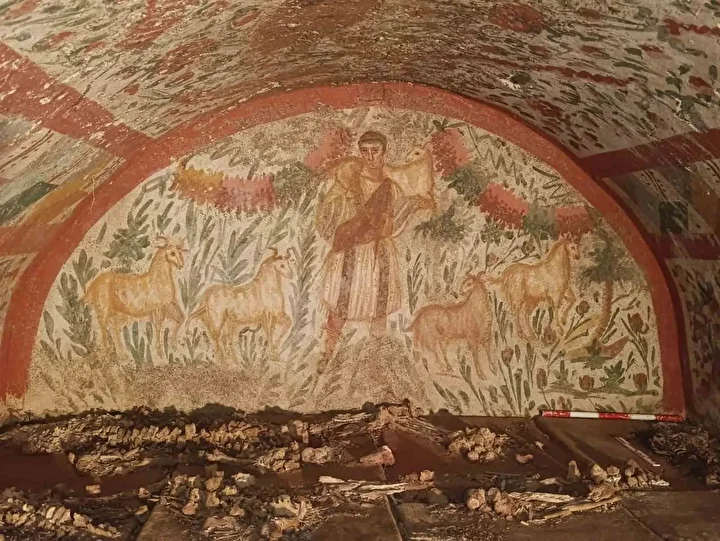
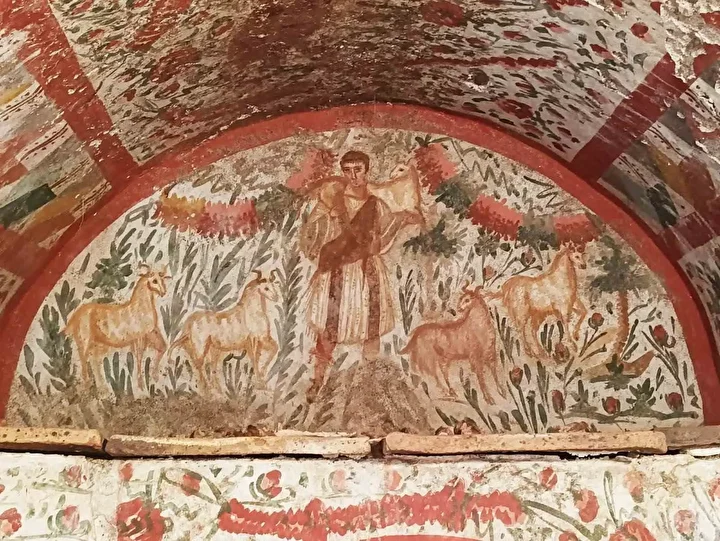
A clay-tile-covered klinē occupies the northern side of the chamber, indicating where the deceased would have been laid to rest. Immediately above it, on the well-preserved plastered wall, the team encountered a vibrant composition: a youthful, beardless Jesus in a Roman tunic, carrying a horned goat across his shoulders. Pairs of goats flank him symmetrically, creating a pastoral scene that blends classical visual language with early Christian symbolism.
Researchers underline that this is not only a rare Good Shepherd depiction but also one of the few instances where Jesus is portrayed with distinctly Roman attributes in the Anatolian interior.
Dating the Tomb to the 3rd Century CE
No artifacts suitable for direct dating were recovered from the tomb’s interior. However, its architectural features closely align with other structures in the necropolis dated to the 3rd century CE. If this assessment is confirmed, the tomb would represent one of the region’s earliest and most expressive examples of Christian imagery during a time when Christianity was still emerging within local communities.
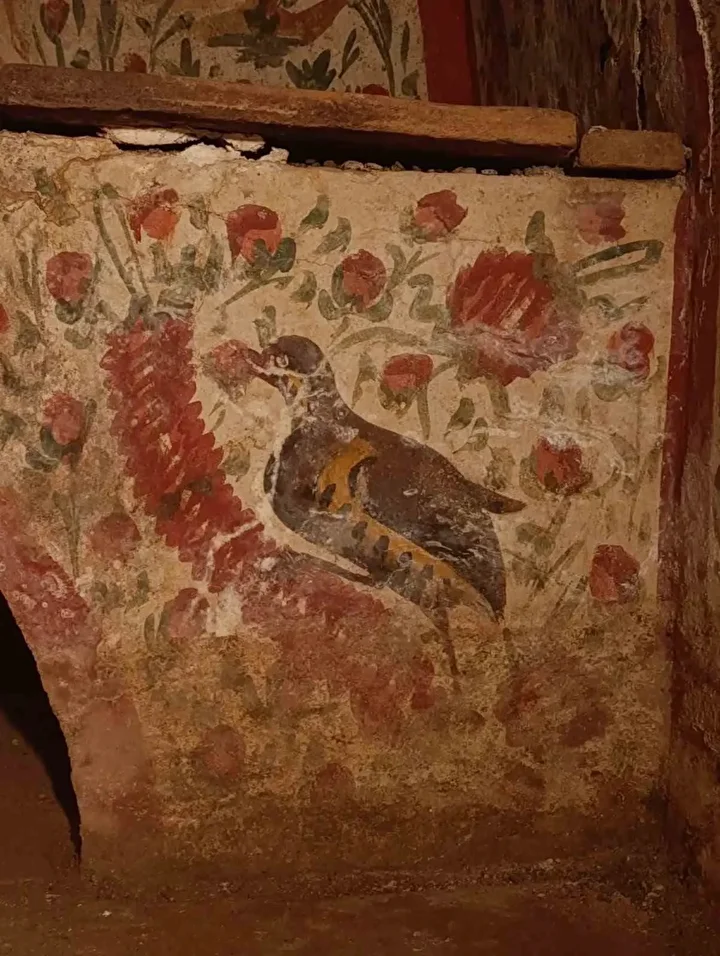
The discovery also marks the first instance of a Jesus depiction ever identified at Hisardere Nekropolü, adding an important chapter to İznik’s already rich archaeological narrative.
This report, covering the discovery of the Good Shepherd depiction in İznik, is an exclusive story by Arkeolojihaber. All photographs used in this article were provided by IHA and Arkeolojihaber.
- A 1700-year-old statue of Pan unearthed during the excavations at Polyeuktos in İstanbul
- The granary was found in the ancient city of Sebaste, founded by the first Roman emperor Augustus
- Donalar Kale Kapı Rock Tomb or Donalar Rock Tomb
- Theater emerges as works continue in ancient city of Perinthos
- Urartian King Argishti’s bronze shield revealed the name of an unknown country
- The religious center of Lycia, the ancient city of Letoon
- Who were the Luwians?
- A new study brings a fresh perspective on the Anatolian origin of the Indo-European languages

- Perhaps the oldest thermal treatment center in the world, which has been in continuous use for 2000 years -Basilica Therma Roman Bath or King’s Daughter-
- The largest synagogue of the ancient world, located in the ancient city of Sardis, is being restored
Leave a Reply