Anatolia’s First Monetary Memory: Lydian Silver Coins and the Birth of Coinage
Anatolia is widely recognized as the birthplace of coinage, where standardized money first emerged as a state-backed medium of exchange. The earliest and most compelling evidence of this transformation comes from silver coins struck during the Lydian period, marking a decisive shift from barter to measurable economic value. Together, these coins form Anatolia’s first monetary memory—an innovation that would reshape trade, power, and daily life across the ancient world.
The assemblage covers a broad chronological range, from the seventh to the fifth centuries BCE. This was a formative era, when economic exchange shifted from barter to measurable, state-guaranteed value—an innovation that reshaped commerce, politics, and daily life across the ancient world.
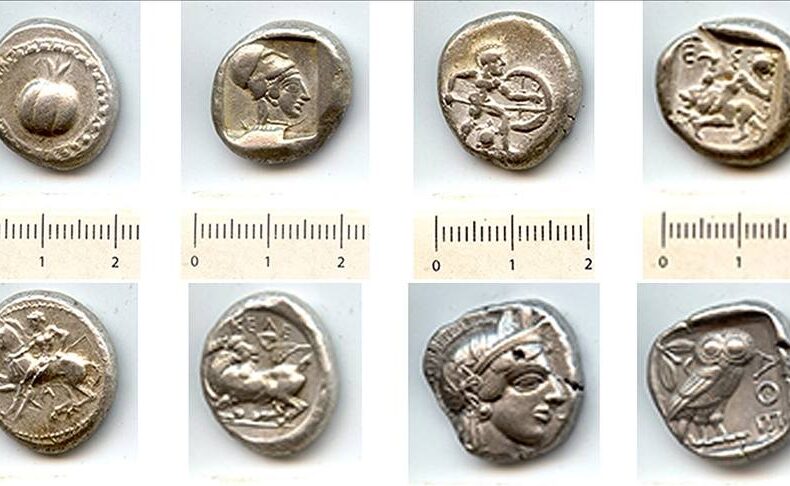
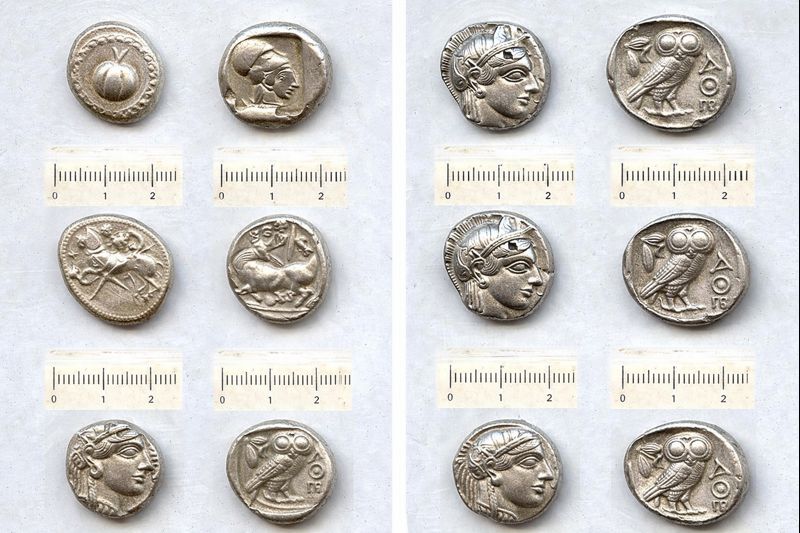
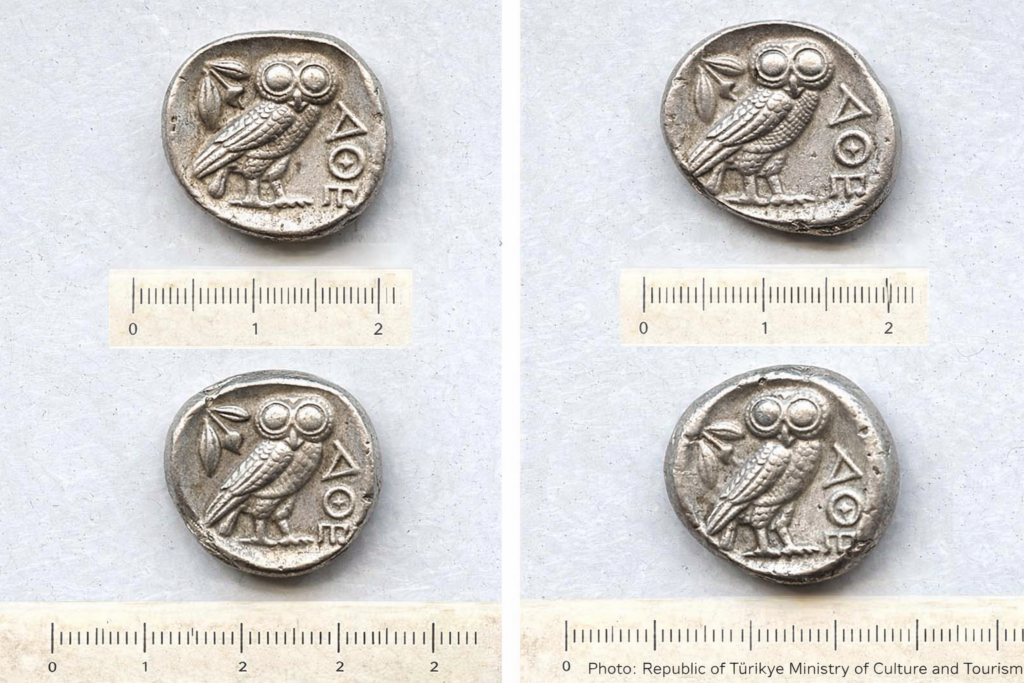
This monetary legacy came into sharper focus through a group of ancient silver coins that had been illicitly removed from Anatolia and later surfaced in Greece. Although detached from their original archaeological context, the coins preserved crucial evidence of early minting practices across western and southern Anatolia.
Scientific assessment and Anatolian origin
At the time, images of the seized artifacts provided by Greek authorities were examined individually by a team of specialists, including numismatist Ülkü Devecioğlu of the Anatolian Civilizations Museum and Associate Professor Hüseyin Köker. Their analysis confirmed that the silver coins included examples belonging to the Lydians—the first society known to mint coins.
📣 Our WhatsApp channel is now LIVE! Stay up-to-date with the latest news and updates, just click here to follow us on WhatsApp and never miss a thing!!
Following days of detailed evaluation focusing on weight standards, iconography, metal composition, and minting techniques, the experts determined that the entire assemblage was of Anatolian origin. The study further identified coins struck in several major ancient cities, including Tarsus, Side, Aspendos, and Soli-Pompeiopolis, highlighting the geographical breadth of early coin production in Anatolia.
Lydia and the invention of coinage
Ancient literary sources and archaeological evidence agree that the Lydians were the first to introduce official coinage. This breakthrough emerged in western Anatolia, particularly around Sardis, the Lydian capital and a major economic hub of its time.
Lydian coins were more than convenient pieces of silver. Their standardized weights and distinctive symbols—often featuring powerful animal motifs—expressed political authority and economic trust. In this sense, coinage became an early medium through which state power and legitimacy were communicated.
The monetary identities of Anatolian cities
One of the most revealing aspects of the assemblage is its diversity. Coins minted in Tarsus, Side, Aspendos, and Soli-Pompeiopolis demonstrate how local communities adapted the new technology of coinage to express their own political identities and economic ambitions.
Rather than reflecting a single centralized system, these coins point to a multi-centered and interconnected monetary network. Through them, Anatolia appears not as a peripheral region, but as a dynamic core of early Mediterranean economic life.
Why these coins matter
Large, coherent groups of coins provide insights that isolated finds cannot. Variations in weight systems, imagery, and metal quality allow scholars to trace economic change, political influence, and cultural interaction over time. In periods where written documentation is scarce, coins serve as silent yet exceptionally reliable historical witnesses.
Together, the Lydian and Anatolian city coins preserved in this assemblage form a condensed archive of the moment when money, authority, and identity became inseparable.
Anatolia’s monetary legacy
From Lydia to Pamphylia and from Cilicia to western Anatolia, this coinage tradition underscores the region’s foundational role in global economic history. Wherever these coins surface today, they point back to a single origin story:
The history of money begins in Anatolia.
1 comment
Leave a Reply
- A 1700-year-old statue of Pan unearthed during the excavations at Polyeuktos in İstanbul
- The granary was found in the ancient city of Sebaste, founded by the first Roman emperor Augustus
- Donalar Kale Kapı Rock Tomb or Donalar Rock Tomb
- Theater emerges as works continue in ancient city of Perinthos
- Urartian King Argishti’s bronze shield revealed the name of an unknown country

- The religious center of Lycia, the ancient city of Letoon
- Who were the Luwians?
- A new study brings a fresh perspective on the Anatolian origin of the Indo-European languages

- Perhaps the oldest thermal treatment center in the world, which has been in continuous use for 2000 years -Basilica Therma Roman Bath or King’s Daughter-
- The largest synagogue of the ancient world, located in the ancient city of Sardis, is being restored
The owl coin is Athenian. The Γρεεκ inscription ΑΘ… προωεσ ιτ.