
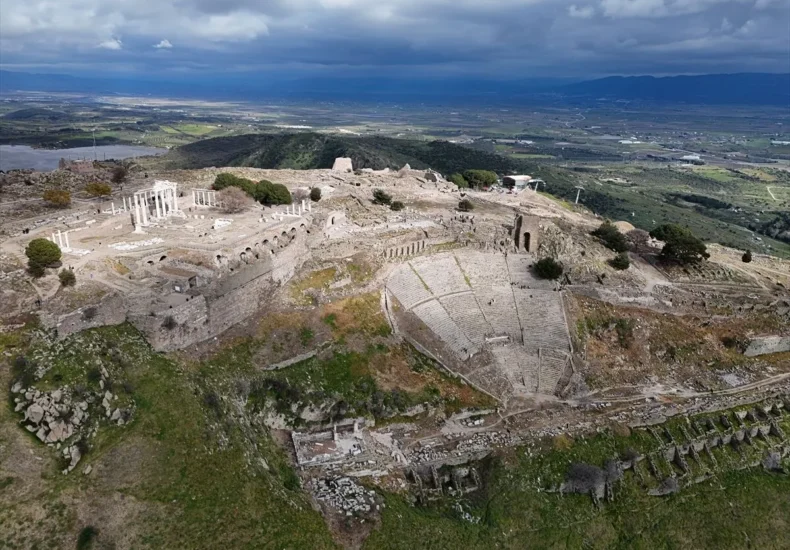
Ancient Pergamon Acropolis Reveals How a Hilltop City Became a Powerhouse of the Ancient World
Rising sharply above the modern town of Bergama in western Türkiye, the Pergamon Acropolis still dominates the landscape—just as it did more than two millennia ago. But this was no ordinary hilltop settlement. New interpretations of its urban design and historical development are shedding light on how Pergamon transformed a steep and seemingly impractical terrain into one of the most powerful and intellectually influential cities of the ancient world.
A City Built to Command the Landscape
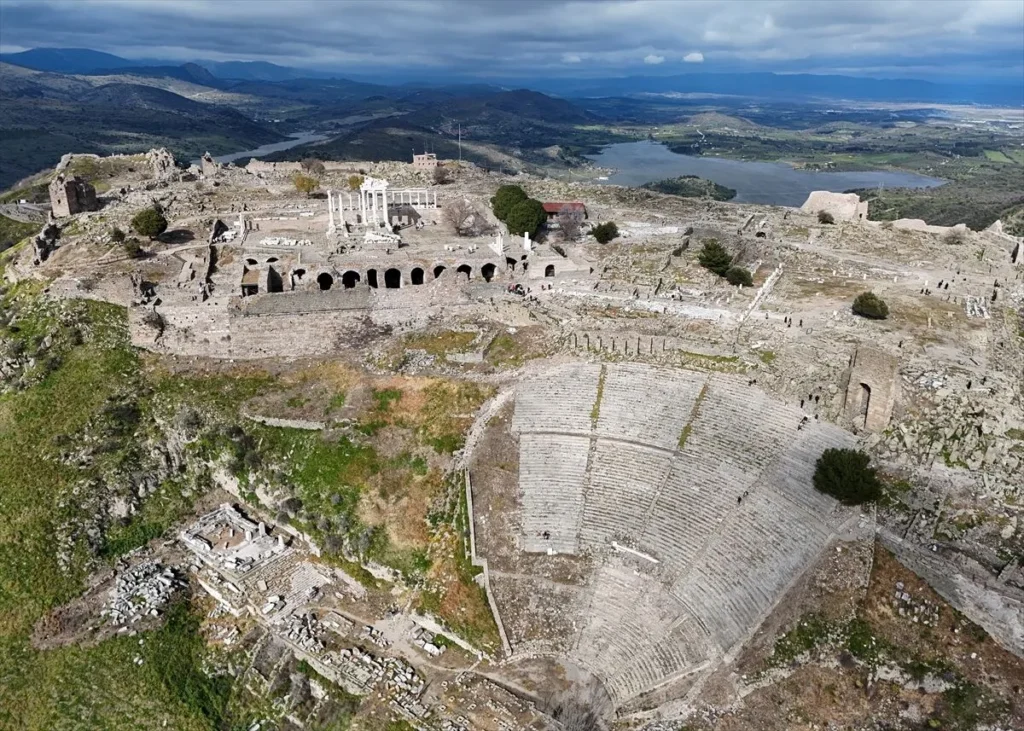
Unlike many ancient cities that expanded gradually, Pergamon was shaped with intention. During the Hellenistic period under the Attalid dynasty, the acropolis was redesigned as a royal statement of power, where elevation itself became a political tool.
Terraces carved into the hillside allowed palaces, temples, and administrative buildings to rise one above another, creating a visual hierarchy that reinforced authority. From the valley below, the city would have appeared not just fortified—but unreachable and dominant.
Knowledge, Innovation, and Rivalry with Alexandria
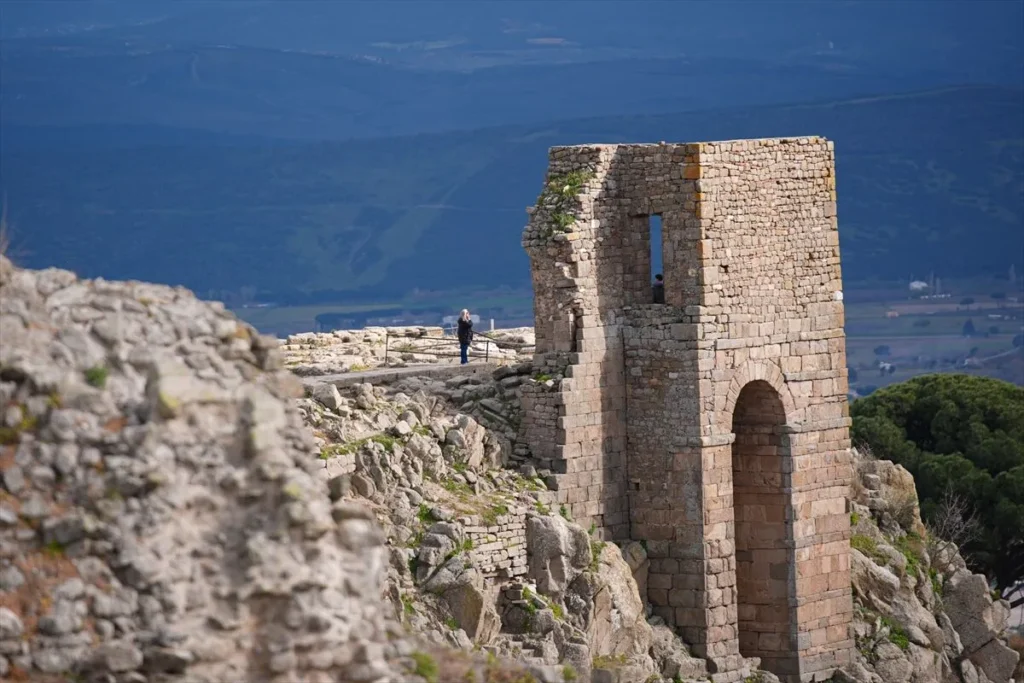
Pergamon’s influence extended far beyond politics. It became one of the ancient world’s leading centers of learning, home to a library that rivaled that of Alexandria.
📣 Our WhatsApp channel is now LIVE! Stay up-to-date with the latest news and updates, just click here to follow us on WhatsApp and never miss a thing!!
Ancient sources suggest the library housed hundreds of thousands of scrolls, attracting scholars from across the Mediterranean. This intellectual competition is also linked to one of Pergamon’s most enduring contributions: the development of parchment, a writing material that would outlast papyrus and shape the future of written knowledge.
Architecture That Defied the Terrain
What makes the Pergamon Acropolis particularly striking is how its builders embraced, rather than resisted, the landscape.
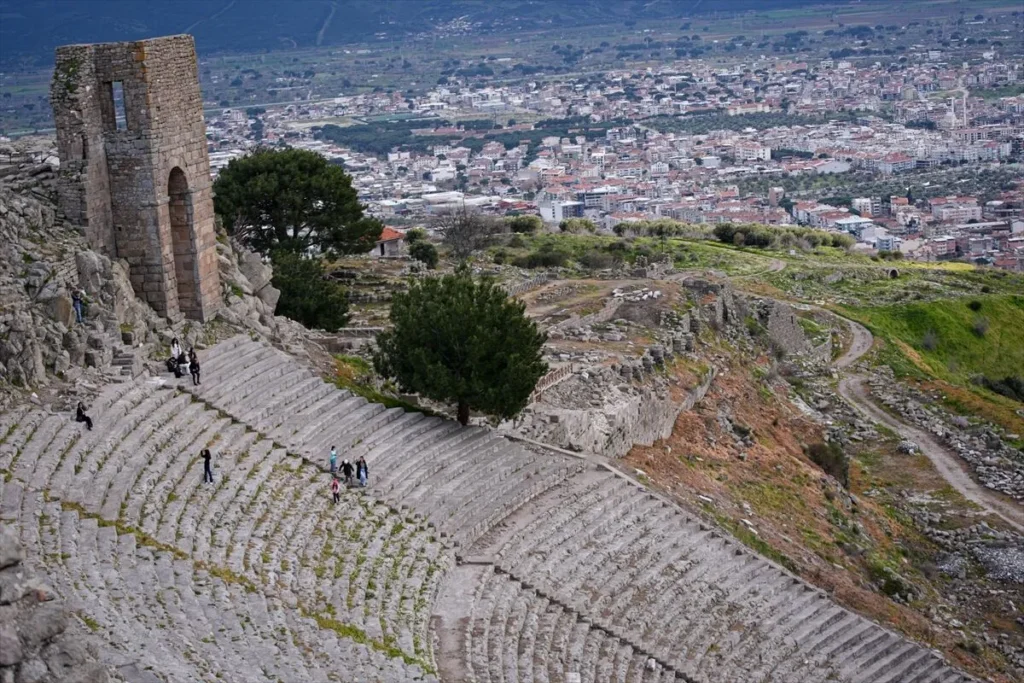
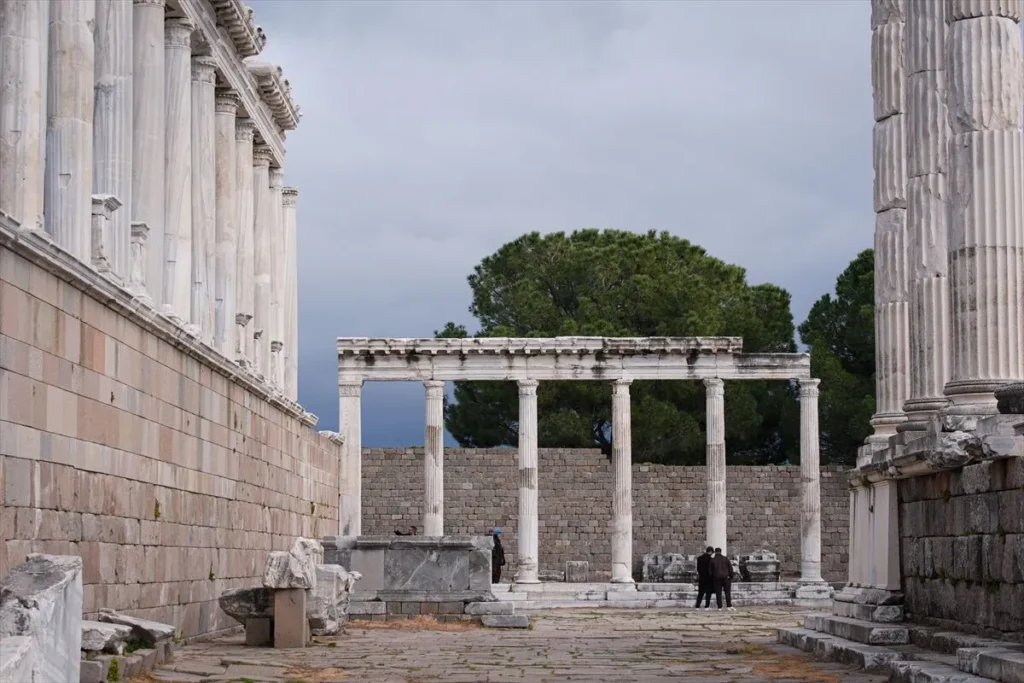
The steep theater, dramatically cut into the hillside, remains one of the most vertiginous in the ancient world. Nearby, the Temple of Athena anchored both religious and intellectual life, while the later Trajan Temple signaled the city’s continued importance under Roman rule.
Dominating the artistic legacy of Pergamon was the monumental Pergamon Altar, a structure designed not only for ritual but also as a visual narrative of power, with its dynamic sculptural friezes redefining Hellenistic art.
From Hellenistic Kingdom to Roman Capital
Pergamon’s story did not end with its kings. In 133 BCE, the city was bequeathed to Rome, becoming the capital of the province of Asia.
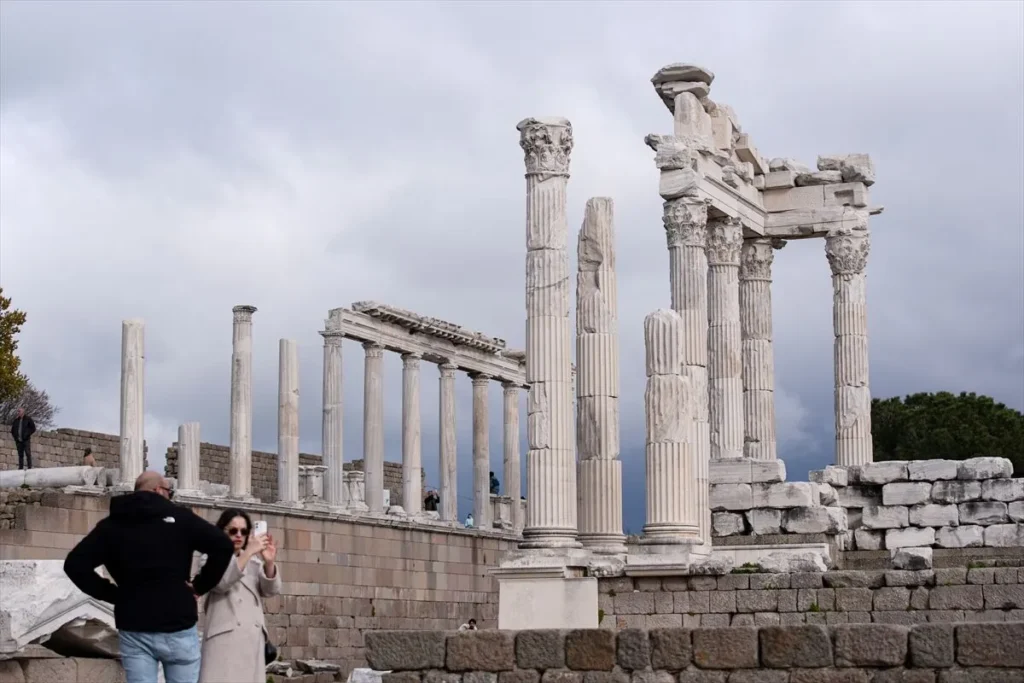
Rather than fading, it entered a new phase of prosperity. Roman investments expanded the lower city, while the acropolis retained its symbolic and administrative significance. The city also became a major center of imperial cult worship, further embedding it in the Roman world.
A Layered Legacy into Late Antiquity
Pergamon remained significant into the early Christian period, later appearing among the Seven Churches of Asia mentioned in the Book of Revelation.
This continuity—from Hellenistic innovation to Roman administration and early Christianity—makes the site a rare example of a multi-layered cultural landscape spanning centuries.
Why Pergamon Still Matters Today
Recognized as a UNESCO World Heritage Site, the Pergamon Acropolis continues to offer new insights into how ancient cities were planned, experienced, and remembered.
It stands as a reminder that power in the ancient world was not only exercised through armies or wealth—but also through architecture, knowledge, and the ability to shape the environment itself.
All photos are courtesy of Anadolu Agency.
- A 1700-year-old statue of Pan unearthed during the excavations at Polyeuktos in İstanbul
- The granary was found in the ancient city of Sebaste, founded by the first Roman emperor Augustus
- Donalar Kale Kapı Rock Tomb or Donalar Rock Tomb
- Theater emerges as works continue in ancient city of Perinthos
- Urartian King Argishti’s bronze shield revealed the name of an unknown country
- The religious center of Lycia, the ancient city of Letoon
- Who were the Luwians?
- A new study brings a fresh perspective on the Anatolian origin of the Indo-European languages

- Perhaps the oldest thermal treatment center in the world, which has been in continuous use for 2000 years -Basilica Therma Roman Bath or King’s Daughter-
- The largest synagogue of the ancient world, located in the ancient city of Sardis, is being restored
Leave a Reply