
Beneath a Modern Market in Trabzon, a Rare Roman-Era River Harbor Emerges
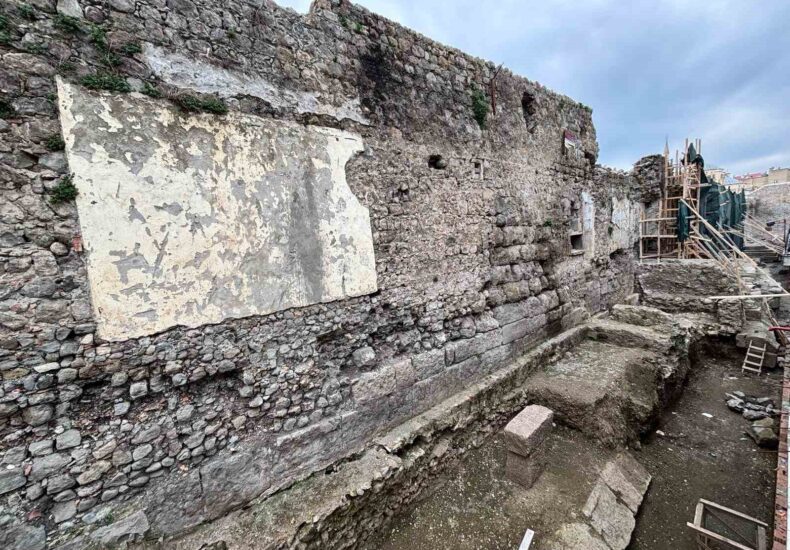
For years, the Pazarkapı district in Trabzon was simply a marketplace. Few suspected that beneath the demolished Kadınlar Hali building lay a structure that would quietly redefine how we understand Black Sea commerce.
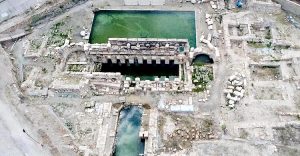
Recent archaeological and conservation work has identified the remains as a river harbor connected to the Kuzgundere Stream — and, according to researchers, one of only three known examples of its kind worldwide.
The finding shifts attention from open-sea ports to inland water logistics. It suggests that ancient Trabzon was not merely a coastal trading station, but a carefully engineered node linking maritime and freshwater routes.
From Construction Site to Archaeological Landmark
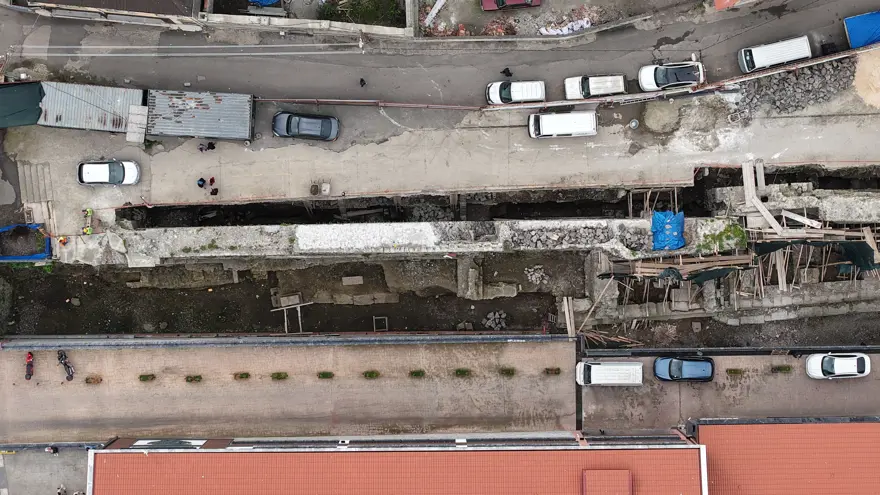
The discovery came to light after the 2020 demolition of the former market structure. When redevelopment plans were revised, systematic excavations began. What initially appeared to be a quay wall soon revealed unexpected scale and complexity.
📣 Our WhatsApp channel is now LIVE! Stay up-to-date with the latest news and updates, just click here to follow us on WhatsApp and never miss a thing!!
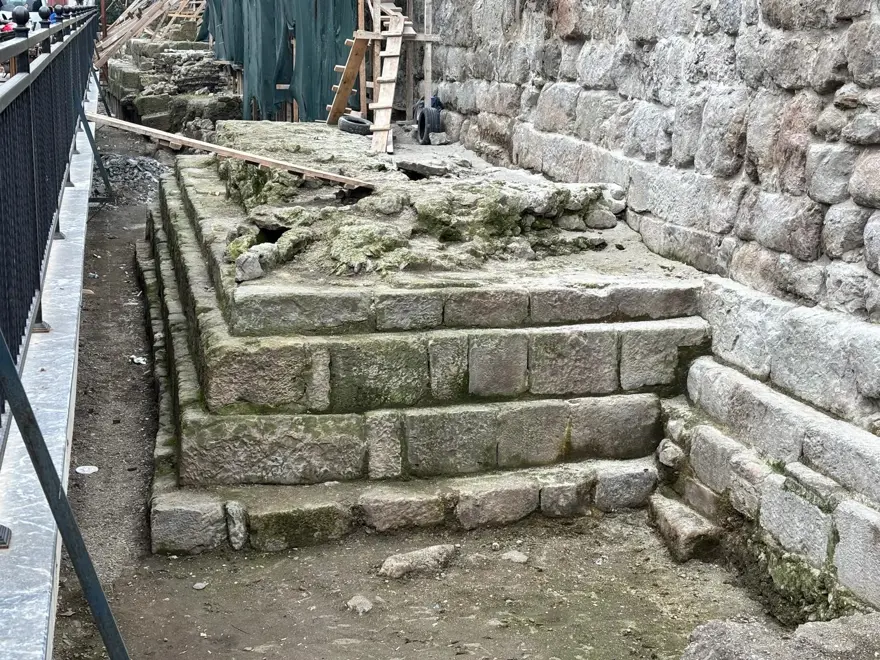
Excavations reaching depths of up to eight meters exposed a monumental retaining wall measuring approximately 135 meters in length and two meters in thickness. The structure’s earliest phase dates between the 1st century BCE and the 1st century CE, yet its architectural layers show continued adaptation across the Roman, Byzantine, Ottoman, and Republican periods.
Walls running perpendicular to the main quay indicate storage or commercial annexes. Two former gateways — one arched, the other belonging to an earlier construction phase — suggest controlled entry points for goods moving between water and land.
The engineering speaks of planning. Not improvisation.
Identifying a River Harbor
The decisive interpretation emerged through the work of archaeologist Vedat Keleş and conservation specialist Yaşar Selçuk Şener. hydrological context, and stratigraphic evidence confirmed that the installation was not an ordinary maritime dock but a harbor connected directly to the Kuzgundere Stream.
River harbors occupy a rare category in ancient infrastructure. Unlike open-sea ports, they demand integrated water management, controlled embankments, and resilience against seasonal flow changes. Their scarcity in the archaeological record makes the Trabzon example particularly significant for Anatolian and Black Sea studies.
Material Evidence of Trade Networks
Among the finds, a Crimean oil lamp stands out. Its presence provides tangible proof of commercial links across the Black Sea basin. Byzantine ceramic fragments recovered from deeper levels further attest to long-term mercantile continuity.
These materials reinforce a growing picture: Trabzon’s commercial vitality predates many later imperial narratives and was embedded in a wider trans-regional network connecting Anatolia to Crimea and beyond.
Conservation as Archaeological Responsibility
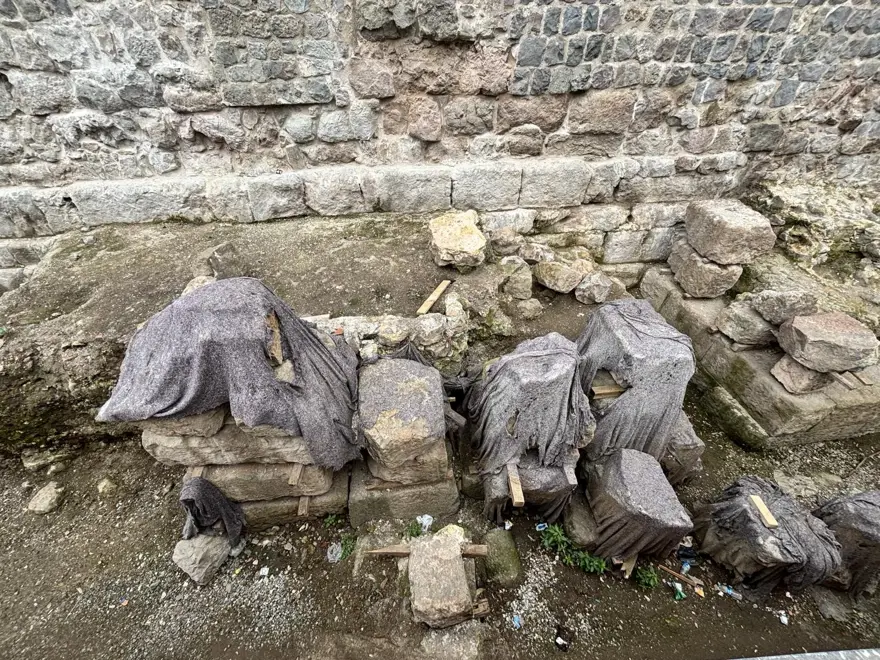
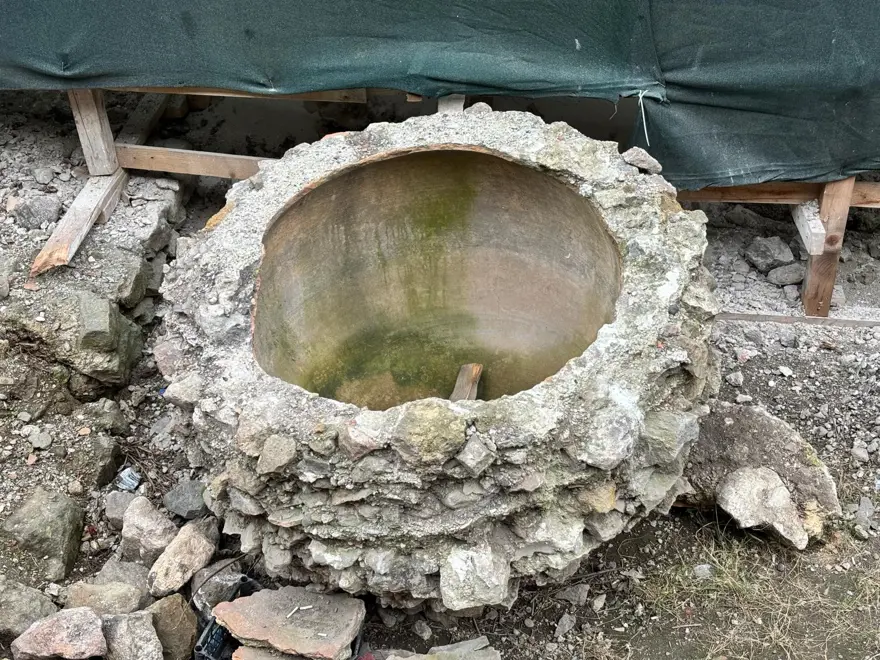
The quay walls had endured centuries of structural stress and modern cement-based interventions. Conservation teams removed incompatible materials and stabilized the masonry using hydraulic lime injections — a method designed to strengthen internal voids without compromising original fabric.
A protective capping layer was added to shield the structure from water infiltration and environmental damage.
The approach was careful. Reversible where possible. Focused on longevity rather than cosmetic reconstruction.
Rethinking Black Sea Infrastructure
The identification of this structure as a river harbor broadens the framework through which Black Sea trade is interpreted. It reveals a hybrid system — maritime and fluvial — that allowed goods to circulate with flexibility and security.
In Trabzon, that system lay hidden beneath everyday urban life.
Now exposed, it offers one of the clearest pieces of evidence that Anatolia’s northern coast functioned through layered, engineered trade corridors long before the medieval era reshaped the region’s political geography.
- A 1700-year-old statue of Pan unearthed during the excavations at Polyeuktos in İstanbul
- The granary was found in the ancient city of Sebaste, founded by the first Roman emperor Augustus
- Donalar Kale Kapı Rock Tomb or Donalar Rock Tomb
- Theater emerges as works continue in ancient city of Perinthos
- Urartian King Argishti’s bronze shield revealed the name of an unknown country
- The religious center of Lycia, the ancient city of Letoon
- Who were the Luwians?
- A new study brings a fresh perspective on the Anatolian origin of the Indo-European languages

- Perhaps the oldest thermal treatment center in the world, which has been in continuous use for 2000 years -Basilica Therma Roman Bath or King’s Daughter-
- The largest synagogue of the ancient world, located in the ancient city of Sardis, is being restored
Leave a Reply