
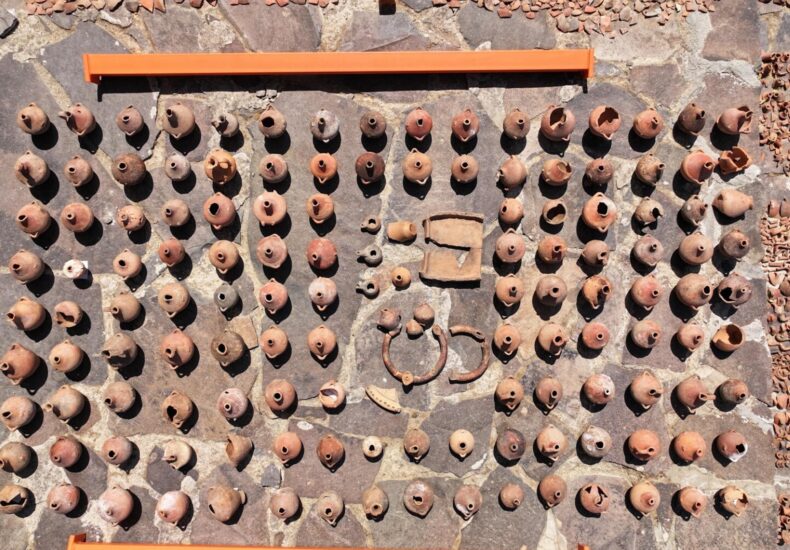
3,000 Ritual Hydriskoi Discovered at Demeter–Kore Temple in Aigai, Western Türkiye
A quiet sanctuary overlooking the rugged slopes of Yuntdağı has revealed an extraordinary testimony to ancient ritual life. Archaeologists working at the Demeter–Kore Temple in Aigai have uncovered approximately 3,000 small terracotta water vessels known as hydriskoi — one of the most substantial votive accumulations ever documented at the site. The excavation, conducted for the
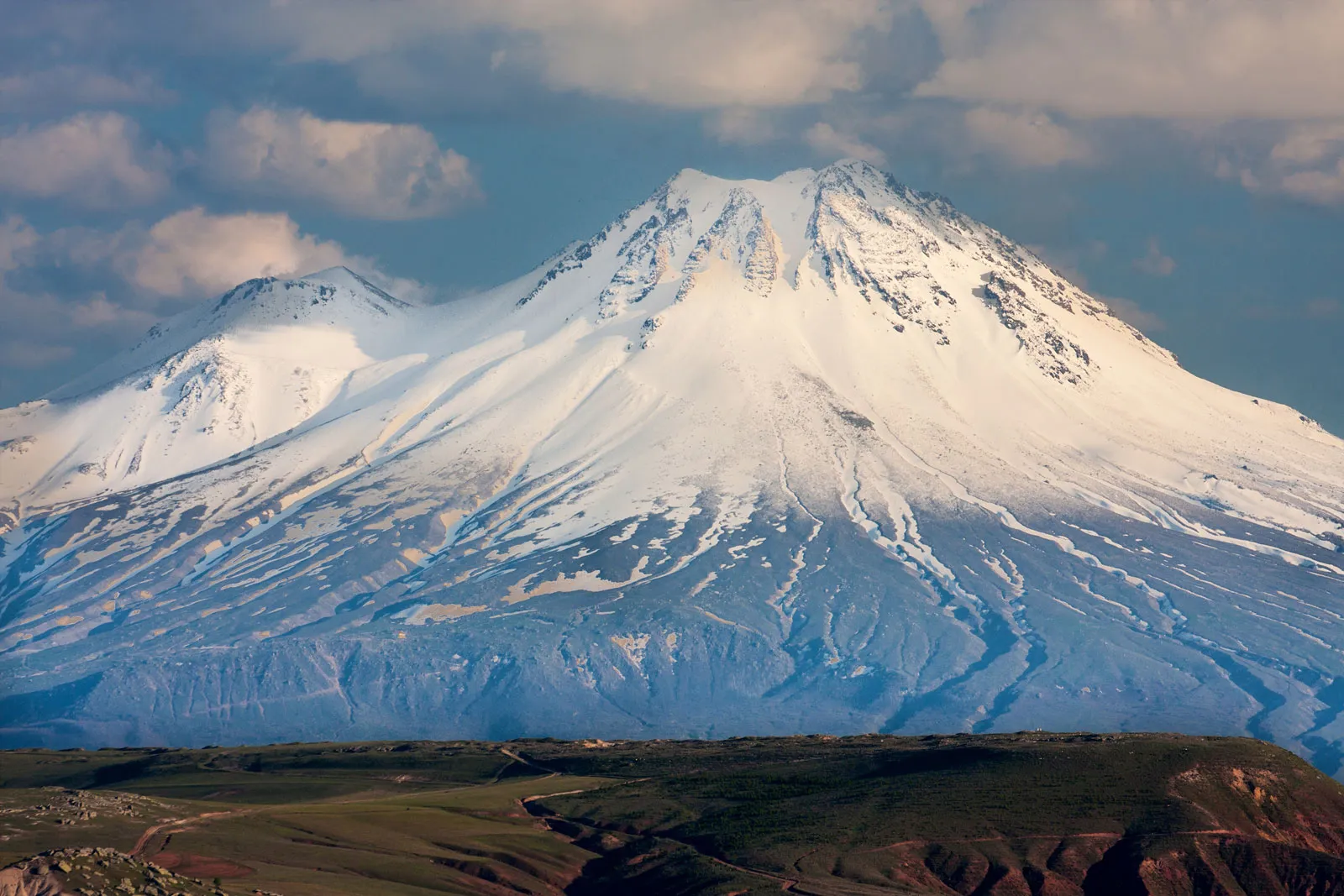
New Study Reassesses Mount Ararat’s Role in the Noah Ark Tradition Across Three Faiths
Mount Ararat is often presented as a question. Did the Ark land there — or not? But a new academic study suggests we may have been asking the wrong question all along. Instead of searching for frozen timber beneath glaciers, the 2025 research turns to something more complex: how one mountain carries three different sacred
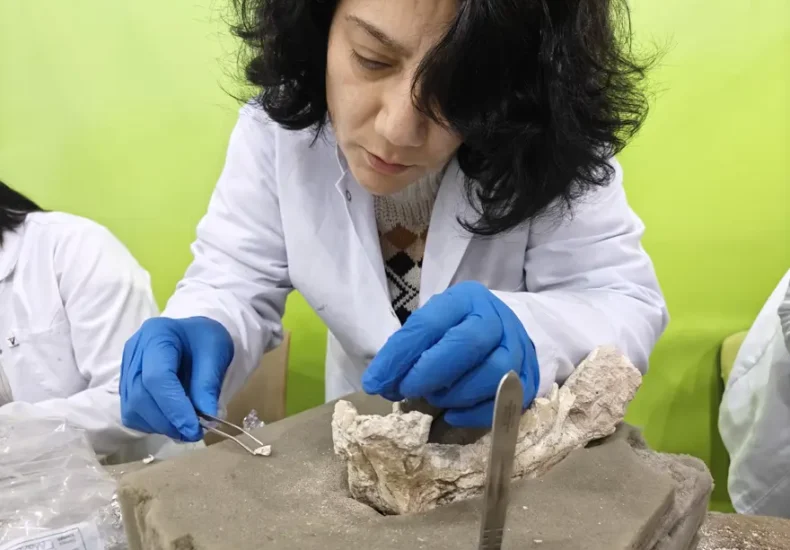
New 7.7-Million-Year-Old Fossils Unearthed in Central Anatolia: Kayseri Site Reveals Younger Species Remains
Fresh fossil discoveries in central Türkiye are offering new insight into Anatolia’s deep-time biodiversity. Excavations near the Yamula Dam locality in Kayseri have yielded 103 new fossil fragments during the 2025 field season—remains that researchers believe may belong to a younger species than those previously documented at the site. The finds come from the Çevril–Taşhan
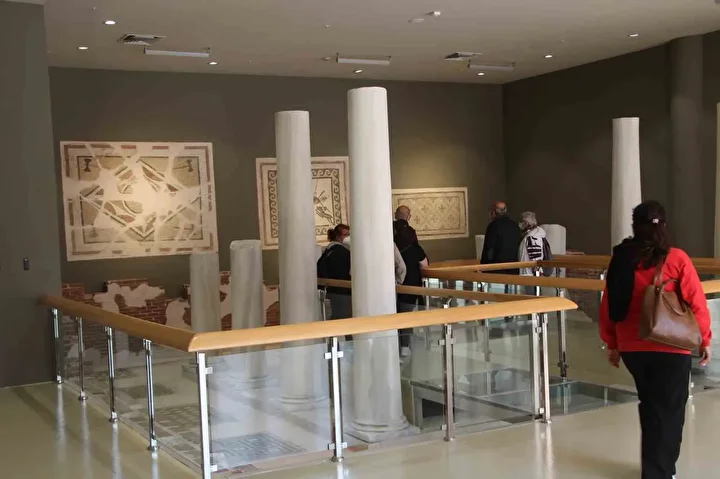
Hatay Archaeology Museum to Reopen in Phases by the End of 2026
The Hatay Archaeology Museum in southern Türkiye—severely damaged during the devastating February 6, 2023 earthquakes—will reopen in stages, with full public access planned by the end of 2026, officials have confirmed. Before the disaster, the museum housed approximately 37,000 artifacts, including an internationally renowned collection of Roman and Byzantine mosaics. Following the earthquakes, the artifacts
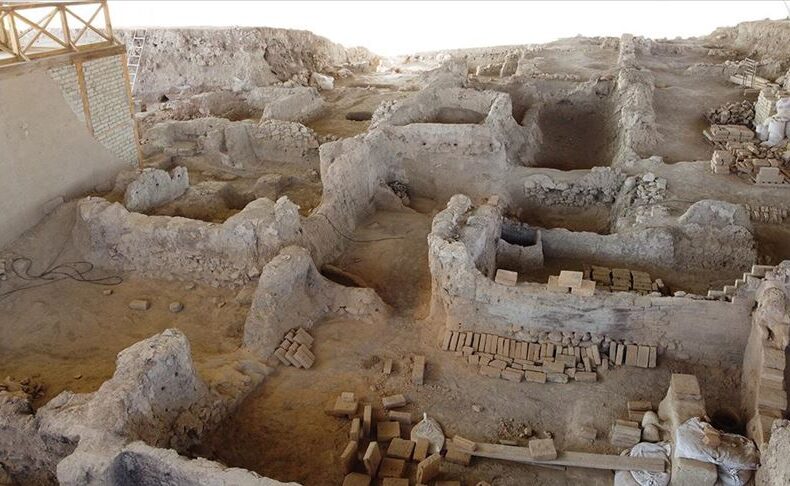
Bronze Age Breakthrough in Anatolia: 3,900-Year-Old Indigo Textile and Single-Needle Knitting Unearthed at Beycesultan
A charred scrap of fabric from western Anatolia is forcing archaeologists to rethink the technological sophistication of the Bronze Age. At Beycesultan Höyük, a major mound settlement in inland western Türkiye, researchers have identified the earliest known indigo-dyed textile in Bronze Age Anatolia—alongside the region’s first evidence of a complex single-needle knitting technique known as
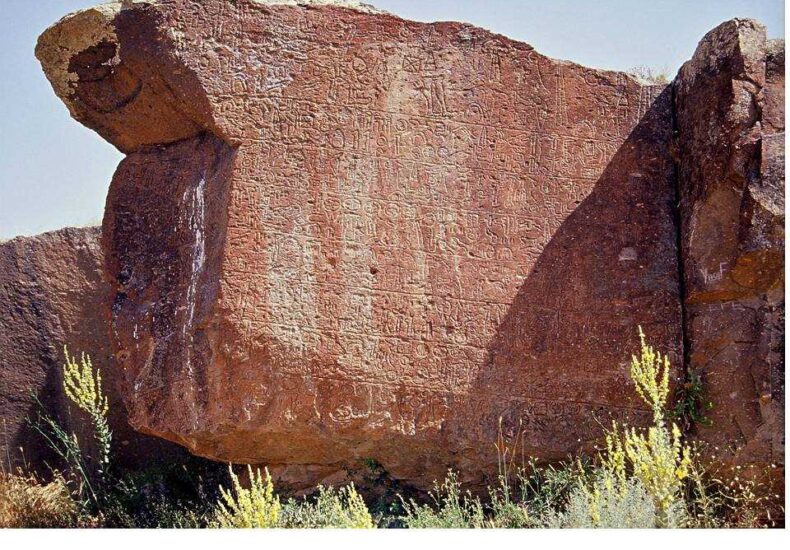
A Kingdom in the Shadow of Assyria: The Topada Inscription and the Politics of War in 8th-Century Anatolia
In central Anatolia, near modern Nevşehir, the Topada Inscription preserves one of the most important royal inscriptions of the 8th century BCE. Commissioned by Wasusarma, king of Tabal, and carved in Hieroglyphic Luwian, the monument documents a regional war involving eight rival kings and reflects the shifting balance of power under the expanding shadow of
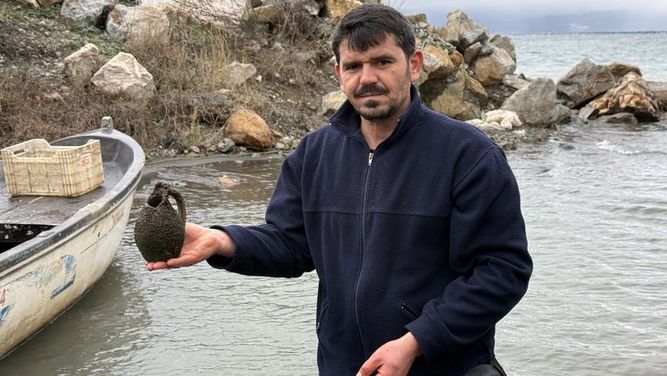
Fishing Net Snags Possible Ancient Jar as Water Levels Drop in Lake İznik
A routine morning on Lake İznik turned unexpectedly archaeological this week, when a fisherman’s net surfaced not with carp or perch—but with what appears to be a historic clay jar. The incident occurred along the shores of Göllüce, a neighborhood on the western edge of the lake in Bursa, northwestern Türkiye. As drought conditions continue
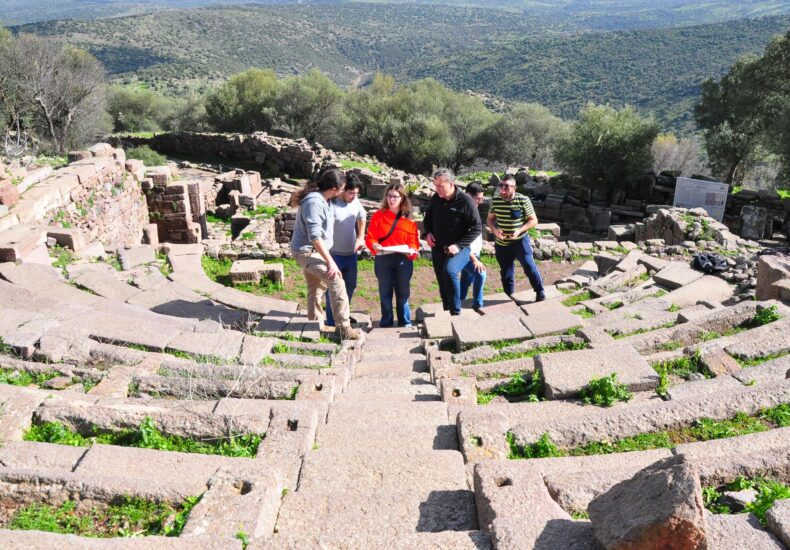
2,200-Year-Old Assembly Building at Aigai Enters Conservation Phase in Western Türkiye
High on the slopes of Yunt Mountain in western Türkiye, a silent stone structure once echoed with debate. Today, the 2,200-year-old bouleuterion—Aigai’s ancient assembly building—is preparing for a new chapter: conservation and restoration. Located in the Yunusemre district of Manisa, the ancient city of Aigai has been under excavation since 2004. According to excavation director
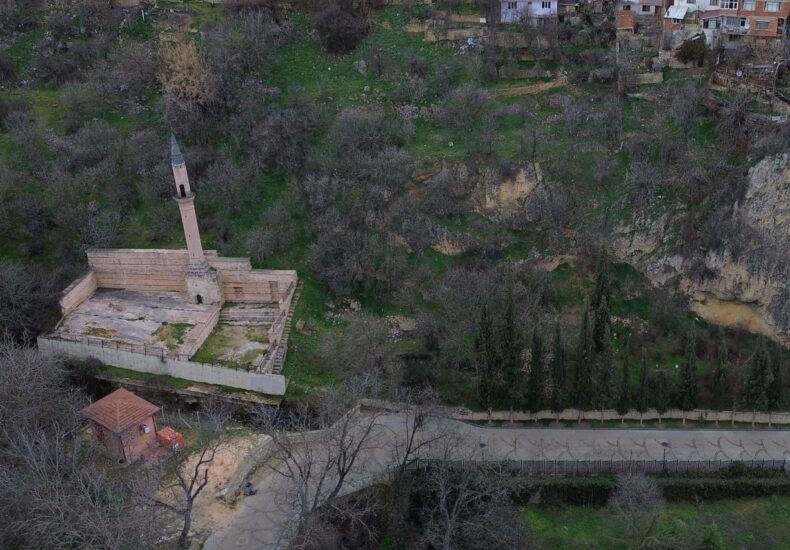
Site of Ottoman Founder Osman I’s Lost House Identified and Registered in Bilecik, Türkiye
The building no longer survives. It was likely destroyed during the upheaval of the early 20th century. Yet in 2025, Turkish authorities formally registered the exact location traditionally identified as the house of Osman I, founder of the Ottoman state, inside the Sheikh Edebali Complex in Bilecik, northwestern Türkiye. The registration covers a 40-square-meter area,
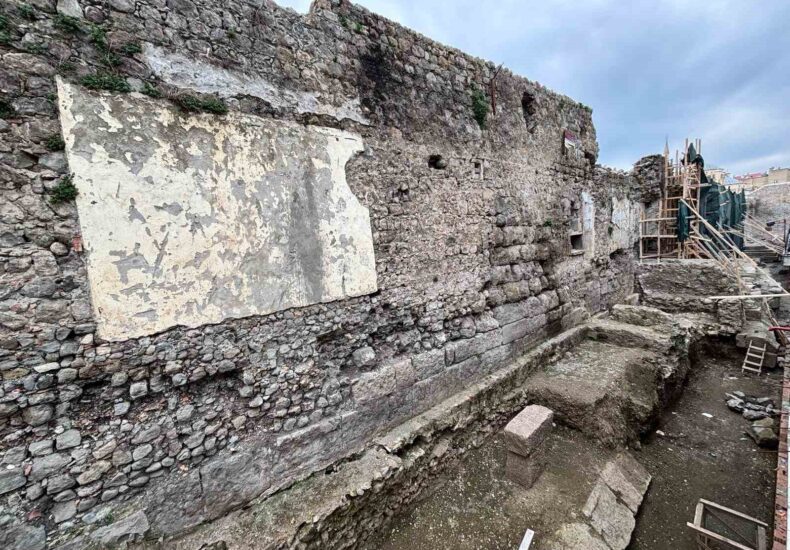
Beneath a Modern Market in Trabzon, a Rare Roman-Era River Harbor Emerges
For years, the Pazarkapı district in Trabzon was simply a marketplace. Few suspected that beneath the demolished Kadınlar Hali building lay a structure that would quietly redefine how we understand Black Sea commerce. Recent archaeological and conservation work has identified the remains as a river harbor connected to the Kuzgundere Stream — and, according to