Hatay Archaeology Museum to Reopen in Phases by the End of 2026
The Hatay Archaeology Museum in southern Türkiye—severely damaged during the devastating February 6, 2023 earthquakes—will reopen in stages, with full public access planned by the end of 2026, officials have confirmed.
Before the disaster, the museum housed approximately 37,000 artifacts, including an internationally renowned collection of Roman and Byzantine mosaics. Following the earthquakes, the artifacts were carefully transferred to secure storage facilities to ensure their preservation while structural reinforcement and restoration work began.
A Cultural Landmark Shaken by Disaster
The earthquakes centered in Kahramanmaraş caused widespread destruction across Hatay province, including in its historic capital Antakya. Public buildings, residential districts, and heritage sites suffered extensive damage.
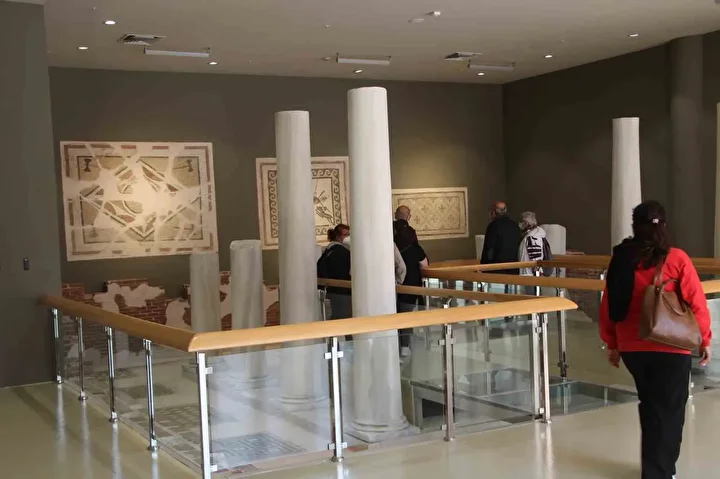
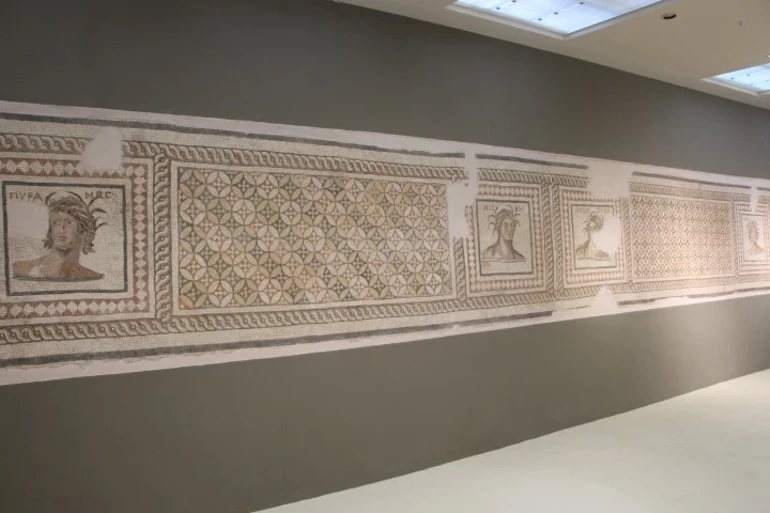
Among them was the Hatay Archaeology Museum—long regarded as a cornerstone of the region’s cultural identity. Its galleries once displayed monumental mosaic floors from ancient cities such as Daphne (Harbiye), Antioch, and Seleucia Pieria, offering rare insight into daily life, mythology, and artistic production in the eastern Mediterranean during the Roman Empire.
📣 Our WhatsApp channel is now LIVE! Stay up-to-date with the latest news and updates, just click here to follow us on WhatsApp and never miss a thing!!
Now, a comprehensive rehabilitation project aims not only to restore the building but to modernize its exhibition infrastructure.
“One of the Largest Mosaic Museums in the World”
During a site visit, Turkish MP and Deputy Chair of the ruling party, Hüseyin Yayman, emphasized the museum’s global significance, describing it as “one of the largest mosaic museums in the world.”
According to officials, part of the museum complex is expected to reopen by the end of the year in a phased rollout, with the full reopening targeted for late 2026.
The restoration is being carried out under the supervision of the Ministry of Culture and Tourism which has prioritized the safeguarding of Hatay’s archaeological heritage as part of broader urban reconstruction efforts.
Expanding the Collection to 40,000 Artifacts
Before the earthquakes, the museum’s inventory stood at 37,000 objects. When it reopens, that number is projected to rise to around 40,000 artifacts, reflecting catalog updates, conservation efforts, and expanded display capacity.
The collection spans multiple civilizations that shaped Hatay over millennia—Hellenistic, Roman, Byzantine, Islamic, and Ottoman—underscoring the city’s historical role as a crossroads between Anatolia and the Levant.
More Than a Museum
For Hatay, the reopening carries symbolic weight.
Reconstruction in the province has focused not only on housing and infrastructure, but also on restoring cultural life. Officials have repeatedly stressed that rebuilding the city means rebuilding its identity—its public spaces, green areas, and cultural institutions alongside homes and businesses.
The Hatay Archaeology Museum, once considered a “must-see” destination for visitors to Türkiye, represents that broader vision. Its mosaics—some measuring several meters across—are among the most important surviving examples of late antique floor art in the Mediterranean.
When the museum doors reopen in 2026, it will mark more than the return of a tourist attraction. It will signal the revival of a city whose history stretches back thousands of years—and whose cultural memory has endured, even in the face of catastrophe.
For international audiences, the reopening will restore access to one of the Middle East’s and Anatolia’s most significant archaeological collections—an archive in stone that tells the story of a region where civilizations met, mingled, and flourished.
- A 1700-year-old statue of Pan unearthed during the excavations at Polyeuktos in İstanbul
- The granary was found in the ancient city of Sebaste, founded by the first Roman emperor Augustus
- Donalar Kale Kapı Rock Tomb or Donalar Rock Tomb
- Theater emerges as works continue in ancient city of Perinthos
- Urartian King Argishti’s bronze shield revealed the name of an unknown country
- The religious center of Lycia, the ancient city of Letoon
- Who were the Luwians?
- A new study brings a fresh perspective on the Anatolian origin of the Indo-European languages

- Perhaps the oldest thermal treatment center in the world, which has been in continuous use for 2000 years -Basilica Therma Roman Bath or King’s Daughter-
- The largest synagogue of the ancient world, located in the ancient city of Sardis, is being restored
Leave a Reply