
Hikers Stumble Upon a Mysterious Underground Mosque of Unknown Date in Batman’s Gömek Plateau
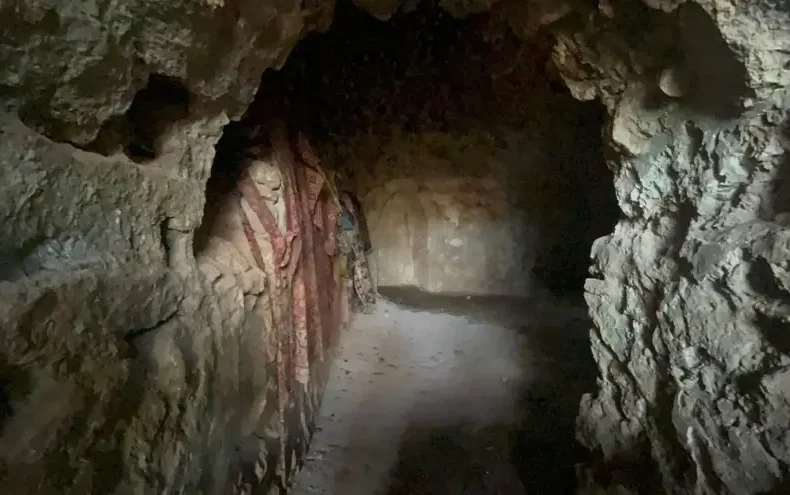
What began as a routine nature walk in the rugged highlands of Batman turned into one of the region’s most unexpected heritage discoveries in recent years. A group of hikers and local villagers exploring the Gömek Plateau near the dramatic ravine known as Cehennem Deresi happened upon a narrow opening in the rock face. What lay beyond the shadowed entrance was something none of them expected: a remarkably preserved underground structure that appears to function as a small mosque, yet its construction date remains entirely unknown.
Inside the chamber, the hikers found a fully intact mihrab, dozens of clay vessels embedded directly into the walls, and a large, unidentified burial at the center of the space. The acoustic jars—likely positioned to modulate sound—suggest a sophisticated understanding of interior resonance, while the monumental grave raises questions about the identity and status of the person interred.
A silent sanctuary hidden beneath the plateau
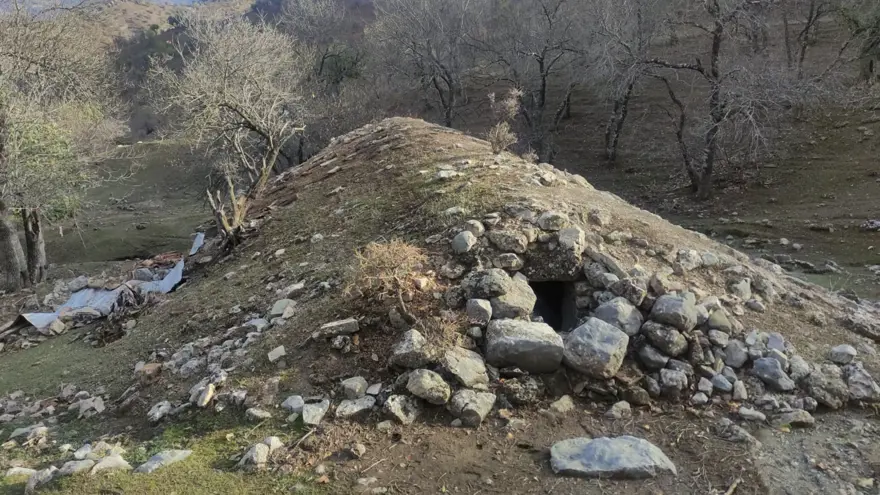
The structure lies beneath a rocky slope, reachable only through a narrow ovoid opening. Sunlight fades almost instantly inside, but the interior plan becomes clearer once the eyes adjust: a prayer niche carved directly into the bedrock, a series of recesses likely used for oil lamps, and rows of jar-shaped cavities that appear to have been intentionally placed for sound insulation.
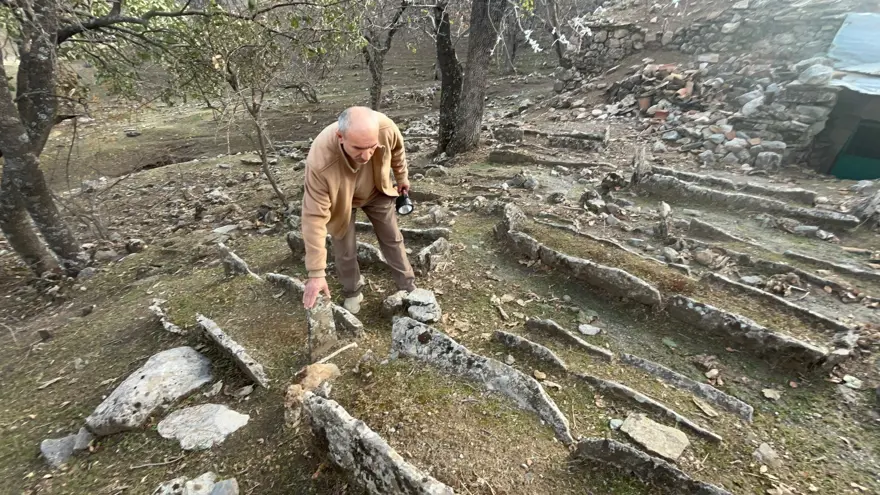
On the surface surrounding the subterranean chamber, hikers and villagers also identified numerous elongated graves scattered across the plateau—some believed to belong to children. Their alignment and clustering suggest that the area once formed part of a larger sacred or communal zone rather than an isolated burial site.
📣 Our WhatsApp channel is now LIVE! Stay up-to-date with the latest news and updates, just click here to follow us on WhatsApp and never miss a thing!!
Local records offer few clues. While previous surveys by the Batman Governorship documented various artifacts from the wider region—many now listed in the Batman Cultural Inventory—this concealed mosque-like space was never recorded. Its absence from official documentation adds a layer of intrigue and urgency, prompting calls for immediate archaeological assessment.
Eyewitness account: “It felt like stepping into a forgotten century”
Sabahattin Atalay, one of the hikers who entered the chamber, described the discovery with clear astonishment.
“We were walking across the Gömek Plateau when villagers pointed out a small hollow in the rocks,” Atalay told Anatolian Archaeology. “Once inside, we were stunned. The mihrab looked untouched. The walls were filled with these jars—I later learned they were probably for acoustics. And right in the middle, there was a large tomb. When we stepped back outside, we realized the surrounding land was full of graves. It felt like a structure rising straight from the depths of history. No one knows its date. It definitely needs expert investigation.”
An unexplored chapter waiting for science
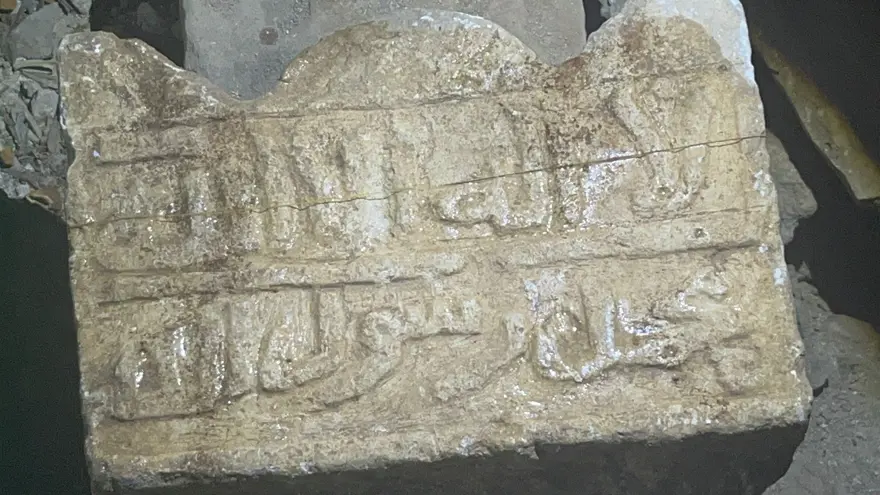
The lack of epigraphic markers, construction signatures, or associated artifacts makes it difficult to place the underground mosque within a clear historical framework. Similar subterranean sanctuaries in southeastern Türkiye have been variously linked to early Islamic communities, Sufi lodges, late antiquity hermitages, or even pre-Islamic sacred spaces repurposed over time.
Archaeologists note that the presence of acoustic jars could hint at a medieval or early-Islamic date, but these are only preliminary hypotheses. A full archaeological study involving stratigraphic analysis, radiocarbon sampling, architectural documentation, and comparative typology will be required to understand the site’s origins.
Until then, the Gömek Plateau holds onto its secrets—an isolated ridge overlooking a dramatic canyon, concealing a silent sanctuary that waited centuries for hikers to pass by at just the right moment.
- A 1700-year-old statue of Pan unearthed during the excavations at Polyeuktos in İstanbul
- The granary was found in the ancient city of Sebaste, founded by the first Roman emperor Augustus
- Donalar Kale Kapı Rock Tomb or Donalar Rock Tomb
- Theater emerges as works continue in ancient city of Perinthos
- Urartian King Argishti’s bronze shield revealed the name of an unknown country
- The religious center of Lycia, the ancient city of Letoon
- Who were the Luwians?
- A new study brings a fresh perspective on the Anatolian origin of the Indo-European languages

- Perhaps the oldest thermal treatment center in the world, which has been in continuous use for 2000 years -Basilica Therma Roman Bath or King’s Daughter-
- The largest synagogue of the ancient world, located in the ancient city of Sardis, is being restored
Leave a Reply