
Looters Target 2,300-Year-Old Amyzon as Excavations in Ancient Carian City Remain Delayed
The ancient city of Amyzon, located in Aydın Province in western Türkiye, has become increasingly vulnerable to looting after long-planned archaeological excavations failed to begin.
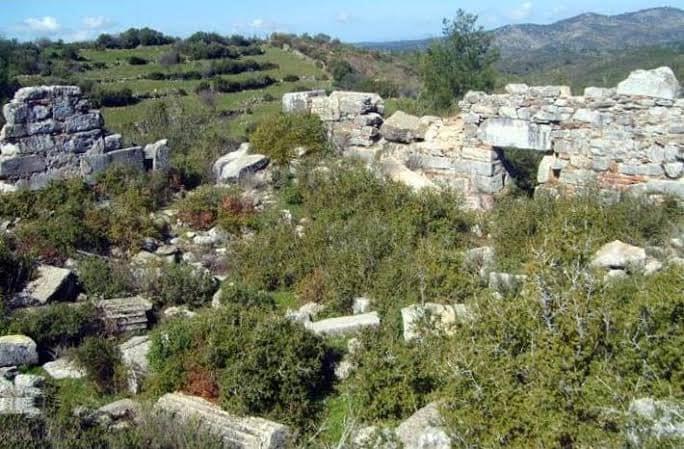
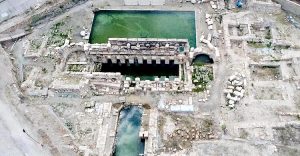
Dating back more than 2,300 years, the Carian city preserves impressive defensive walls and architectural remains. Yet despite its archaeological importance, Amyzon has not been the focus of a systematic excavation for decades.
The lack of an official excavation team has left large parts of the site exposed — and in some cases, damaged by illegal digging.
Excavations Announced but Never Began
In 2021, authorities announced plans to launch new archaeological excavations at Amyzon. The project raised hopes that the site would finally receive sustained scientific attention after nearly eighty years without major fieldwork.
📣 Our WhatsApp channel is now LIVE! Stay up-to-date with the latest news and updates, just click here to follow us on WhatsApp and never miss a thing!!
However, the initiative stalled when an official excavation directorate was never established.
Without an academic team responsible for research and protection, the project could not move forward. As a result, Amyzon remains what locals sometimes describe as one of Aydın’s “orphaned” ancient cities — historically significant, yet still waiting for proper archaeological study.
Looting and Earlier Excavations
In the absence of continuous archaeological supervision, parts of the site have reportedly become targets for illegal excavations.
Treasure hunters searching for artifacts have caused damage in several areas of the ancient settlement.
Local accounts also recall an earlier episode in the 1940s, when a foreign researcher is said to have conducted excavations at Amyzon with workers from nearby villages. According to these stories, numerous inscribed stones were uncovered during that time and later disappeared, although documentation of the work remains limited.
Monumental Walls and Underground Chambers
Even without modern excavation, Amyzon’s surviving remains are striking.
The city is enclosed by massive fortification walls built from large isodomic stone blocks, rising to nearly six meters in height. The precision of the masonry reflects the engineering traditions of the Hellenistic period, when many cities in western Anatolia were heavily fortified.
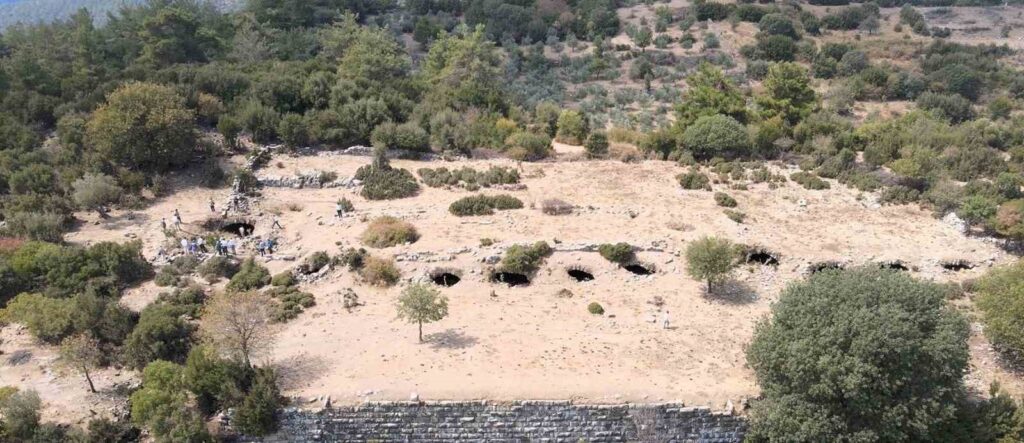
Within the settlement, archaeologists have also identified a series of underground chambers arranged parallel to one another. These vaulted spaces are thought to have served as storage areas or granaries, suggesting that Amyzon once played an important role in the regional economy of ancient Caria.
Waiting Beneath the Soil
Today the ruins lie in a landscape of hills and forests that attracts hikers and history enthusiasts. Yet much of the ancient city still remains buried.
Archaeologists believe that systematic excavations could reveal valuable information about settlement patterns, trade networks, and daily life in Caria during the Hellenistic era.
For now, however, Amyzon remains an important but largely unexplored archaeological site — waiting for the research that could finally bring its long history back into view.
Cover Image Credit: Aydın Provincial Directorate of Culture and Tourism
- A 1700-year-old statue of Pan unearthed during the excavations at Polyeuktos in İstanbul
- The granary was found in the ancient city of Sebaste, founded by the first Roman emperor Augustus
- Donalar Kale Kapı Rock Tomb or Donalar Rock Tomb
- Theater emerges as works continue in ancient city of Perinthos
- Urartian King Argishti’s bronze shield revealed the name of an unknown country
- The religious center of Lycia, the ancient city of Letoon
- Who were the Luwians?

- A new study brings a fresh perspective on the Anatolian origin of the Indo-European languages

- Perhaps the oldest thermal treatment center in the world, which has been in continuous use for 2000 years -Basilica Therma Roman Bath or King’s Daughter-
- The largest synagogue of the ancient world, located in the ancient city of Sardis, is being restored
Leave a Reply