
Mysterious Spherical Stones Found Near the Iraq Border in Eastern Türkiye Remain Unexplained
Unusually shaped spherical stones uncovered during road construction works in eastern Türkiye remain scientifically unexplained three years after their discovery, prompting renewed calls for formal academic investigation.
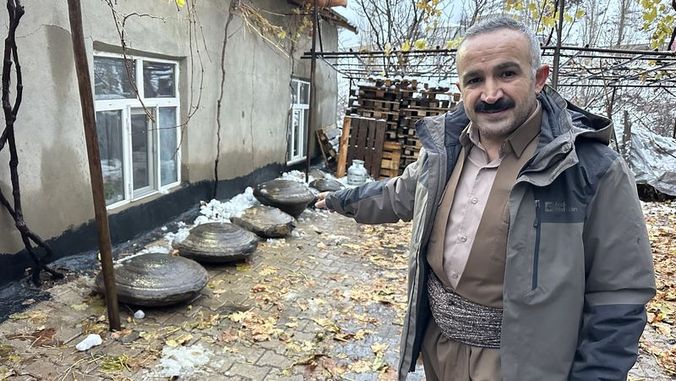
The stones were discovered in the Aktütün area of Şemdinli district in Hakkari Province, close to the Türkiye–Iraq border, during a road-widening project carried out approximately three years ago. Excavation works revealed at least six rounded stone objects buried beneath the ground, each weighing more than 200 kilograms. Their size, shape, and concentration within a single area set them apart from common geological formations observed in the region.
Local efforts to safeguard the stones

Following the discovery, the stones attracted the attention of Konur village headman Cafer Gezer, who noted their unusual appearance and potential scientific value. To prevent damage or removal, the stones were carefully lifted from the roadside using construction machinery and relocated to the front of Gezer’s residence, where they have remained under protection.
Gezer explained that some of the stones had already surfaced naturally along the road, while others became visible during excavation. He emphasized that safeguarding the stones locally was intended as a temporary measure until specialists could examine them.
📣 Our WhatsApp channel is now LIVE! Stay up-to-date with the latest news and updates, just click here to follow us on WhatsApp and never miss a thing!!
Possible fossil interpretation
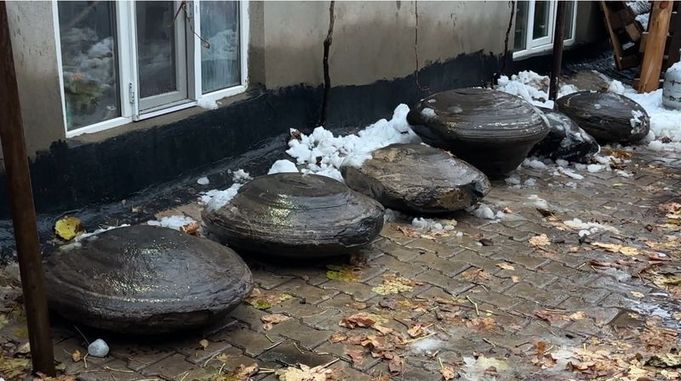
According to Gezer, his own preliminary research led him to believe that the stones may not be ordinary rocks. He suggested that their structure and surface characteristics could indicate fossilized remains of extinct animal species, potentially dating back millions of years. However, no formal scientific analysis has yet been conducted to support or refute this interpretation.
Gezer reported the discovery to Hakkari University and was informed that the stones could potentially be transferred to the Van Museum for further examination. To date, however, no comprehensive study by archaeologists, geologists, or paleontology specialists has taken place.
Awaiting scientific assessment
Despite their possible significance, the stones have remained outside institutional study for nearly three years. Gezer has called on Türkiye’s Ministry of Culture and Tourism, along with relevant academic experts, to carry out an official on-site investigation.

If confirmed as fossils, the stones would represent a rare paleontological discovery for eastern Anatolia. Even if they ultimately prove to be unusual geological formations, their consistent spherical shape and collective presence warrant detailed scientific examination.
For now, the stones remain under local protection, their origin unresolved. Whether they are the result of natural geological processes or remnants of a much older biological past remains an open question pending scientific assessment.
Ancientist
- A 1700-year-old statue of Pan unearthed during the excavations at Polyeuktos in İstanbul
- The granary was found in the ancient city of Sebaste, founded by the first Roman emperor Augustus
- Donalar Kale Kapı Rock Tomb or Donalar Rock Tomb
- Theater emerges as works continue in ancient city of Perinthos
- Urartian King Argishti’s bronze shield revealed the name of an unknown country
- The religious center of Lycia, the ancient city of Letoon
- Who were the Luwians?
- A new study brings a fresh perspective on the Anatolian origin of the Indo-European languages

- Perhaps the oldest thermal treatment center in the world, which has been in continuous use for 2000 years -Basilica Therma Roman Bath or King’s Daughter-
- The largest synagogue of the ancient world, located in the ancient city of Sardis, is being restored
Leave a Reply