
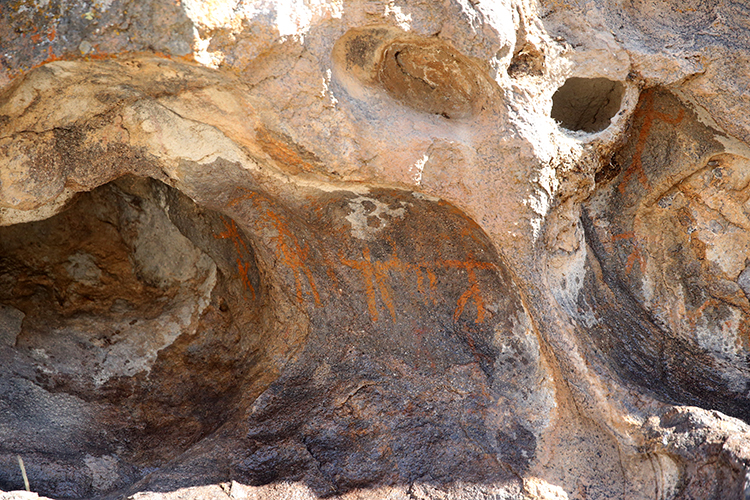
Neolithic Rock Art Discovered in Central Türkiye After Hiker Spots Ancient Cliff Figures
A routine walk through the mountains of central Türkiye has led to a discovery that could reshape the prehistoric timeline of the region. A local resident exploring a remote highland area noticed faint yet distinctive human-shaped markings on a rock face and immediately reported the find to authorities. Early examinations indicate that the figures belong to the Neolithic era, potentially placing their creation more than 8,000 years ago.
If further analysis confirms the preliminary assessment, the discovery positions central Türkiye alongside major prehistoric art centers of Anatolia, offering fresh insight into early human symbolic expression.
A First for Kayseri’s Archaeological Record
According to Prof. Dr. Osman Özsoy, Kayseri representative of the ÇEKÜL Foundation, the team has spent over a decade building a detailed inventory of the region’s underground cultural heritage—yet nothing like this has ever surfaced.
“This discovery is unprecedented for Kayseri,” he told Anadolu Agency. “Its place within the Neolithic tradition is clear, and it may push the city’s documented history significantly further back.”
📣 Our WhatsApp channel is now LIVE! Stay up-to-date with the latest news and updates, just click here to follow us on WhatsApp and never miss a thing!!
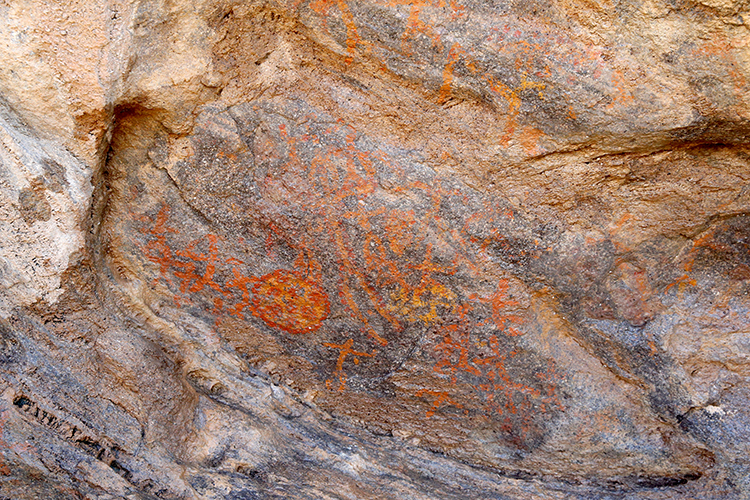
The newly identified figures show strong stylistic parallels with well-established Neolithic sites across Anatolia, including Latmos (Bafa Lake) in western Türkiye and the iconic Çatalhöyük panels. Earthy brown pigments, anthropomorphic silhouettes, and symbolic arrangements—especially the T-shaped forms—appear consistent with Neolithic rock art traditions stretching across the region.
A Possible Contemporary of Latmos, Hakkari or Even Göbeklitepe
While detailed dating has yet to begin, specialists believe the figures could align chronologically with Neolithic imagery documented in sites such as Hakkari, Van, and the Aegean coast.
“The motifs, colors, and overall composition resemble what we see in Latmos,” Özsoy noted. “Whether they are closer in time to the art of Hakkari or even to the earliest phases of Göbeklitepe is something that only scientific analysis will answer.”
He added that stylistic comparison alone suggests a likely date around the 6th millennium BCE, although a broader range—up to 10,000 years ago—remains possible depending on pigment composition, weathering traces, and contextual evaluation.
How Were the Paintings Made? Experts Still Investigating
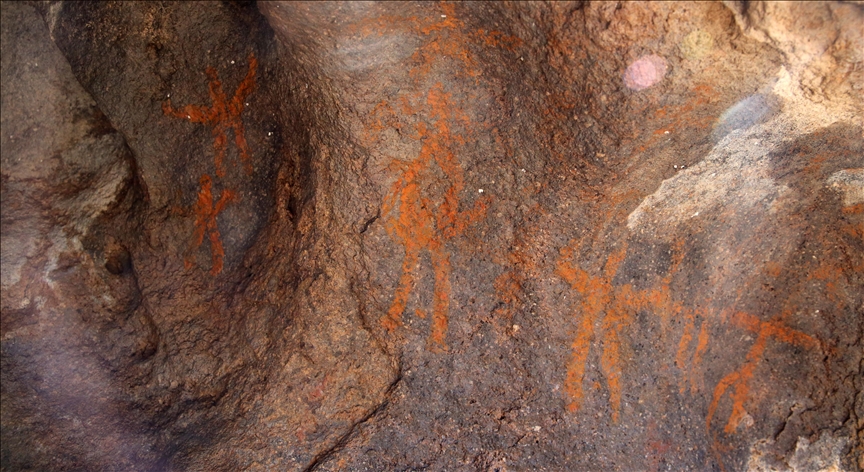
Researchers have not yet determined whether the figures were painted, carved, or created through a combination of techniques.
In much of Anatolia, Neolithic artists used pigments produced by mixing hematite minerals with clay or crushed stone—yet no firm conclusion can be drawn for the Kayseri figures without chemical and microscopic examination.
“Whether these are carvings or mineral-based paintings is still unclear. These are questions the analysis will answer once specialists begin laboratory work,” Özsoy explained.
Searching for More Panels in the Surrounding Slopes
A systematic survey of the surrounding landscape is now underway to determine whether additional panels remain hidden in nearby ridges or shelters. Throughout Türkiye, Neolithic rock art often appears in clusters, sometimes spanning entire mountain belts.
Experts believe that if more figures are found, the discovery could contribute a missing chapter to central Anatolia’s early symbolic traditions—and potentially gain international attention once scientific reports are completed.
- A 1700-year-old statue of Pan unearthed during the excavations at Polyeuktos in İstanbul
- The granary was found in the ancient city of Sebaste, founded by the first Roman emperor Augustus
- Donalar Kale Kapı Rock Tomb or Donalar Rock Tomb
- Theater emerges as works continue in ancient city of Perinthos
- Urartian King Argishti’s bronze shield revealed the name of an unknown country
- The religious center of Lycia, the ancient city of Letoon
- Who were the Luwians?
- A new study brings a fresh perspective on the Anatolian origin of the Indo-European languages

- Perhaps the oldest thermal treatment center in the world, which has been in continuous use for 2000 years -Basilica Therma Roman Bath or King’s Daughter-
- The largest synagogue of the ancient world, located in the ancient city of Sardis, is being restored
Leave a Reply