
New 7.7-Million-Year-Old Fossils Unearthed in Central Anatolia: Kayseri Site Reveals Younger Species Remains
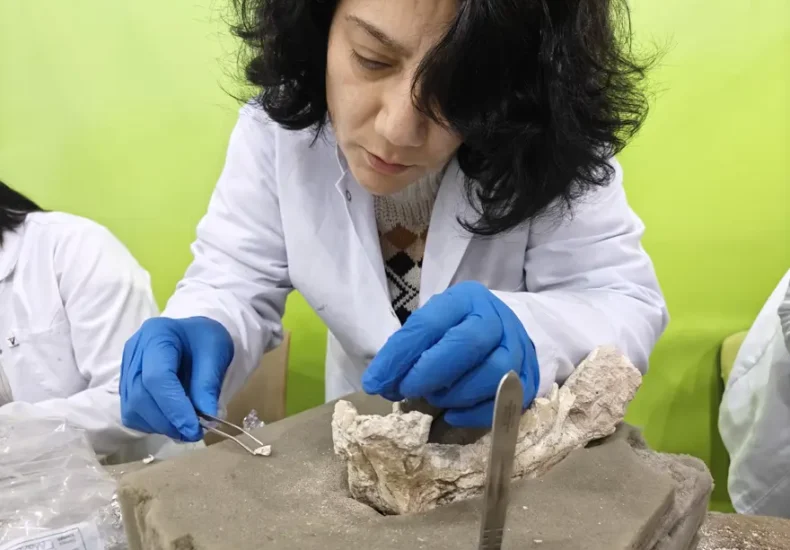
Fresh fossil discoveries in central Türkiye are offering new insight into Anatolia’s deep-time biodiversity. Excavations near the Yamula Dam locality in Kayseri have yielded 103 new fossil fragments during the 2025 field season—remains that researchers believe may belong to a younger species than those previously documented at the site.
The finds come from the Çevril–Taşhan area, part of a broader fossil-rich zone long known for its Late Miocene deposits. Preliminary assessments suggest that the newly recovered pieces likely represent a single individual, potentially refining the evolutionary sequence already established for the region.
A Younger Chapter in the Miocene Record
According to field specialists involved in the excavation, the fossils are tentatively dated to around 7.7 million years ago, within the Late Miocene epoch. What makes this season particularly noteworthy is the possibility that these remains are stratigraphically younger than earlier discoveries from the same basin.
If confirmed through further laboratory analysis, this could slightly adjust the known faunal succession of the Yamula Dam locality—an important reference point in Anatolian paleontology.
📣 Our WhatsApp channel is now LIVE! Stay up-to-date with the latest news and updates, just click here to follow us on WhatsApp and never miss a thing!!
Among the most striking earlier finds from the Çevril–Taşhan sector were a five-tusked proboscidean skull and the lower jaw of a carnivore. Such discoveries have already underscored the ecological diversity of central Anatolia during the Miocene, when the region supported a mosaic of woodland, open grassland, and wetland habitats.
Anatolia as a Continental Crossroads
Researchers emphasize that Anatolia’s geological position—between Europe, Asia, and Africa—made it a crucial land bridge during the Neogene period. This corridor facilitated faunal exchanges between continents, explaining why fossil assemblages in central Türkiye often display a mixture of Eurasian and Afro-Arabian characteristics.
The Yamula Dam locality, in particular, has produced a wide range of mammalian fossils over the years. Each new excavation season contributes incremental but meaningful data about climate shifts, habitat diversity, and species turnover in the region.
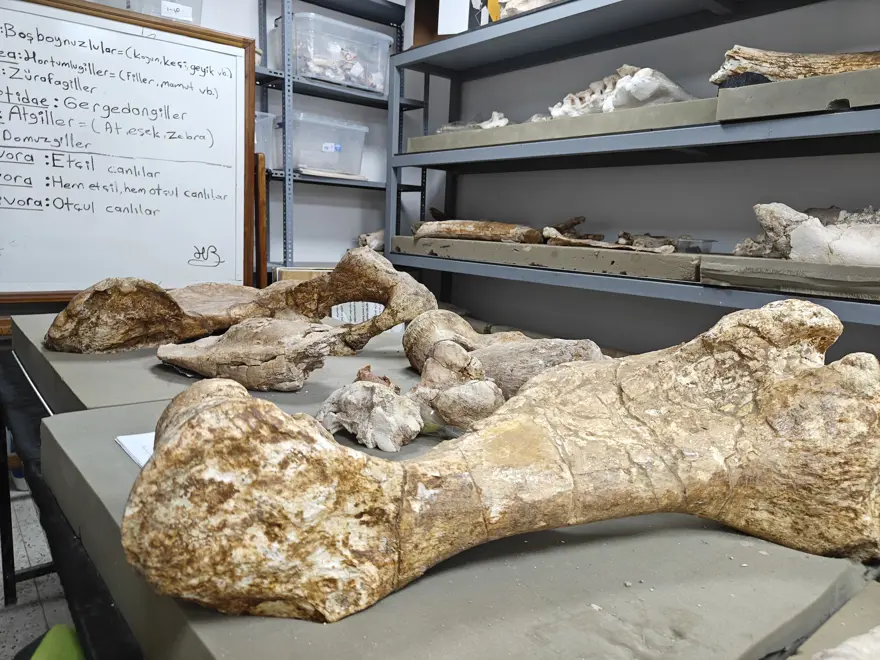
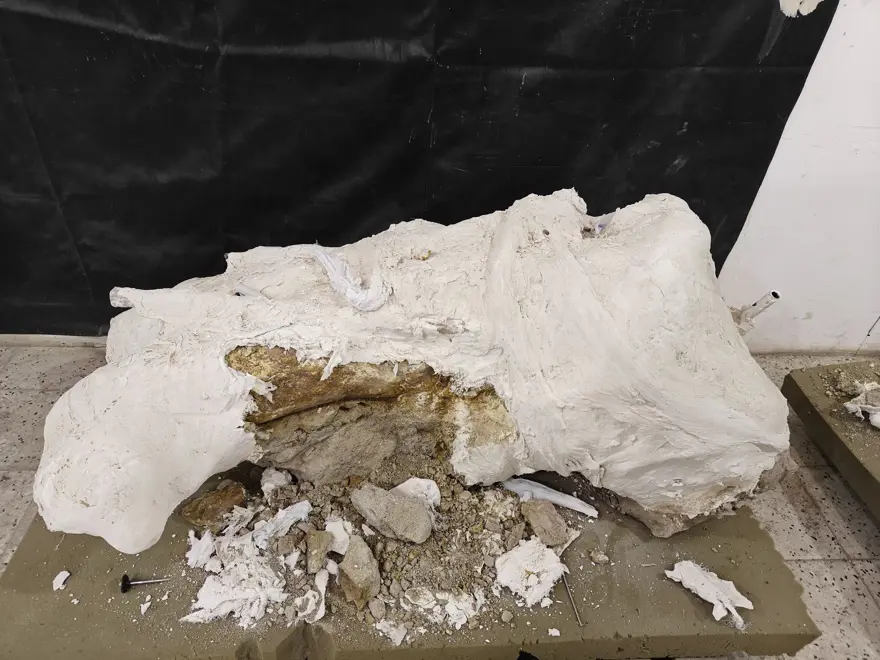
The 2025 assemblage, now undergoing preparation and reconstruction at the Kayseri Metropolitan Municipality Science Center, will soon be exhibited to the public after stabilization and mounting procedures. These conservation efforts allow visitors to observe how fragmentary remains are methodically reconstructed into anatomically coherent displays.
Why This Site Matters
The Kayseri basin represents more than an isolated fossil field. It serves as a stratified archive of environmental transformation across millions of years. Fossils from this region help scientists reconstruct:
– Vegetation patterns and climate fluctuations
– Migration routes between continents
– Evolutionary relationships among Miocene mammals
Researchers have also noted that the potential discovery of primate remains in the area would significantly enhance the scientific importance of the locality. While no such specimen has yet been confirmed from the 2025 season, the geological context suggests that further surprises remain possible.
From Excavation to Exhibition
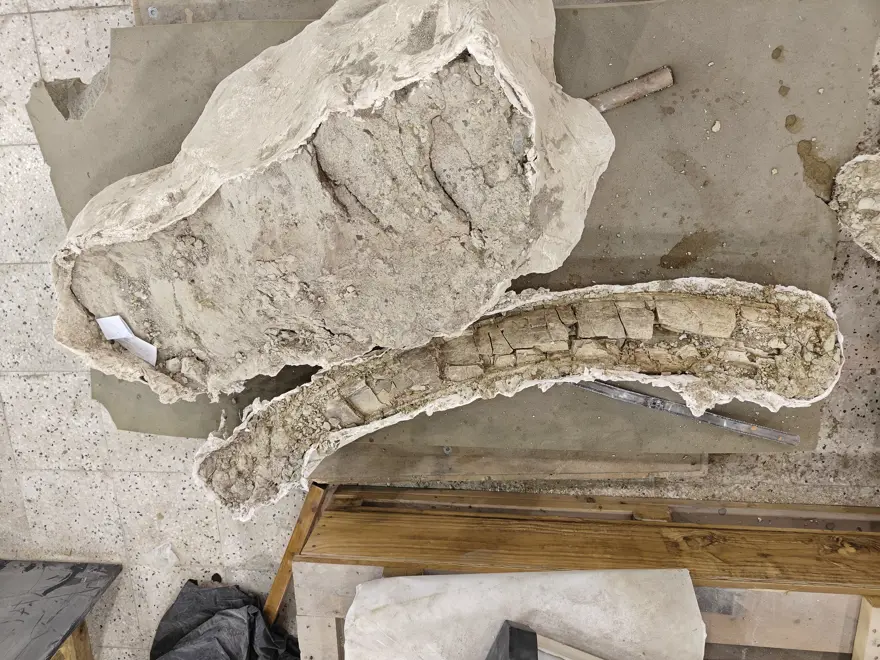
Following recovery, the fossil fragments were transferred to laboratory facilities operated under the auspices of the Kayseri Metropolitan Municipality. There, specialists conduct mechanical cleaning, consolidation, and comparative anatomical studies before preparing the pieces for display.
The public exhibition of the fossils not only highlights Kayseri’s paleontological heritage but also underscores Türkiye’s expanding role in international Miocene research.
As analytical work continues, researchers hope to clarify the precise taxonomic identity of the newly unearthed material. Whether it ultimately represents a new species or a revised chronological placement of a known lineage, the discovery reinforces a central truth: Anatolia remains one of the most dynamic fossil landscapes bridging three continents.
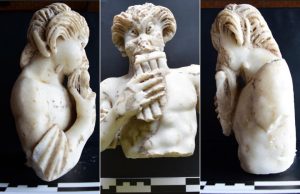
- A 1700-year-old statue of Pan unearthed during the excavations at Polyeuktos in İstanbul
- The granary was found in the ancient city of Sebaste, founded by the first Roman emperor Augustus
- Donalar Kale Kapı Rock Tomb or Donalar Rock Tomb
- Theater emerges as works continue in ancient city of Perinthos
- Urartian King Argishti’s bronze shield revealed the name of an unknown country
- The religious center of Lycia, the ancient city of Letoon
- Who were the Luwians?
- A new study brings a fresh perspective on the Anatolian origin of the Indo-European languages
- Perhaps the oldest thermal treatment center in the world, which has been in continuous use for 2000 years -Basilica Therma Roman Bath or King’s Daughter-
- The largest synagogue of the ancient world, located in the ancient city of Sardis, is being restored
Leave a Reply