Restoration of the Temple of Zeus Lepsynos at Euromos Enters Its Final Phase
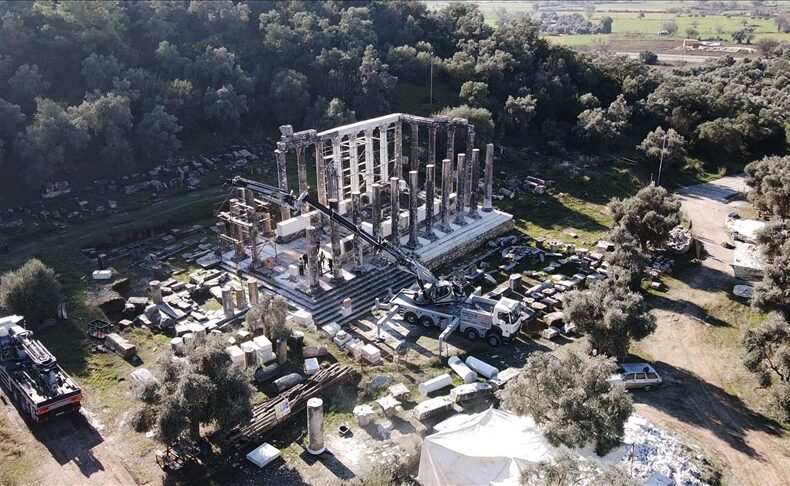
On a quiet hillside near Milas in southwestern Türkiye, one of Anatolia’s best-preserved Roman temples is undergoing a transformation that will reshape how the ancient city of Euromos is experienced. Restoration work at the Temple of Zeus Lepsynos, led by the Turkish Ministry of Culture and Tourism, is now advancing toward completion, with the project expected to conclude in 2026.
Rising within the boundaries of Euromos, a city founded in the 2nd century BC in the heart of ancient Caria, the temple has long stood as the site’s defining monument. Today, its restoration is being carried out as part of the nationwide Heritage for the Future (Geleceğe Miras) initiative, which aims to stabilize and reintegrate major archaeological landmarks into cultural life.
A Landmark of Caria, Preserved Against the Odds
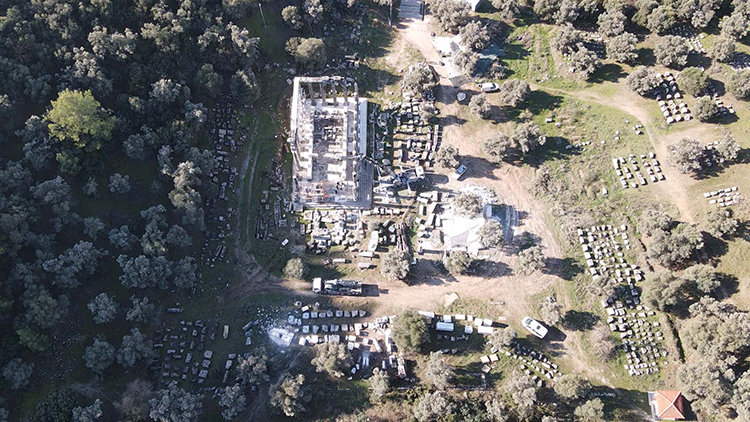
Unlike many classical temples that survive only in fragmentary form, the Temple of Zeus Lepsynos is remarkable for the extent of its preservation. According to excavation director Assoc. Prof. Dr. Abuzer Kızıl of Muğla Sıtkı Koçman University, nearly 70 percent of the original architectural blocks have remained intact—a rare circumstance in Anatolian archaeology.
Before restoration began, however, these blocks were scattered across the site, displaced over centuries by seismic activity and natural decay. The first phase of the project therefore focused on meticulous documentation. Almost 1,000 individual stone blocks were measured, recorded, catalogued, and digitally analyzed before any physical intervention took place. Only after this comprehensive inventory was completed did conservation work move forward.
📣 Our WhatsApp channel is now LIVE! Stay up-to-date with the latest news and updates, just click here to follow us on WhatsApp and never miss a thing!!
Modern Engineering Meets Ancient Construction
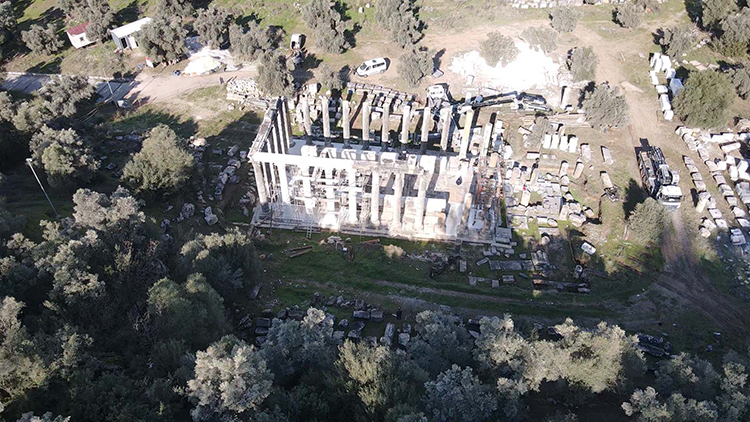
The current restoration targets both the flooring system and the columns on all four façades of the temple. Structural stability has been the guiding principle throughout the process. Particular attention has been paid to the northern colonnade, where several columns had developed a forward tilt, posing a long-term risk to the monument.
“These columns were carefully dismantled, and the foundations beneath them were reinforced,” Kızıl explains. “Without a stable base, no ancient structure—no matter how impressive—can survive an earthquake.”
While ancient construction techniques inform the restoration strategy, the team is also employing modern technologies, allowing for greater precision and efficiency. This hybrid approach ensures that international conservation standards are met while preserving the historical integrity of the building.
Euromos Beyond the Temple
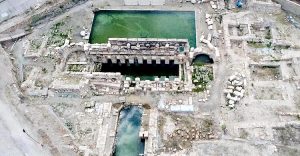
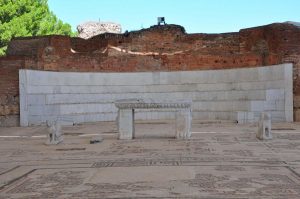
Restoration at the Temple of Zeus Lepsynos forms part of a broader archaeological campaign at Euromos. Excavations in recent seasons have concentrated on the bath complex and the theater, expanding scholarly understanding of the city’s urban layout and social life. The theater, supported through private sponsorship, has already reached a presentable stage, while work at the baths continues under the Heritage for the Future framework.
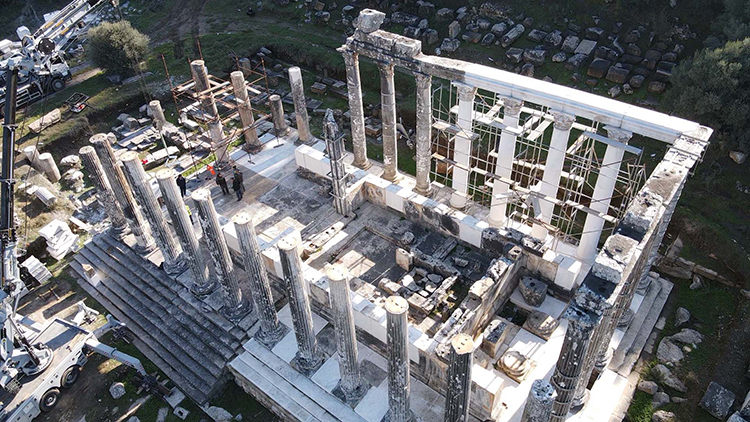
Thanks to its favorable geography and relatively limited later occupation, Euromos is considered one of Anatolia’s more fortunate ancient cities in terms of preservation. In antiquity, it was among Caria’s prominent urban centers, closely tied to regional religious traditions centered on Zeus Lepsynos, a distinctly local manifestation of the god.
A Monument Reconnected to the Public
Once completed, the restored temple will not only regain its architectural coherence but also become more resilient against seismic threats. The planned interconnection of the column rows across all four sides will enhance both visual impact and structural strength.
Beyond archaeology, the project is expected to significantly boost cultural tourism in the Milas region, drawing visitors to a monument that embodies the intersection of Roman engineering, local Carian identity, and modern conservation science.
When the scaffolding finally comes down, the Temple of Zeus Lepsynos will stand not merely as a relic of the past, but as a carefully renewed testament to Anatolia’s layered cultural heritage.
- A 1700-year-old statue of Pan unearthed during the excavations at Polyeuktos in İstanbul
- The granary was found in the ancient city of Sebaste, founded by the first Roman emperor Augustus
- Donalar Kale Kapı Rock Tomb or Donalar Rock Tomb
- Theater emerges as works continue in ancient city of Perinthos
- Urartian King Argishti’s bronze shield revealed the name of an unknown country
- The religious center of Lycia, the ancient city of Letoon
- Who were the Luwians?
- A new study brings a fresh perspective on the Anatolian origin of the Indo-European languages

- Perhaps the oldest thermal treatment center in the world, which has been in continuous use for 2000 years -Basilica Therma Roman Bath or King’s Daughter-
- The largest synagogue of the ancient world, located in the ancient city of Sardis, is being restored
Leave a Reply