
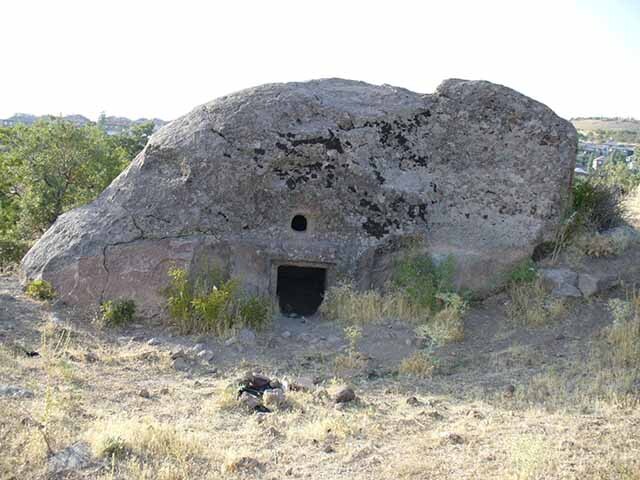
Konya’s “Dümdüm Rock”: A Phrygian Tomb That Echoes Across Time
In the rural landscape of central Anatolia, a solitary rock formation near İncesu village in Seydişehir, Konya Province, carries both an archaeological legacy and a local legend. Known as “Dümdüm Rock,” the site preserves a rock-cut tomb attributed to the Phrygian period—an era that shaped much of Anatolia’s early Iron Age cultural identity. What sets

A Long-Hidden Roman Thermal Complex Emerges at Myra After 15 Years of Delay
For more than a decade, a Roman-era structure lay trapped beneath modern industry at the edge of Myra Ancient City, its archaeological potential known but inaccessible. In 2025, that barrier finally disappeared. Excavations in Demre, southern Türkiye, have now brought to light an exceptional Roman thermal complex, revealing an architectural type previously undocumented in the
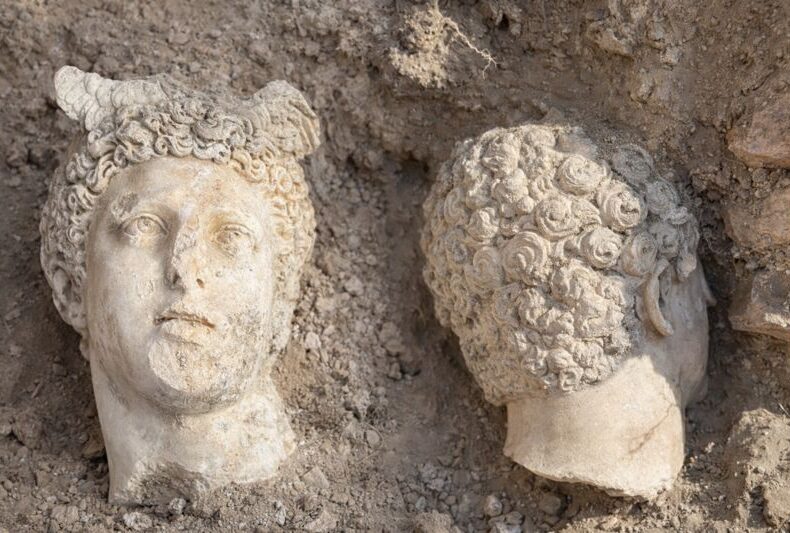
1,800-Year-Old Head of Hermes Statue Unearthed at Laodikeia in Western Anatolia
Excavations at the ancient city of Laodikeia, located near modern-day Denizli in western Anatolia, have revealed a finely carved marble head belonging to a statue of Hermes, dating back approximately 1,800 years. The discovery was made in the eastern entrance corridor of the city’s Bouleuterion, or council house—an area closely associated with civic authority and
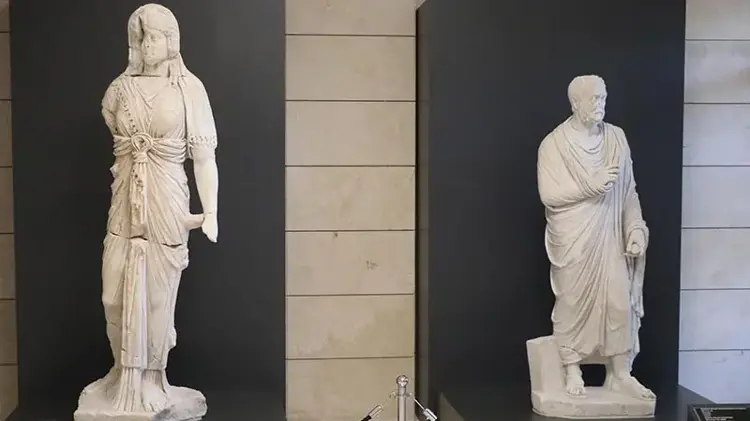
Sculpted Faces from Ancient Lykos Meet Visitors in Denizli
Stone faces shaped nearly two thousand years ago are once again meeting the public—this time in modern-day Denizli. A new exhibition titled “Faces of Lykos” has opened its doors, bringing together some of the most striking sculptural finds uncovered in the ancient cities of western Anatolia. Hosted at the Nihat Zeybekci Congress and Culture Center,
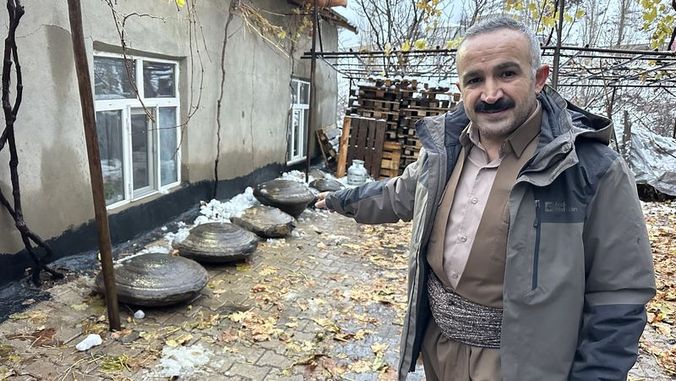
Mysterious Spherical Stones Found Near the Iraq Border in Eastern Türkiye Remain Unexplained
Unusually shaped spherical stones uncovered during road construction works in eastern Türkiye remain scientifically unexplained three years after their discovery, prompting renewed calls for formal academic investigation. The stones were discovered in the Aktütün area of Şemdinli district in Hakkari Province, close to the Türkiye–Iraq border, during a road-widening project carried out approximately three years
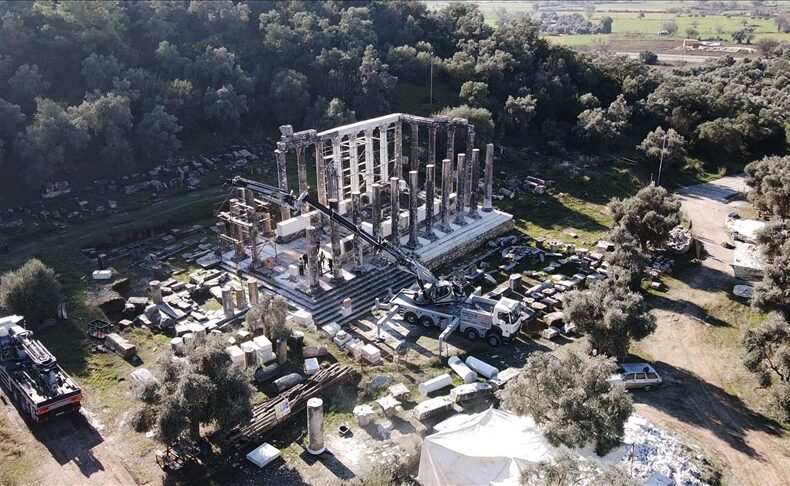
Restoration of the Temple of Zeus Lepsynos at Euromos Enters Its Final Phase
On a quiet hillside near Milas in southwestern Türkiye, one of Anatolia’s best-preserved Roman temples is undergoing a transformation that will reshape how the ancient city of Euromos is experienced. Restoration work at the Temple of Zeus Lepsynos, led by the Turkish Ministry of Culture and Tourism, is now advancing toward completion, with the project
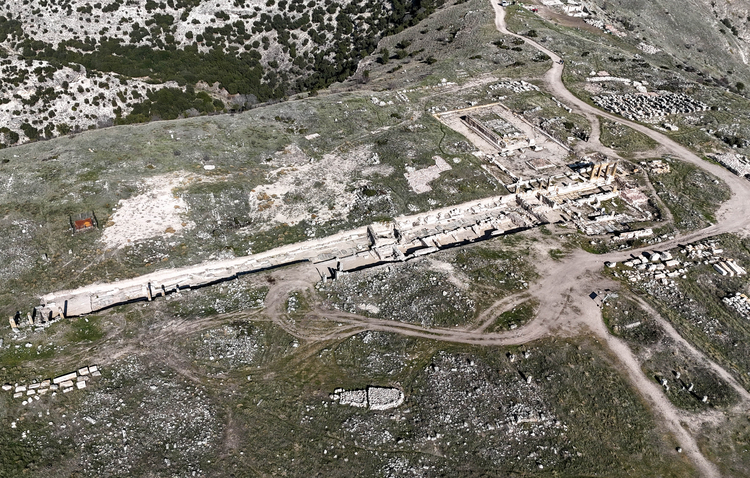
A 2,000-Year-Old Stadium Emerges at Blaundos: The Cliff-Top “Fortress City” of Anatolia Reveals a New Landmark
Archaeologists have begun excavating a Roman-era stadium perched above the dramatic canyons of Uşak’s Ulubey district — a discovery that could turn the ancient city of Blaundos into one of western Türkiye’s most distinctive archaeological landscapes. Surrounded by the sheer cliffs of the Ulubey Canyon system, the ancient city of Blaundos has long been known
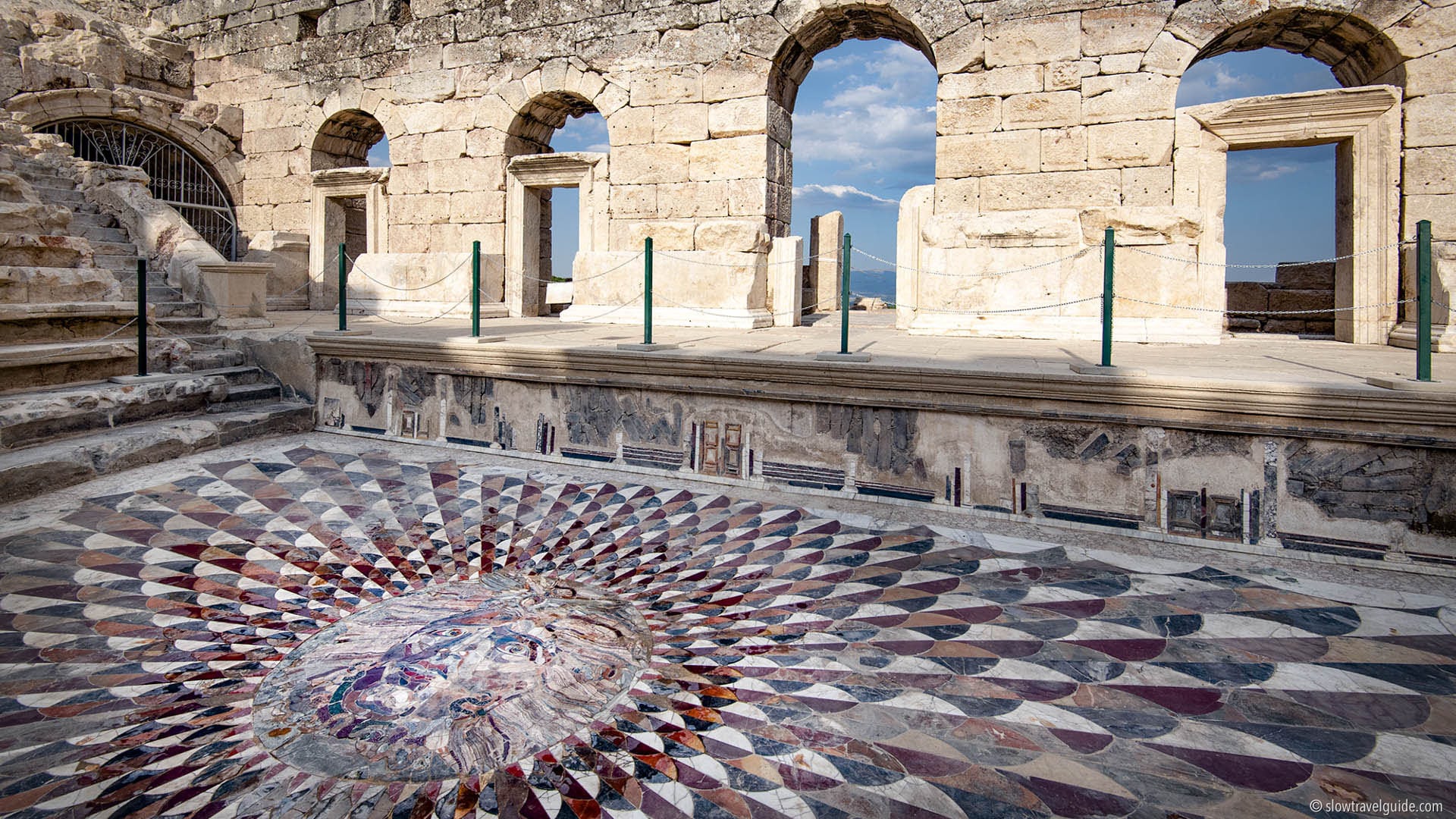
A Nearly Intact Medusa Mosaic at Ancient Kibyra Is Temporarily Closed to Protect It from Winter Damage
Anyone visiting the mountain-ringed plateau of Kibyra in southwestern Türkiye is usually greeted by an unexpected survivor: a vividly colored Medusa mosaic crafted from precision-cut marble. This winter, however, the famous artwork is hidden from view—not because of secrecy, but because it is simply too rare to risk exposure to cold, rain, and frost. Archaeologists
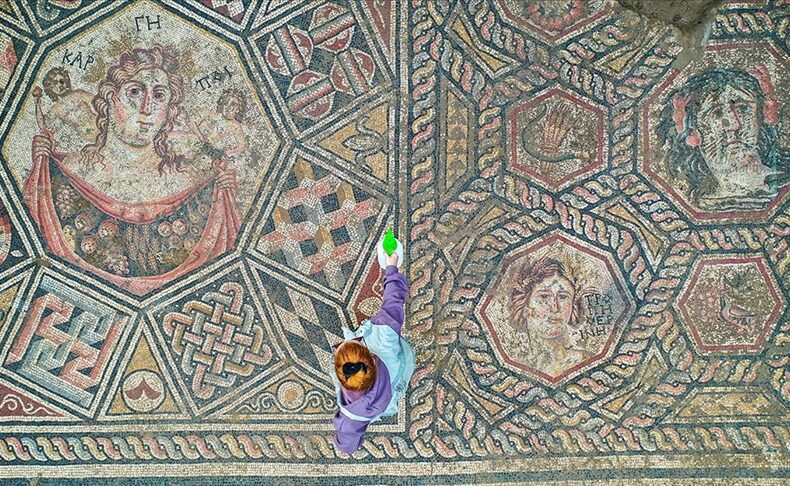
A Roman Mosaic Found 11 Years Ago in Iznik Is Finally Being Revealed: The Askania Figure Emerges
A remarkable discovery in northwest Türkiye is resurfacing after more than a decade. In 2014, workers laying a sewer line in Iznik (ancient Nicaea) briefly uncovered part of a Roman mosaic floor before the area was sealed and placed under protection. What appeared to be a single decorated panel has now, after 11 years, turned
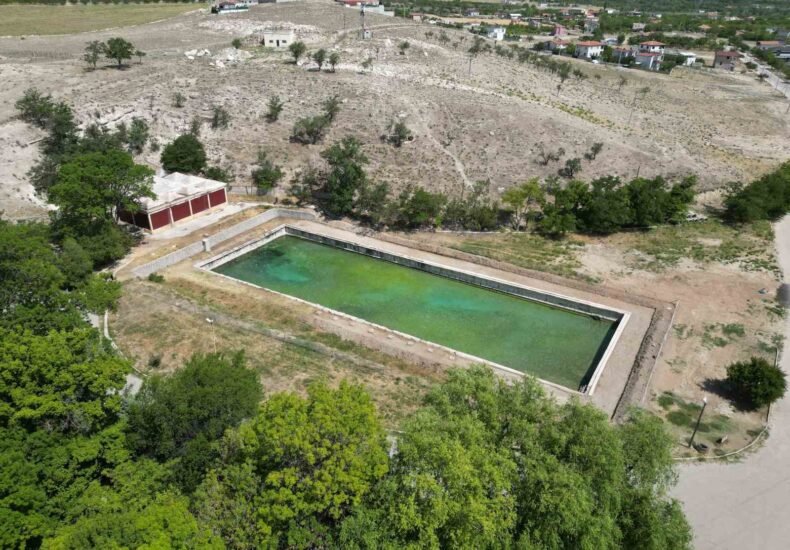
It was thought to be an ordinary water source: the Roman Pool of Bahçeli turns out to be a healing sanctuary
Eighty years after the last excavation, the Roman Pool in Bahçeli, a town near Bor in Niğde Province, has revealed an entirely new identity. Once believed to be a mere component of Tyana’s water supply system, the monumental pool has now been identified as part of a Roman healing sanctuary dedicated to the god Asklepios