

DNA from Çayönü Tepesi Reveals How Anatolia Shaped the World’s First Farming Societies
New genetic research conducted on human remains from Çayönü Tepesi is providing fresh evidence for Anatolia’s central position in the formation of early sedentary societies. The findings suggest that Neolithic communities in southeastern Anatolia were part of a wide interaction sphere linking the Near East, the Caucasus, and inner Anatolia. Scientific Analysis of Human Remains
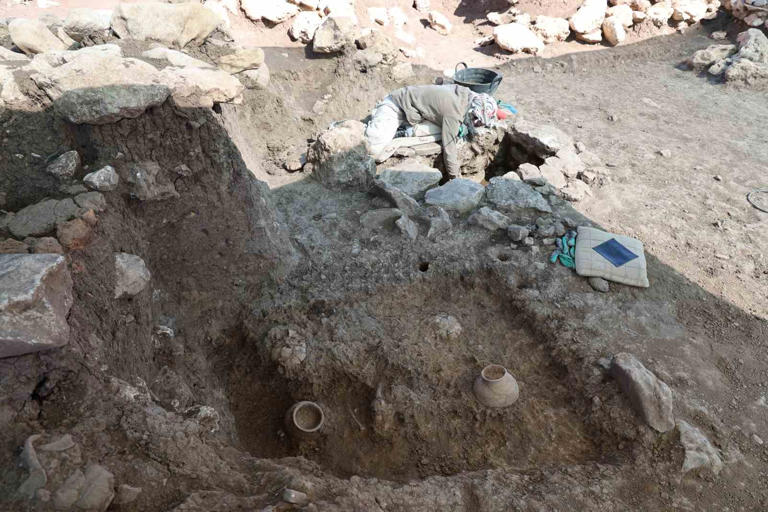
5,000- and 11,000-Year-Old Burials Unearthed at Çayönü: Shedding Light on Neolithic and Bronze Age Anatolia
Archaeologists working at the Neolithic settlement mound of Çayönü, in Ergani district of Diyarbakır, Türkiye, have unearthed six ancient burials—five from the Early Bronze Age, about 5,000 years old, and one dating back 11,000 years to the Neolithic period. The discovery provides crucial evidence of how one of humanity’s earliest farming communities buried and remembered
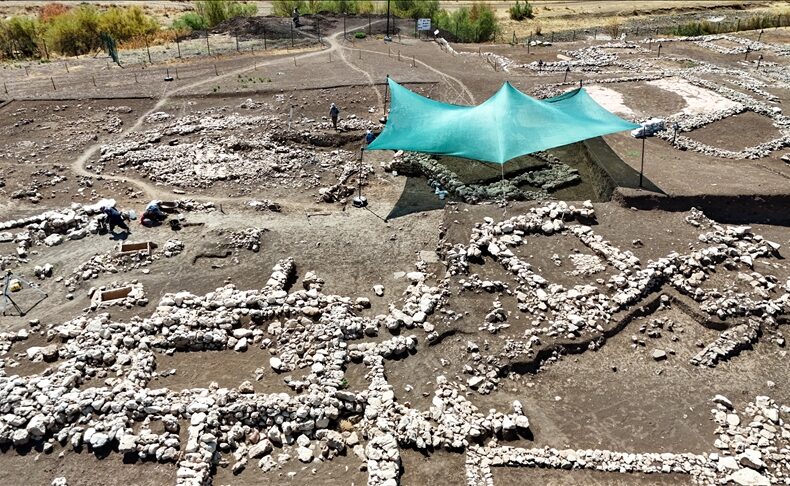
9,500-Year-Old Communal Structure with Red Floor Discovered at Türkiye’s Çayönü Tepesi
Archaeologists working at Çayönü Tepesi, a world-renowned Neolithic settlement in southeastern Türkiye, have unearthed a 9,500-year-old communal building distinguished by its vividly painted red floor. The discovery provides rare insight into early agricultural societies and the evolution of social organization in one of humanity’s earliest permanent villages. Excavations, which first began in 1964, are now