
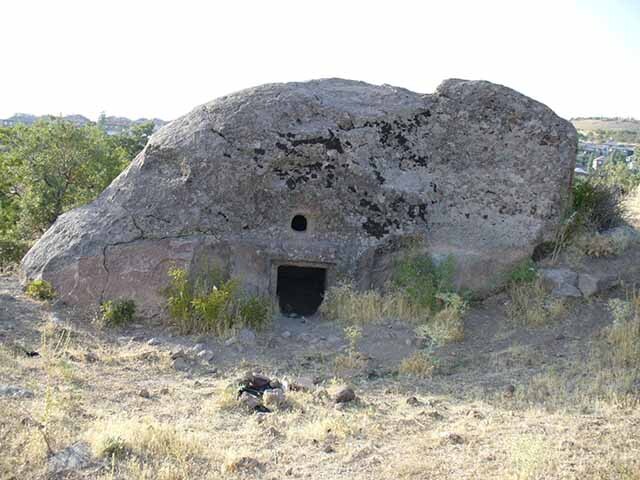
Konya’s “Dümdüm Rock”: A Phrygian Tomb That Echoes Across Time
In the rural landscape of central Anatolia, a solitary rock formation near İncesu village in Seydişehir, Konya Province, carries both an archaeological legacy and a local legend. Known as “Dümdüm Rock,” the site preserves a rock-cut tomb attributed to the Phrygian period—an era that shaped much of Anatolia’s early Iron Age cultural identity. What sets
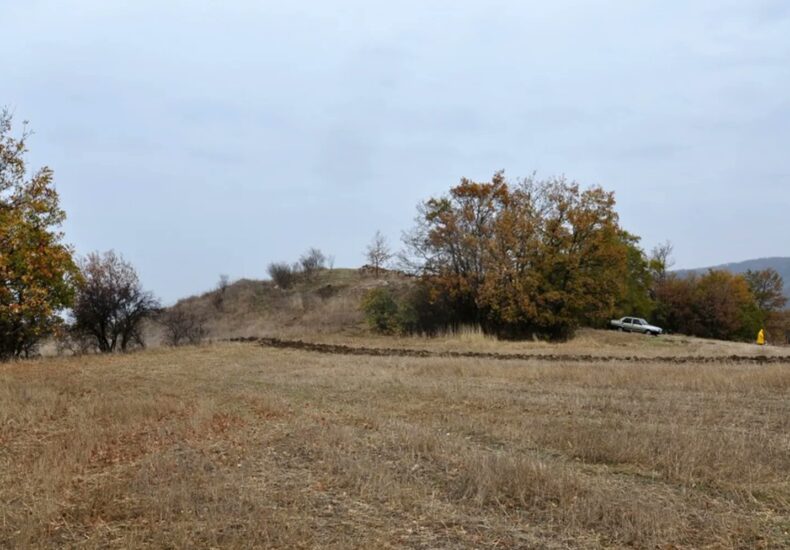
In Midas’ Shadow? The Royal Phrygian Tumulus in Western Anatolia Is Reshaping the Power Map
For much of the last century, the political and ceremonial geography of Phrygia has been interpreted through a single focal point: Gordion. Long regarded as the unquestioned center of royal authority, the city shaped how scholars understood power, hierarchy, and elite identity in Iron Age Anatolia. A newly analyzed burial from western Anatolia, however, is
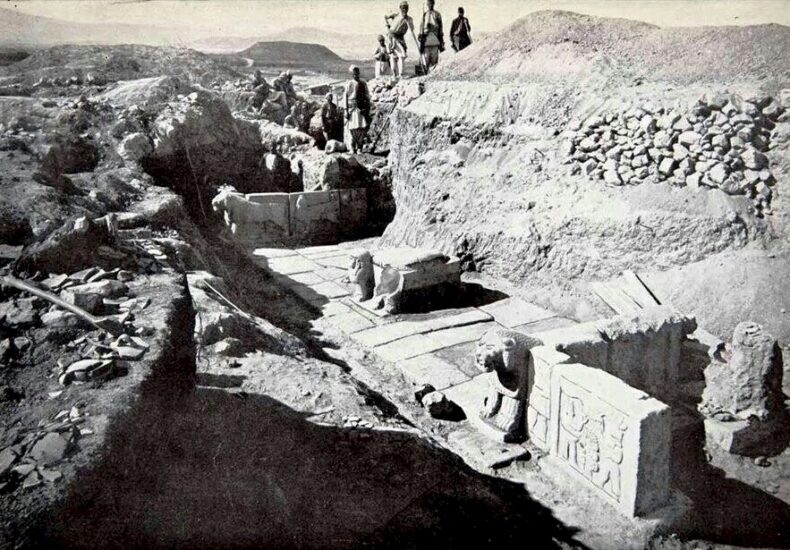
When a Village Courtyard Hid a King: The Neo-Hittite Reliefs of Sakçagözü
In southeastern Anatolia, near the modern village of Sakçagözü, an extraordinary chapter of Neo-Hittite art once lay in plain sight—embedded not in a museum wall, but in an ordinary village courtyard. What appeared to be a utilitarian stone block was, in fact, a monumental royal relief dating to the 8th century BC, carved for a
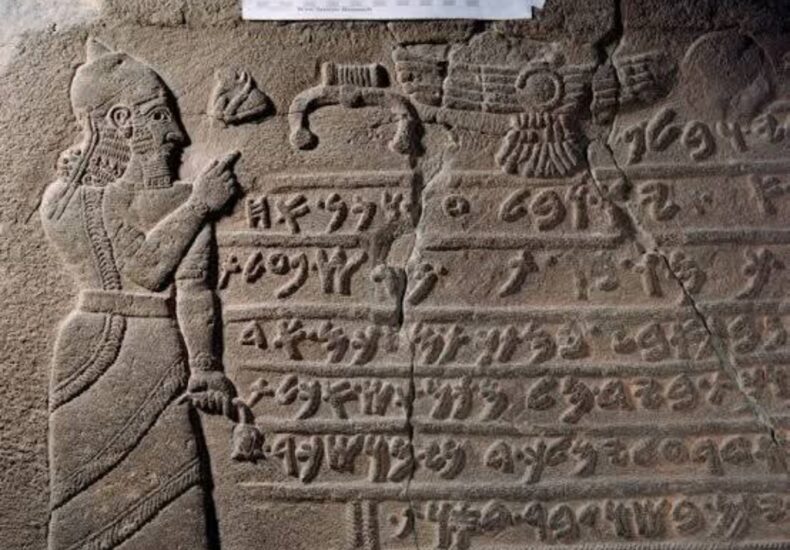
The Kilamuwa Stele from Zincirli Höyük Reveals How a Neo-Hittite King Wrote His Own Power into Stone
At Zincirli Höyük, located in today’s Gaziantep province in southern Türkiye, archaeologists uncovered one of the most explicit royal inscriptions of the Iron Age Near East. Known as the Kilamuwa Stele, this monument was erected in the 9th century BCE by King Kilamuwa, ruler of the Neo-Hittite kingdom of Bit-Gabbari. More than a historical record,
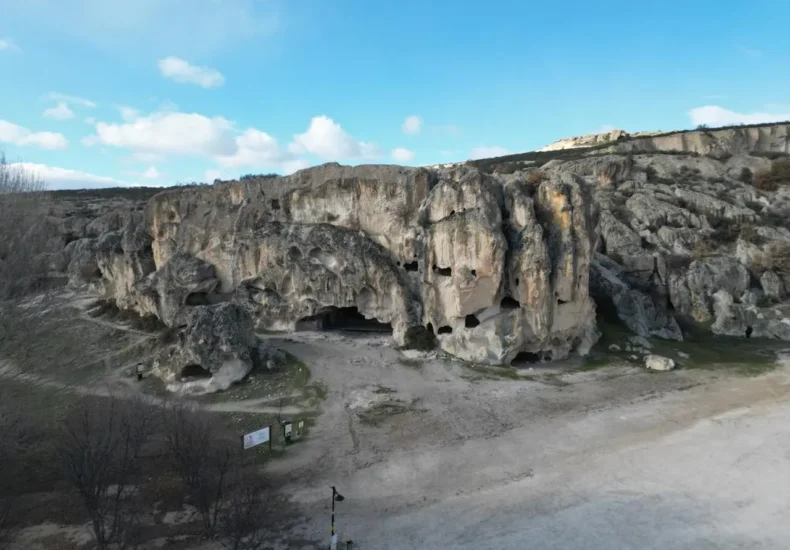
A 3,000-Year-Old Rock-Cut Toilet in the Phrygian Valley Is Attracting Visitors’ Attention
In the heart of western Anatolia, the Phrygian Valley continues to surprise visitors not only with its monumental rock façades and ancient sanctuaries, but also with striking details from everyday life. One of the most talked-about features in recent years is a 3,000-year-old rock-cut toilet, carved into a multi-story structure in the Ayazini area of

Archaeologists Trace Proto-Turkic Presence in Central Anatolia Back 2,600 Years at Kerkenes Mound
In a groundbreaking revelation from the heart of Türkiye, archaeologists working at the Kerkenes Mound in Yozgat’s Sorgun district have uncovered evidence suggesting that the architectural and cultural roots of Proto-Turkic peoples in Anatolia may reach as far back as 2,600 years. The discovery, led by Prof. Dr. Şevket Dönmez under the Ministry of Culture