
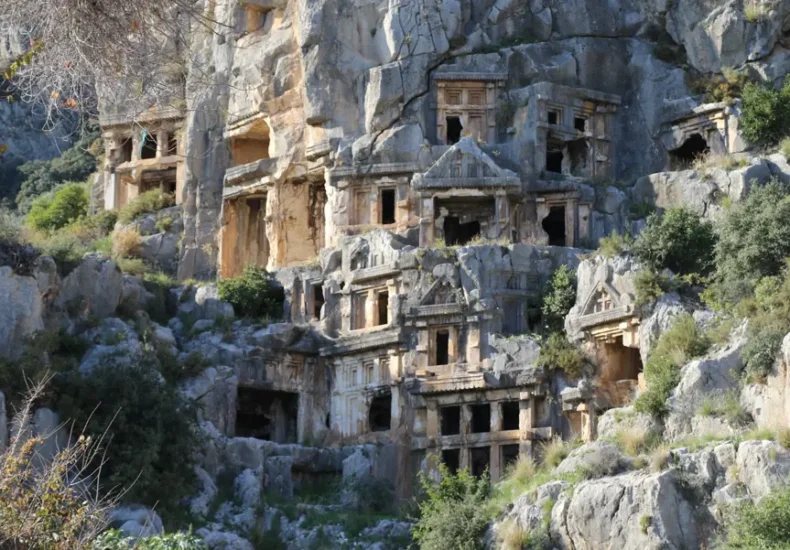
Myra’s Monumental Roman Theatre Set for Restoration as Archaeologists Call the City “Anatolia’s Pompeii”
Archaeological excavations and conservation projects at Myra Ancient City and its ancient harbor, Andriake, on Türkiye’s Mediterranean coast have entered a decisive new phase. Officials have confirmed that restoration of Myra’s monumental Roman theatre is scheduled to begin in 2026, while a selection of exceptionally rare artifacts uncovered during recent excavations is now being displayed
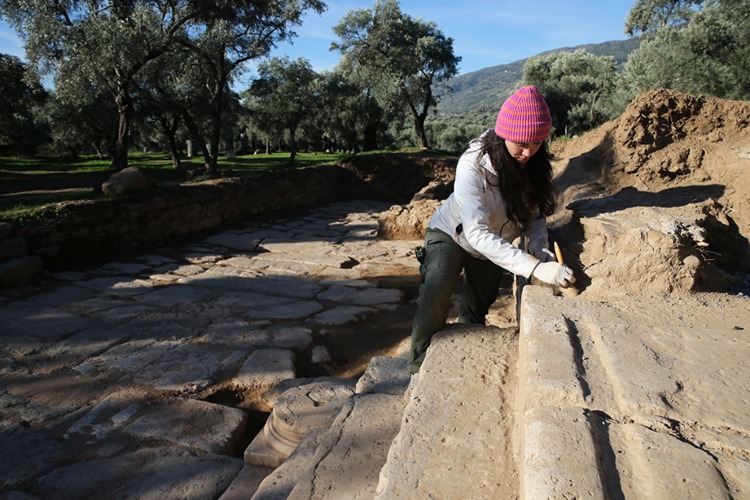
At Nysa, the Road to Knowledge Emerges Again: 1,800-Year-Old Steps to a Roman Library Revealed
In the early hours of the excavation season, as the soil was carefully lifted from a Roman street in western Anatolia, a forgotten route resurfaced — one that once led directly to knowledge itself. At Nysa Ancient City, archaeologists have uncovered a set of marble steps dating back roughly 1,800 years, revealing how ancient visitors
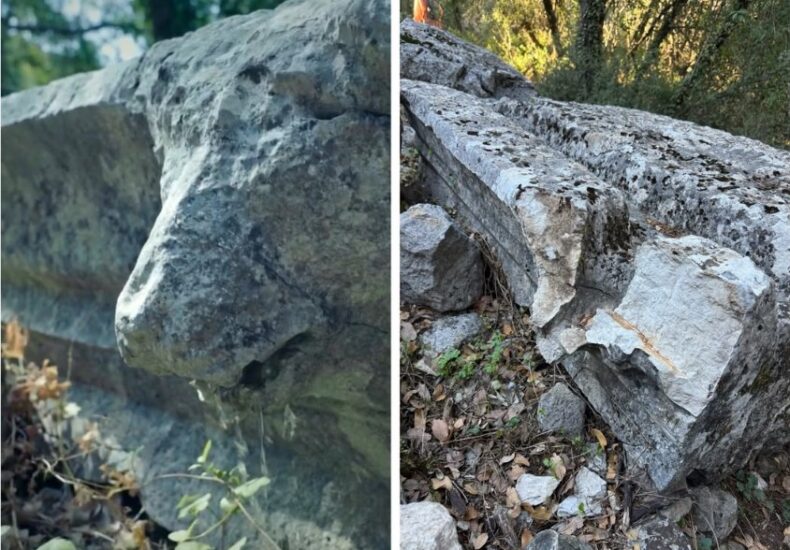
2,000-Year-Old Lion-Headed Gargoyle Damaged at Termessos, the City Alexander the Great Could Not Conquer
At the ancient city of Termessos, one of the most dramatic mountain strongholds of ancient Anatolia, a 2,000-year-old lion-headed gargoyle has been found broken, raising renewed concerns about the protection of archaeological heritage sites in Türkiye. Located at an altitude of around 1,150 meters in the Taurus Mountains near Antalya, Termessos is famously known as
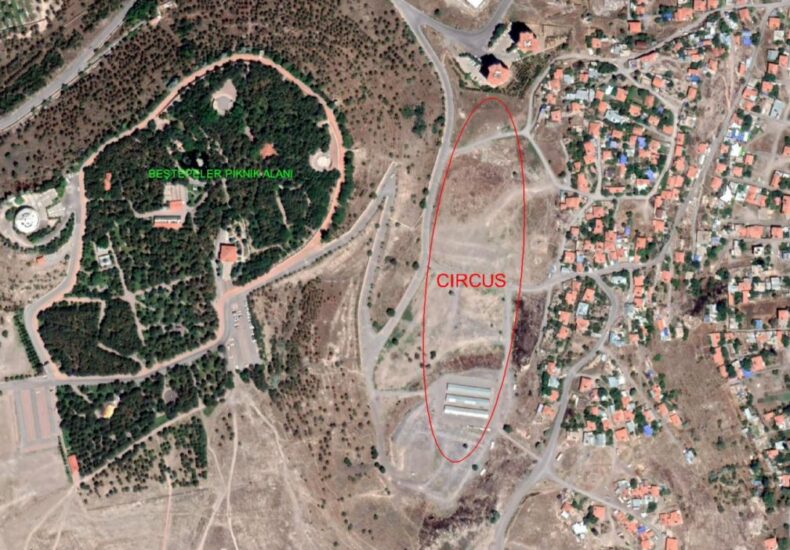
Third Roman Hippodrome in Anatolia Unearthed Beneath the City of Kayseri
Archaeological research conducted in central Türkiye has uncovered the remains of a Roman-era hippodrome beneath the modern city of Kayseri — marking the third known example of such a monumental structure in Anatolia. The discovery offers rare insight into the architectural and social fabric of ancient Caesarea, the capital of the Kingdom of Cappadocia and

Ancient Roman Power in Stone: Archaeologists Unearth Monumental Water Basin at Gabii Near Rome
Archaeologists from the University of Missouri have uncovered a monumental stone basin in the ancient city of Gabii, just 18 kilometers east of Rome — a find that may represent one of the earliest known examples of Roman monumental architecture. Built around 250 B.C., the vast basin carved partly into bedrock is believed to have

A First in Anatolian Archaeology: 2,050-Year-Old Hexagonal Council House Unearthed in Laodicea
During the 2025 excavation season at Laodicea, an ancient city located in Denizli and listed on the UNESCO World Heritage Tentative List, archaeologists have uncovered a unique 2,050-year-old council house (bouleuterion) dating back to the reign of Roman Emperor Augustus. The architectural rarity stands out for its unusual hexagonal design—marking the first such example ever