
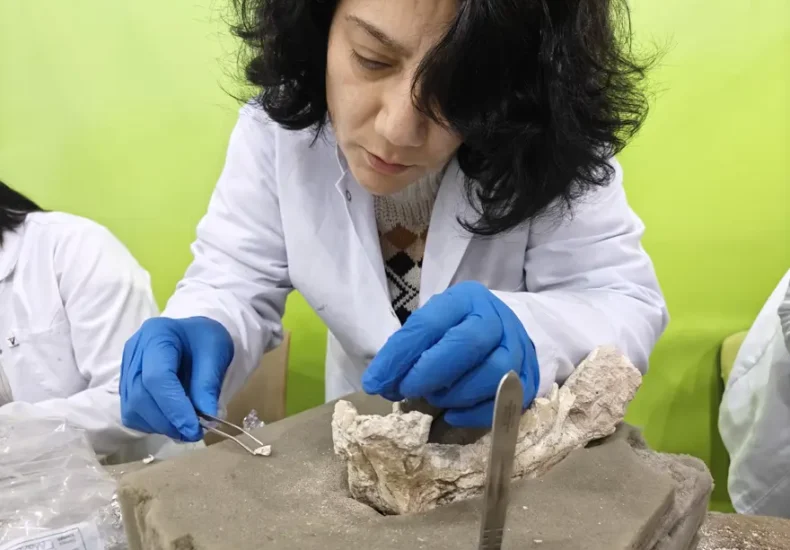
New 7.7-Million-Year-Old Fossils Unearthed in Central Anatolia: Kayseri Site Reveals Younger Species Remains
Fresh fossil discoveries in central Türkiye are offering new insight into Anatolia’s deep-time biodiversity. Excavations near the Yamula Dam locality in Kayseri have yielded 103 new fossil fragments during the 2025 field season—remains that researchers believe may belong to a younger species than those previously documented at the site. The finds come from the Çevril–Taşhan
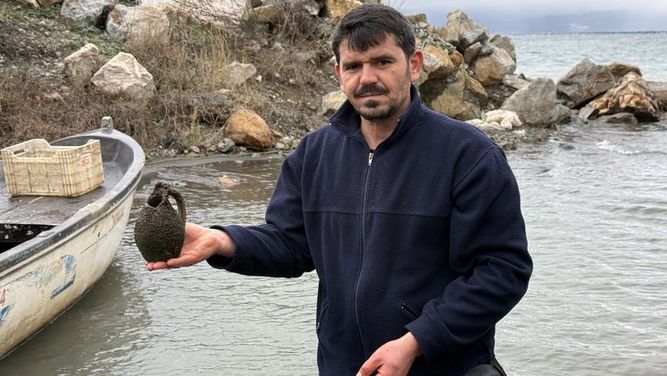
Fishing Net Snags Possible Ancient Jar as Water Levels Drop in Lake İznik
A routine morning on Lake İznik turned unexpectedly archaeological this week, when a fisherman’s net surfaced not with carp or perch—but with what appears to be a historic clay jar. The incident occurred along the shores of Göllüce, a neighborhood on the western edge of the lake in Bursa, northwestern Türkiye. As drought conditions continue
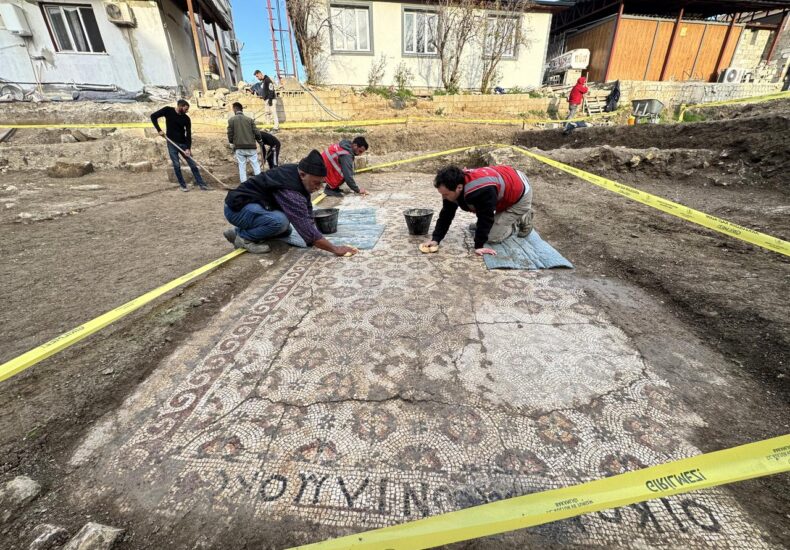
Greek-Inscribed Late Antique Mosaic Unearthed in Türkiye’s Hatay Province
A Late Antique floor mosaic bearing a Greek inscription has been uncovered in southern Türkiye’s Hatay province during foundation excavation work at a site severely damaged by the February 6, 2023 earthquakes. The discovery once again highlights the extraordinary archaeological depth of Antakya, ancient Antioch, even amid large-scale post-disaster reconstruction. The mosaic was found in
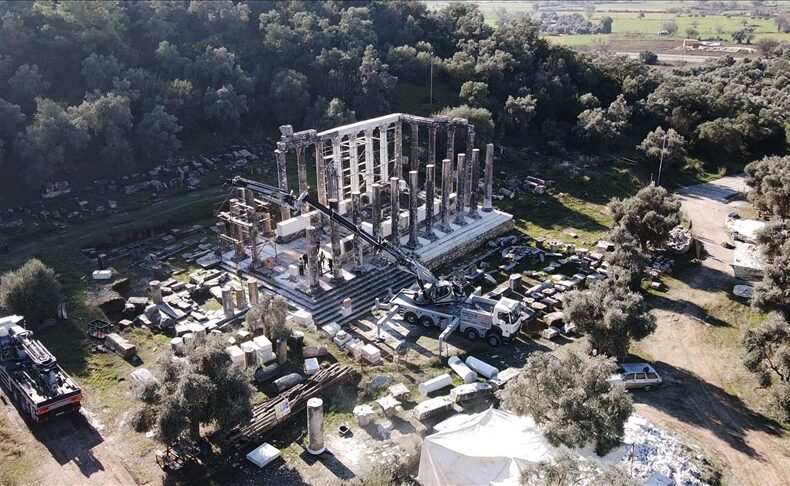
Restoration of the Temple of Zeus Lepsynos at Euromos Enters Its Final Phase
On a quiet hillside near Milas in southwestern Türkiye, one of Anatolia’s best-preserved Roman temples is undergoing a transformation that will reshape how the ancient city of Euromos is experienced. Restoration work at the Temple of Zeus Lepsynos, led by the Turkish Ministry of Culture and Tourism, is now advancing toward completion, with the project
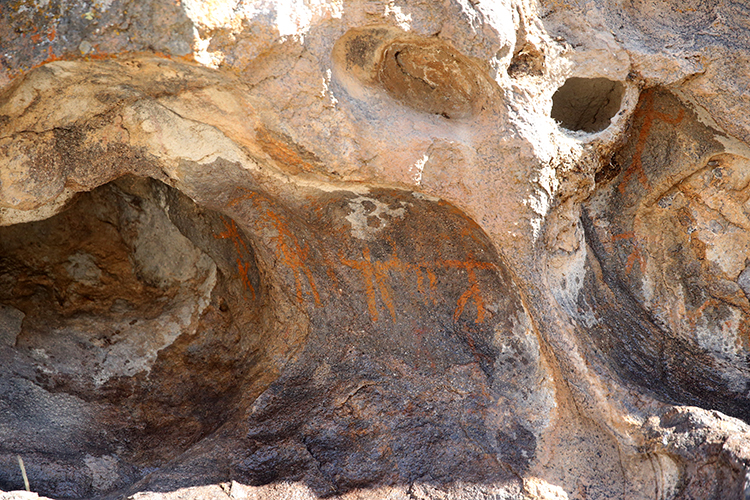
Neolithic Rock Art Discovered in Central Türkiye After Hiker Spots Ancient Cliff Figures
A routine walk through the mountains of central Türkiye has led to a discovery that could reshape the prehistoric timeline of the region. A local resident exploring a remote highland area noticed faint yet distinctive human-shaped markings on a rock face and immediately reported the find to authorities. Early examinations indicate that the figures belong
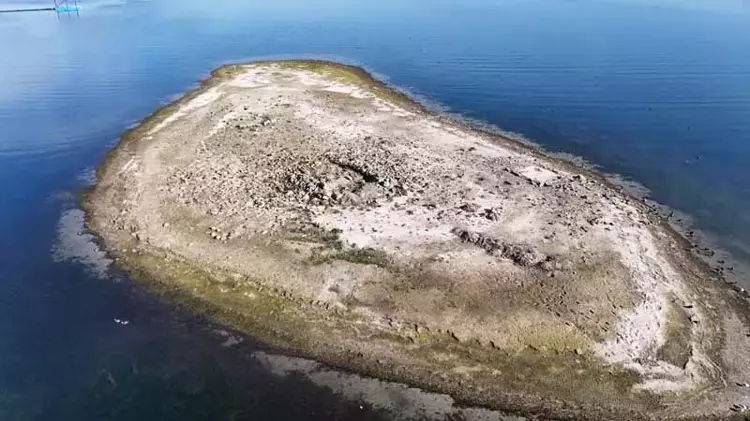
Newly Exposed Mosaic Structure in Lake Sapanca May Belong to a Late Antique Chapel, Researchers Say
As water levels recede in Lake Sapanca, a mosaic-floored building resurfaces, prompting renewed archaeological interest. The falling water level of Lake Sapanca in northwestern Türkiye has revealed a mosaic-paved structure that had remained submerged for centuries. As stone foundations and sections of patterned flooring emerged from the lakebed, specialists began reassessing the site’s function and
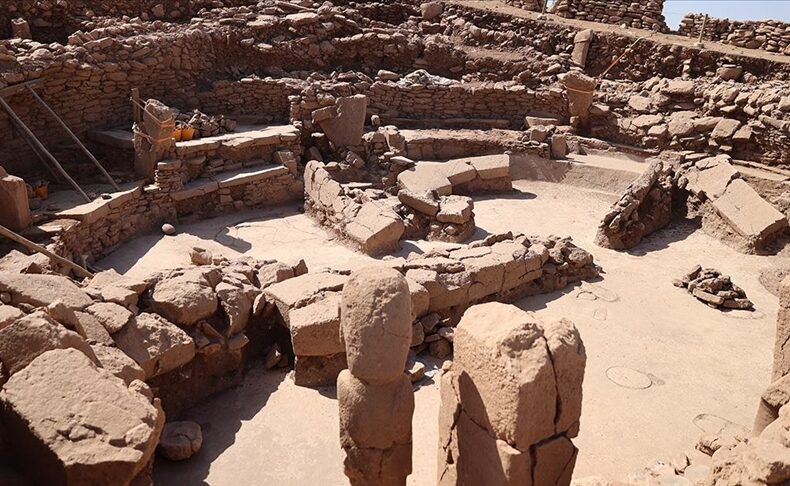
An amphitheater-like Neolithic structure has been uncovered at Karahantepe in southeastern Türkiye
Archaeologists in southeastern Türkiye have brought to light a striking Neolithic structure at Karahantepe—a circular, amphitheater-like building carved into bedrock and lined with tiered stone benches, human sculptures, and sculpted heads emerging from its walls. The find opens an unexpected window onto how some of the world’s earliest settled communities gathered, communicated, and expressed shared
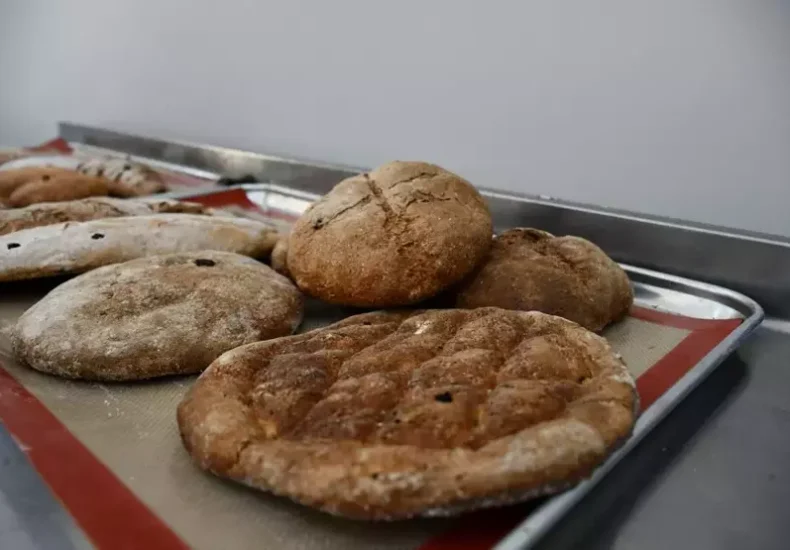
3,000-Year-Old Honey-Barley Bread Recreated in Ancient Hasankeyf
Researchers in Türkiye’s historic district of Hasankeyf have successfully recreated a 3,000-year-old honey-barley bread, using instructions preserved in cuneiform tablets from ancient Mesopotamia. The experimental culinary project, conducted by faculty members at Batman University’s Hasankeyf Vocational School, brings one of the world’s earliest documented bread recipes back to life. The academic team—İlker Aksoy, Hüseyin Gül,
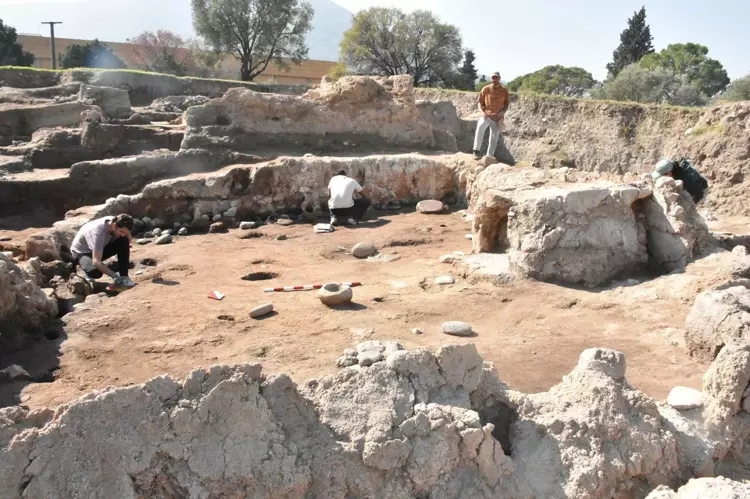
8,000-Year-Old Ceramic Workshop Unearthed in İzmir’s Ulucak Höyük Reveals Early Specialized Production
In the heart of modern industrial İzmir, surrounded by nearly 500 factories, archaeologists have brought to light a remarkable echo of humanity’s first producers. At Ulucak Höyük — the oldest known settlement in the region, dating back 8,850 years — a specialized ceramic production complex from 8,000 years ago has been unearthed. Led by Prof.
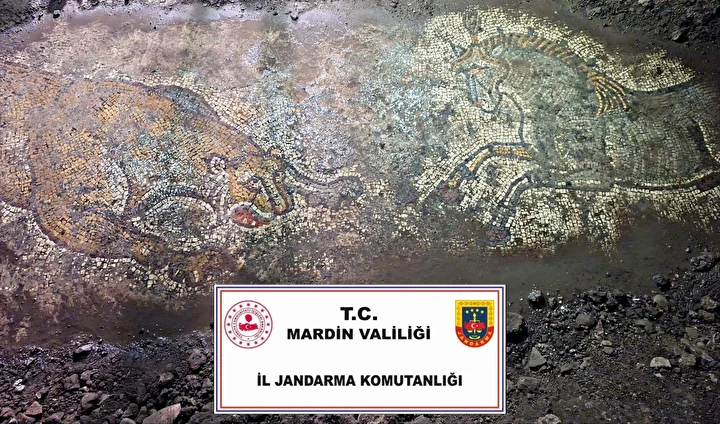
1,500-Year-Old Roman Mosaic Unearthed in Mardin During “Anatolian Heritage” Operation
Authorities uncover hidden Late Roman mosaic buried beneath concrete slab in southeastern Türkiye A spectacular 1,500-year-old floor mosaic depicting human and animal figures has been discovered in the Derik district of Mardin, southeastern Türkiye, during a smuggling operation code-named “Anatolian Heritage” (Anadolu Mirası). The mosaic—spanning approximately 60 square meters and dating to the Late Roman