
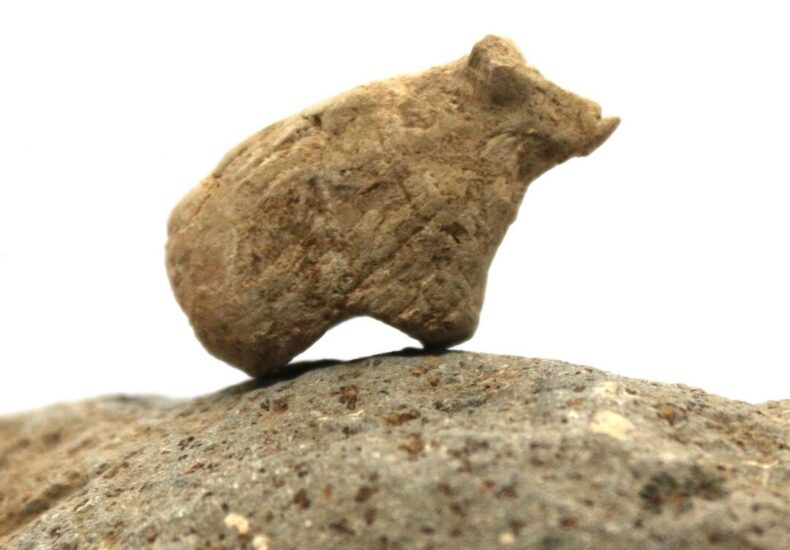
The 9,000-Year-Old Figurines of Gürcütepe Illuminate Life After Göbeklitepe
The first light over the Harran Plain has a way of turning everything into pale gold. From a distance, Gürcütepe looks like nothing more than a gentle rise in the landscape—quiet, unassuming, easy to miss. Yet beneath its surface lies one of the most revealing chapters in the story of how early societies redefined themselves after the era of monumental sanctuaries.
Just four kilometers southeast of Şanlıurfa, this small Neolithic settlement is offering something the great temples never could: a look at the lives lived between the stones. And that shift, subtle yet profound, is transforming archaeological narratives across Upper Mesopotamia.
Under the direction of Assoc. Prof. Mücella Erdalkıran and the broader Taş Tepeler Project, Gürcütepe is steadily emerging as a counterpoint to Göbeklitepe and its contemporaries. Where the highland sanctuaries built meaning from colossi of limestone, Gürcütepe speaks through something far smaller—objects that fit in the palm of a hand.
A Settlement Born After the Silence of Monuments
The chronology alone sets Gürcütepe apart. Unlike Göbeklitepe, Karahantepe, or Sayburç, all known for their monumental T-shaped pillars, Gürcütepe was founded after those ceremonial centers were abandoned. This makes the site a rare witness to what came next—how societies transitioned once the towering sanctuaries no longer defined communal identity.
📣 Our WhatsApp channel is now LIVE! Stay up-to-date with the latest news and updates, just click here to follow us on WhatsApp and never miss a thing!!
Instead of building ritual architecture, the inhabitants occupied four closely placed areas on the plain. They turned toward agriculture, herding, domestic production, and the rhythms of everyday life. Their world was shaped not by stone enclosures, but by fields, hearths, workspaces, and the quiet routines of early farming communities.
This alone shifts the narrative. It shows that the end of the monumental age was not a collapse, but a reorganization—one that brought people down from the limestone ridges into fertile lowlands where subsistence and family life took precedence.
Where Symbolism Becomes Personal
Without the towering pillars of Göbeklitepe, one might expect a decline in symbolic expression. But Gürcütepe reveals something different: a transformation, not a disappearance.
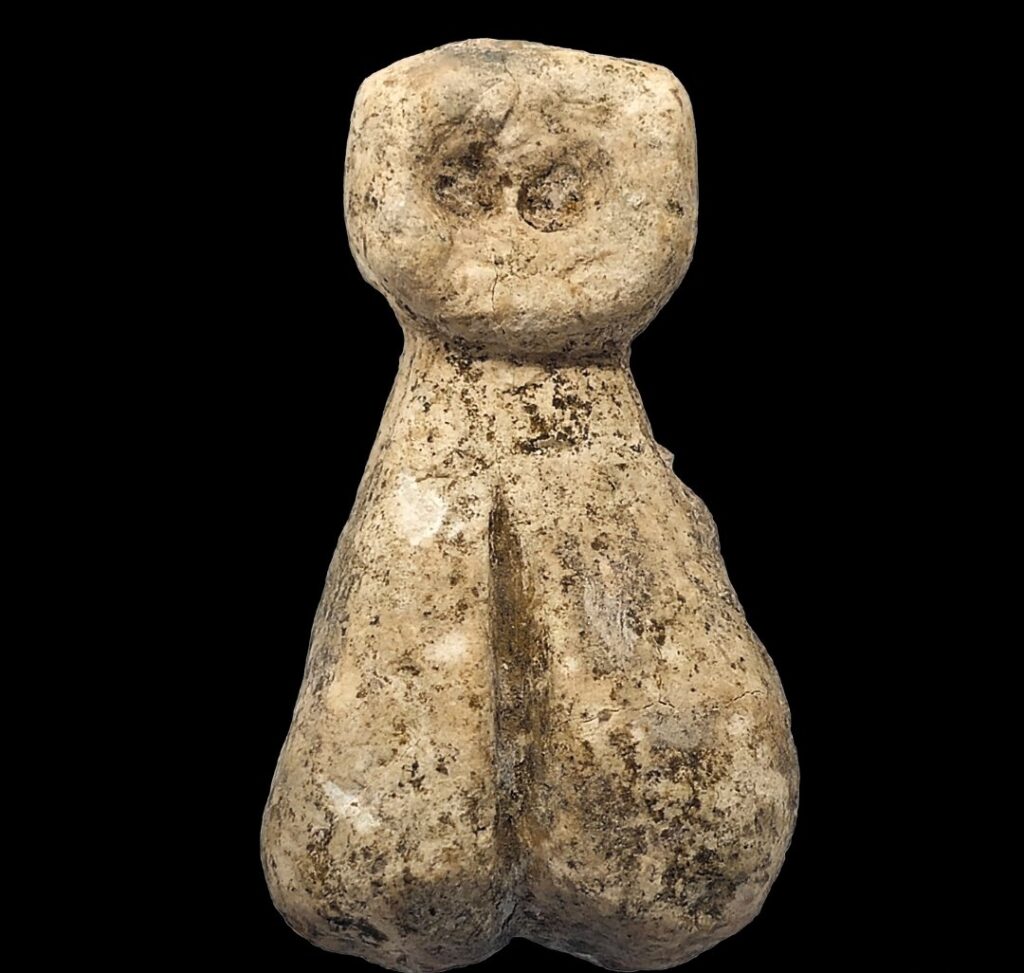
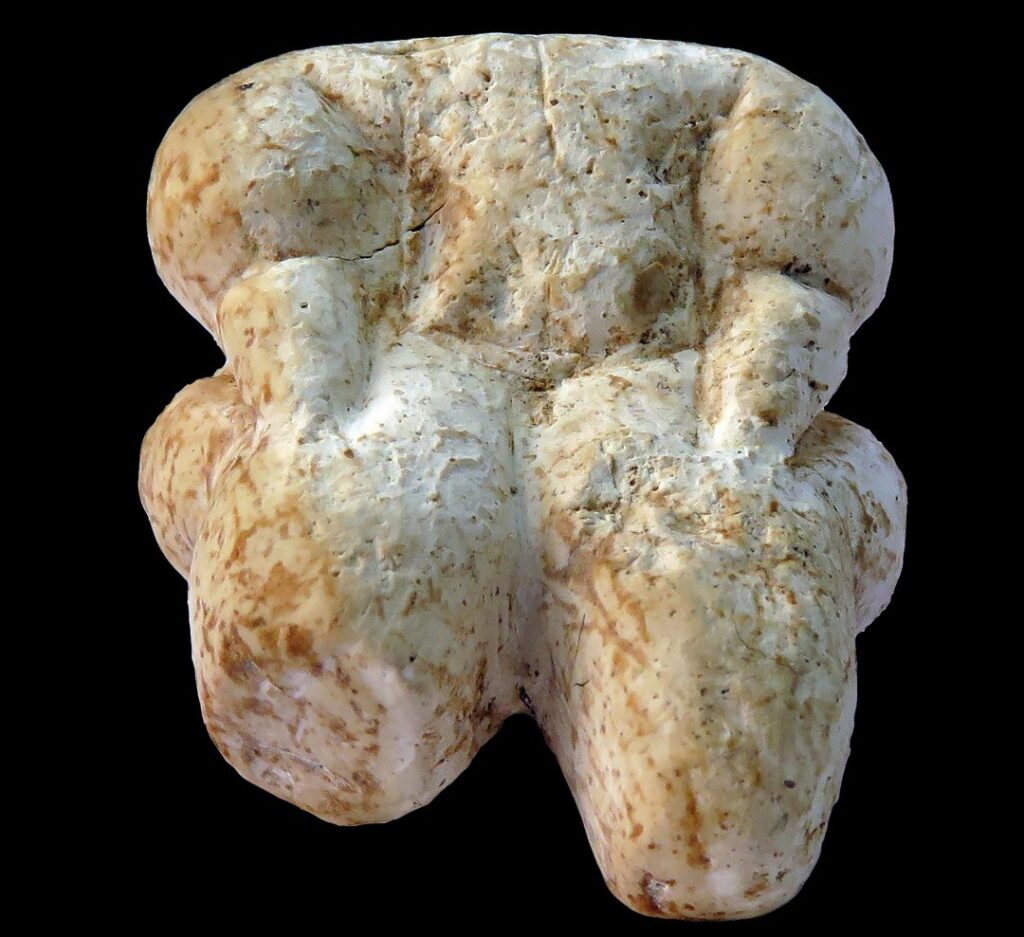
Excavations on two mounds have uncovered dozens of figurines—some schematic, others naturalistic—carved from limestone or shaped from clay. Many represent human forms, especially women or gender-neutral bodies. Others depict animals central to Neolithic subsistence or cosmology.
These figurines are small, but their implications are enormous.
They show that symbolism moved from public stone sanctuaries into the realm of private life, where beliefs were expressed through objects meant to be touched, carried, or placed inside a home. In Gürcütepe, meaning becomes intimate, portable, and woven deeply into daily practice.
A particularly striking aspect is the resemblance between certain female figurines and examples known from Çatalhöyük and Aşıklı Höyük in Central Anatolia. Whether through shared traditions or long-distance cultural contact, Gürcütepe appears connected to broader Neolithic networks.
The stylistic diversity of these miniature objects suggests a world far more interconnected than previously assumed.
Continuity Instead of Collapse
For years, the closure of Göbeklitepe was interpreted as a turning point—sometimes even as an endpoint. Gürcütepe challenges this view. What emerges from the site is a story of continuity, not abandonment.
Communities shifted their focus from monumental architecture to domestic production. They settled in more productive landscapes. They adopted new rhythms of farming and herding. And they continued to express symbolic life through different forms—smaller, more personal, deeply rooted in household identity.
In this sense, Gürcütepe fills one of the most significant chronological and cultural gaps in the archaeology of Upper Mesopotamia. It helps connect the ritual intensity of the 10th millennium BCE to the fully agricultural societies that would later span Mesopotamia.
What Gürcütepe Offers Archaeology
For archaeologists, Gürcütepe is not just another Neolithic village. It is a lens—a way to observe the subtle shifts that redefined human life after the age of monuments.
It shows:
- how symbolic practices adapted,
- how communities reorganized after ritual centers were abandoned,
- how domestic life became the arena in which meaning was created,
- how networks of shared traditions extended across Anatolia and Mesopotamia,
- and how the final phases of the Pre-Pottery Neolithic carried the seeds of later agricultural societies.
As excavations progress, new figurines, structures, and environmental data continue to emerge. Each discovery adds another brushstroke to the picture of a society in transition—one that kept its beliefs alive not through megalithic architecture, but through the quiet power of clay and limestone.
- A 1700-year-old statue of Pan unearthed during the excavations at Polyeuktos in İstanbul
- The granary was found in the ancient city of Sebaste, founded by the first Roman emperor Augustus
- Donalar Kale Kapı Rock Tomb or Donalar Rock Tomb
- Theater emerges as works continue in ancient city of Perinthos
- Urartian King Argishti’s bronze shield revealed the name of an unknown country
- The religious center of Lycia, the ancient city of Letoon
- Who were the Luwians?
- A new study brings a fresh perspective on the Anatolian origin of the Indo-European languages
- Perhaps the oldest thermal treatment center in the world, which has been in continuous use for 2000 years -Basilica Therma Roman Bath or King’s Daughter-
- The largest synagogue of the ancient world, located in the ancient city of Sardis, is being restored
Leave a Reply