
The Beginning of Human History in Berlin: Göbeklitepe and Taş Tepeler Exhibition Opens
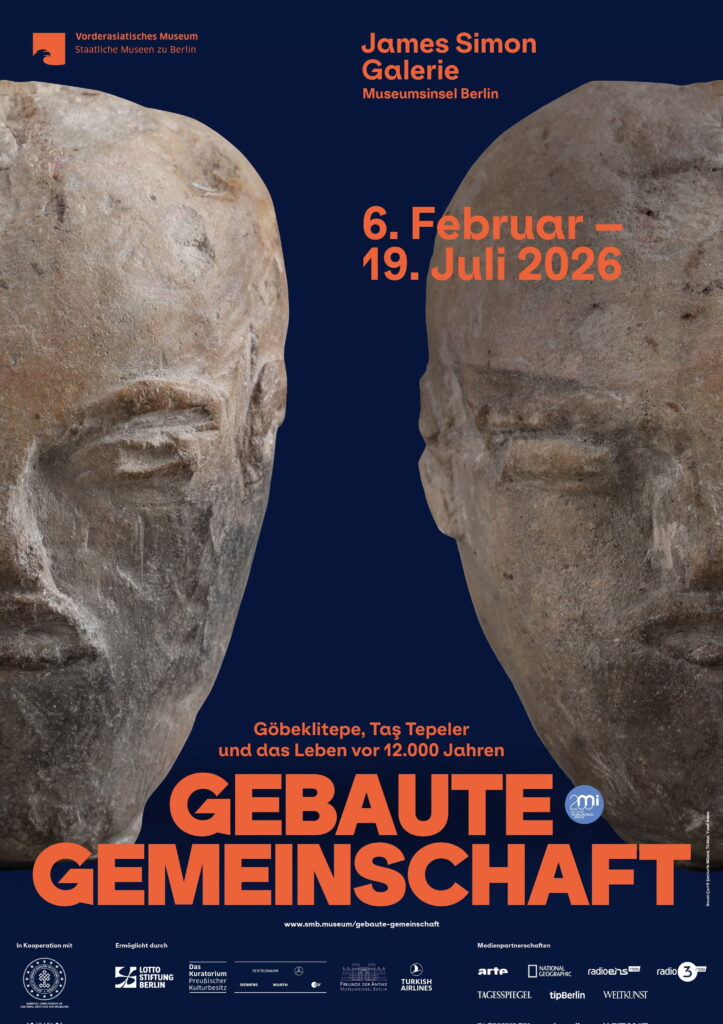
The story of humanity’s earliest communities is now unfolding in the heart of Europe. On February 10, a major exhibition dedicated to Göbeklitepe and the wider Taş Tepeler region opens in Berlin, bringing 12,000 years of history to an international audience.
Titled “The Discovery of Society: Life 12,000 Years Ago at Göbeklitepe and the Taş Tepeler,” the exhibition will be hosted at the James-Simon Galerie on Berlin’s Museum Island. Organized through a collaboration between Türkiye’s Ministry of Culture and Tourism and the Vorderasiatisches Museum, the exhibition will remain open until July 19.
93 Selected Works — 44 on Public Display for the First Time
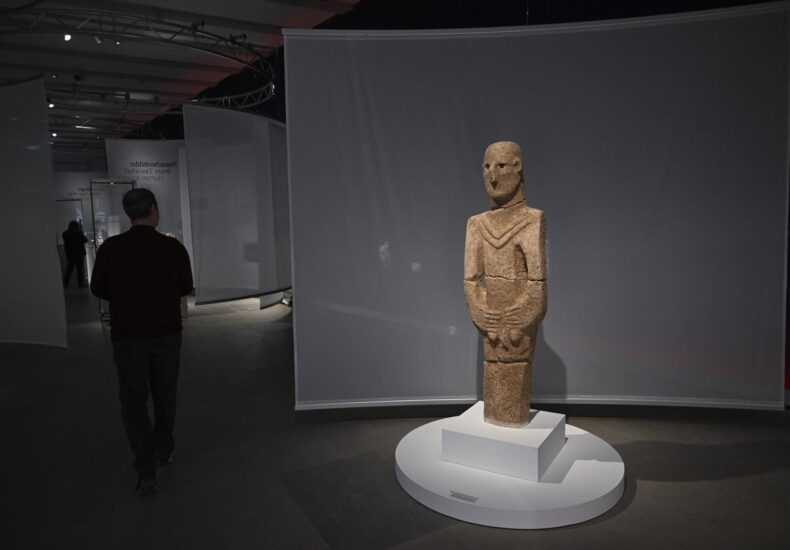
The exhibition features 89 original Neolithic artifacts from the Şanlıurfa Museum collection, accompanied by four replicas — a total of 93 objects. Notably, 44 of these artifacts are being exhibited for the first time.

These objects range from sculptural works and relief fragments to ritual items and elements of early architectural culture. Together, they illuminate a transformative era in human history — the transition from mobile hunter-gatherer groups to settled communities experimenting with food production, social organization, and symbolic expression.
📣 Our WhatsApp channel is now LIVE! Stay up-to-date with the latest news and updates, just click here to follow us on WhatsApp and never miss a thing!!
Rather than presenting Göbeklitepe as an isolated phenomenon, the exhibition situates it within the broader Taş Tepeler landscape — a network of early Neolithic sites in southeastern Türkiye that collectively reshape our understanding of the origins of complex society.
Minister Ersoy: “We Are Opening a Door to the Beginning of Human History in Berlin”
Türkiye’s Minister of Culture and Tourism, Mehmet Nuri Ersoy, announced the exhibition through his official social media accounts In his statement, Ersoy emphasized that the exhibition brings 89 artifacts and four replicas from the Şanlıurfa Museum to Berlin, highlighting that nearly half of the works have never been displayed before.
He underlined that the exhibition aims not merely to present archaeological finds, but to narrate the profound transformation humanity experienced during the Neolithic period — a time when new forms of belief, architecture, and communal organization emerged. According to Ersoy, the Taş Tepeler heritage represents a foundational chapter in human history, one that now meets global audiences in the cultural center of Berlin.
“Göbeklitepe Is Not Alone”
Professor Necmi Karul, Coordinator of the Taş Tepeler Research Project, described the Berlin exhibition as the result of two major pillars: a century-long tradition of archaeological collaboration between Turkish and German scholars, and the Taş Tepeler Project launched in 2021.
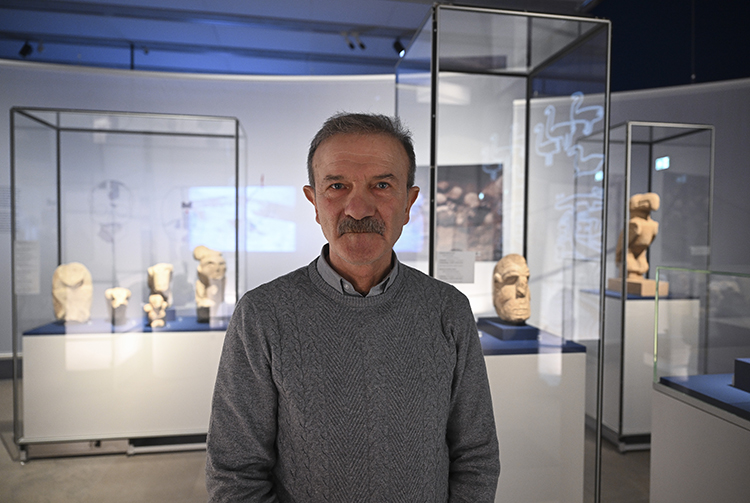
According to Karul, the project demonstrated that Göbeklitepe should not be viewed in isolation. Excavations are currently underway at ten different locations in the Şanlıurfa region, carried out by multinational teams involving 36 academic institutions from countries including China and Germany. These investigations are reshaping scholarly perspectives on the beginnings of sedentism and early food production.
Karul noted that nearly one hundred original artifacts from Taş Tepeler are being displayed in Berlin for the first time within a thematic framework organized around eight conceptual sections. Sharing this knowledge with a broad public, he emphasized, is a central objective of the project.
Making the Neolithic World Tangible
For Barbara Helwing, Director of the Vorderasiatisches Museum, the exhibition carries both professional and personal significance. As a student, she participated in the 1988–1989 excavations at Nevali Çori under the direction of Harald Hauptmann and Klaus Schmidt.
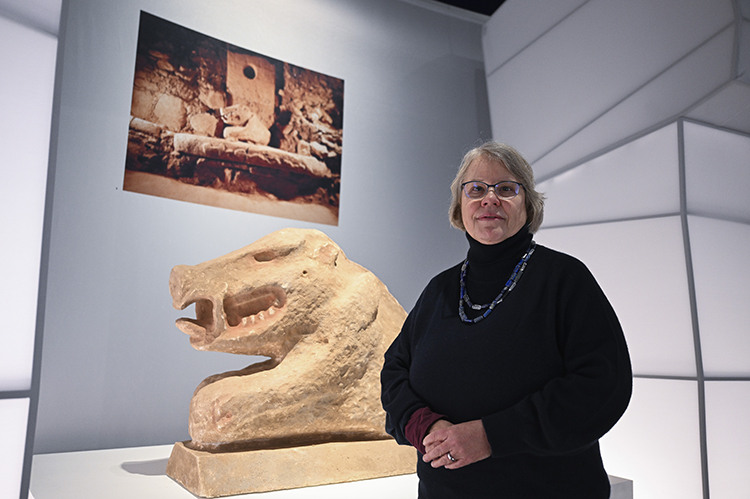
Helwing pointed out that the existence of approximately 30 sites similar to Göbeklitepe in the region does not diminish its importance — on the contrary, it renders it more comprehensible and more powerful within a broader cultural landscape.
She stressed that the objects on display shed light on everyday life in the Neolithic period, allowing visitors to directly engage with the lived realities of early communities. The emotional and visual impact, she suggested, can be compared to the powerful effect of Paleolithic cave art in Europe and Indonesia.
Isabel Muñoz’s Contemporary Lens
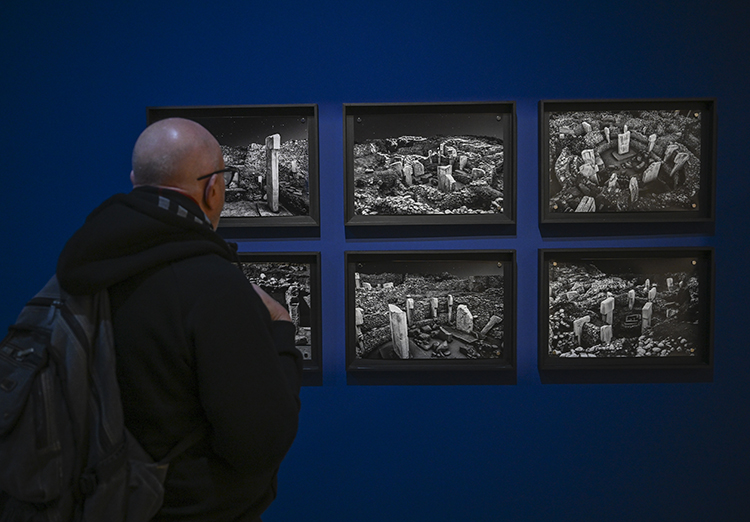
The exhibition also features photographs by internationally renowned Spanish photographer Isabel Muñoz. Her images of Taş Tepeler interpret the archaeological landscape through light, texture, and human form, offering a contemporary artistic dialogue with the Neolithic past.
Through monumental pillars, sculpted figures, and ritual spaces, the exhibition explores one of the most significant turning points in human history: the emergence of organized society. In Berlin, the story of Göbeklitepe and Taş Tepeler is presented not as a distant chapter of Anatolian history, but as a shared human heritage — a beginning that belongs to us all.
- A 1700-year-old statue of Pan unearthed during the excavations at Polyeuktos in İstanbul
- The granary was found in the ancient city of Sebaste, founded by the first Roman emperor Augustus
- Donalar Kale Kapı Rock Tomb or Donalar Rock Tomb
- Theater emerges as works continue in ancient city of Perinthos
- Urartian King Argishti’s bronze shield revealed the name of an unknown country

- The religious center of Lycia, the ancient city of Letoon
- Who were the Luwians?

- A new study brings a fresh perspective on the Anatolian origin of the Indo-European languages

- Perhaps the oldest thermal treatment center in the world, which has been in continuous use for 2000 years -Basilica Therma Roman Bath or King’s Daughter-
- The largest synagogue of the ancient world, located in the ancient city of Sardis, is being restored
Leave a Reply