
The World’s Oldest Swords and the Birth of Warfare at Arslantepe
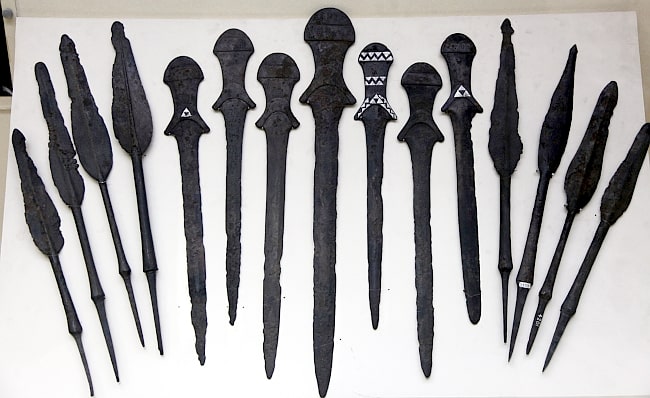
More than four decades ago, excavations at Arslantepe Mound revealed a find that would fundamentally alter how archaeologists understand the origins of warfare. Unearthed inside a mud-brick palace complex, a cache of nine metal blades—long regarded today as the world’s oldest known swords—pushed the emergence of sword technology back by at least a millennium.
Until this discovery, most scholars believed that true swords appeared no earlier than around 1600–1500 BCE. Arslantepe forced a reassessment. The blades, dating to the Early Bronze Age (c. 3300–3100 BCE), demonstrate that complex bladed weapons were already in use at the dawn of the first city-states.
Early Bronze Age blades unlike anything before
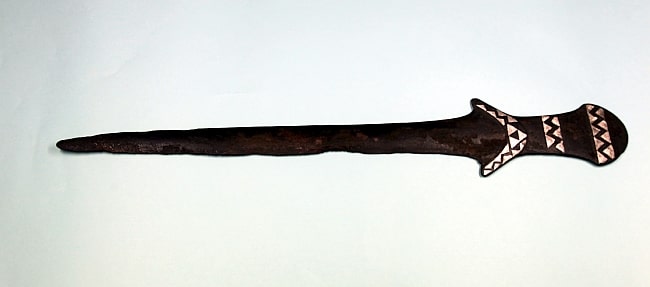
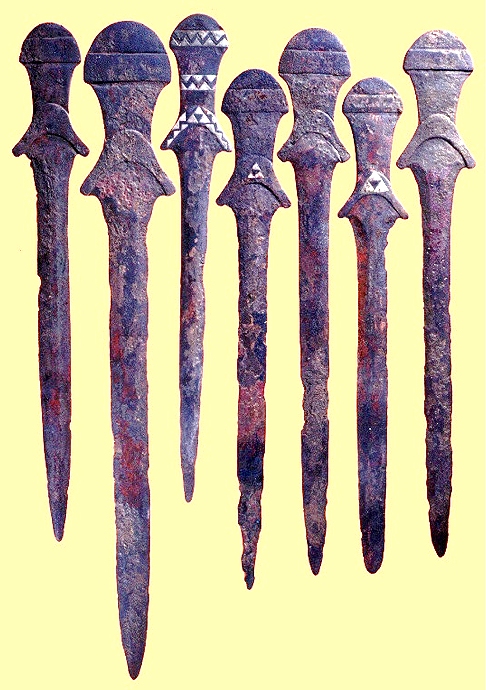
The Arslantepe assemblage consists of nine swords and daggers, measuring roughly 45 to 60 centimeters in length. While shorter than later historical swords, their form is unmistakable. Each piece shows the defining components of a sword: a blade, a guard-like transition, a grip, and a pommel-shaped end.
Technologically, they are equally remarkable. The weapons were cast from an arsenical copper alloy, an advanced metallurgical innovation for its time. Three of the swords were further enhanced with silver inlays, signaling not only technical mastery but also symbolic value.
📣 Our WhatsApp channel is now LIVE! Stay up-to-date with the latest news and updates, just click here to follow us on WhatsApp and never miss a thing!!
Palace power and the first city-state
The swords were discovered in the context of a monumental palace, part of a broader administrative and ceremonial complex overlooking the Euphrates. Arslantepe, often described as one of the earliest known city-states, provides rare insight into how power, ritual, and violence intersected at the very beginning of organized society.
High-status graves and elite architectural spaces at the site suggest that metallurgy was closely tied to authority. These swords, among the most valuable objects of their age, likely belonged to a ruling class that used material culture to legitimize and display power.
Weapon or symbol? An ongoing debate
Archaeologists continue to debate how these early swords functioned. Were they practical weapons, or primarily ceremonial insignia? Throughout history, swords have often served both roles simultaneously. Even if they appear unwieldy by modern standards, in the hands of an Early Bronze Age warrior they would have been formidable—and potentially lethal.
What is clear is that Arslantepe marks a turning point. Here, for the first time, blades appear that fully meet the conceptual and technological definition of a sword.
From excavation to global heritage
The swords were excavated in the early 1980s by the team of Marcella Frangipane of Rome University, who identified them as the earliest swords ever discovered. Since then, Arslantepe has become a cornerstone site for understanding early state formation in Anatolia.
Today, UNESCO recognizes Arslantepe Mound as a World Heritage Site. Although parts of the area were affected by the February 6 earthquakes, the site’s archaeological layers and permanent protective structures remained intact, preserving this extraordinary evidence of humanity’s first swords.
- A 1700-year-old statue of Pan unearthed during the excavations at Polyeuktos in İstanbul
- The granary was found in the ancient city of Sebaste, founded by the first Roman emperor Augustus
- Donalar Kale Kapı Rock Tomb or Donalar Rock Tomb
- Theater emerges as works continue in ancient city of Perinthos
- Urartian King Argishti’s bronze shield revealed the name of an unknown country
- The religious center of Lycia, the ancient city of Letoon
- Who were the Luwians?

- A new study brings a fresh perspective on the Anatolian origin of the Indo-European languages

- Perhaps the oldest thermal treatment center in the world, which has been in continuous use for 2000 years -Basilica Therma Roman Bath or King’s Daughter-
- The largest synagogue of the ancient world, located in the ancient city of Sardis, is being restored
Leave a Reply