
2,200-Year-Old Contract from Amos Reveals Strict Farming Rules in Ancient Anatolia
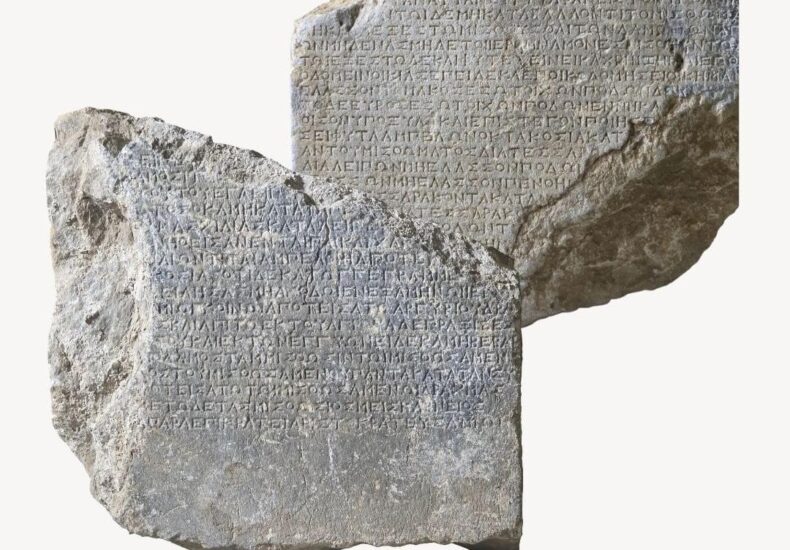
In ancient Anatolia, paying rent was not just about money. A newly studied 2,200-year-old contract from Amos Ancient City shows that tenants were required to plant hundreds of vines and dozens of fig trees—with even the depth of each sapling carefully prescribed.
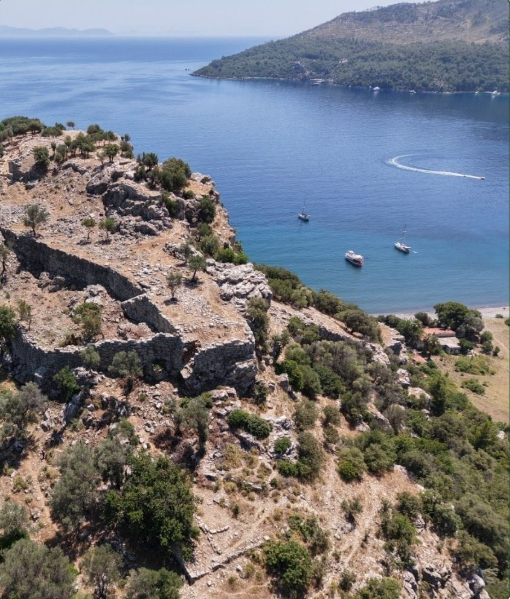
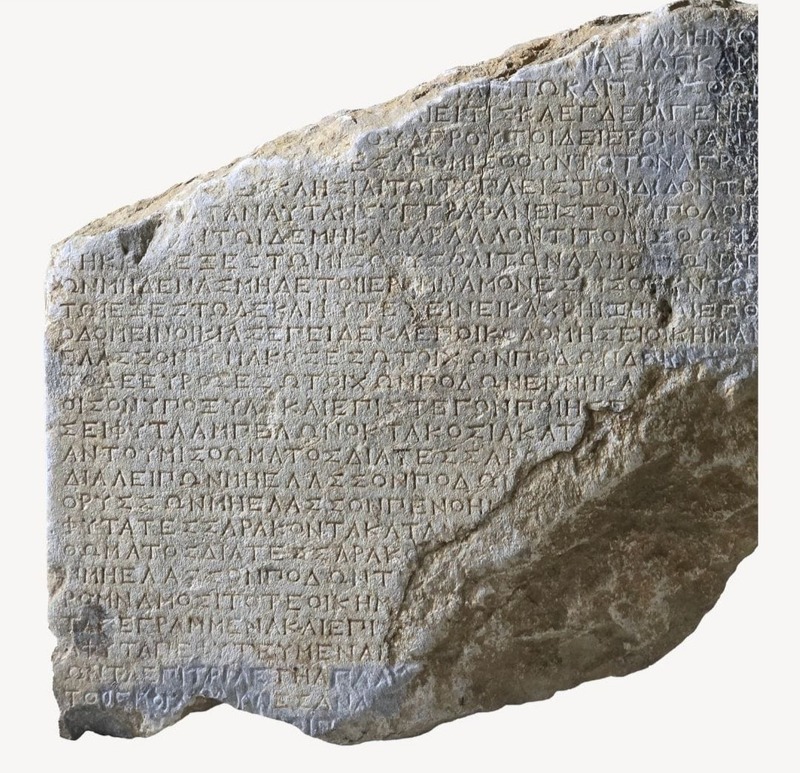
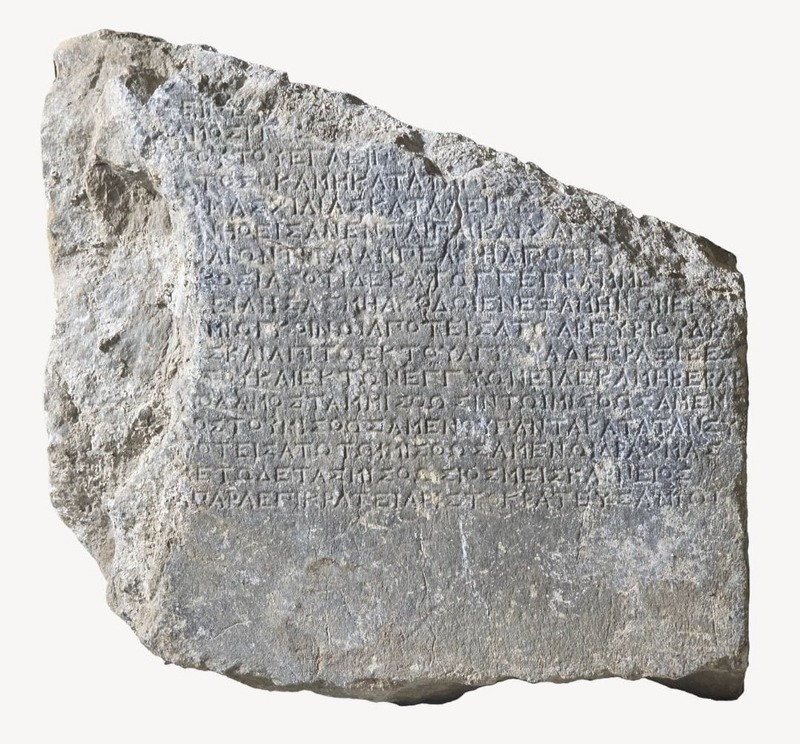
The inscription, now housed in the Fethiye Archaeological Museum, was recovered from a small chapel on Şövalye Island (ancient Makra). Carved on both sides of a limestone stele in Doric Greek, the text dates to around 220–200 BCE. It had originally stood in Amos before being transported—likely as ship ballast—and reused in later construction.
A Contract That Follows a Broader System
This is not an isolated document. The text closely matches other lease inscriptions from Amos and the wider Rhodian Peraia. The similarities are structural and linguistic, pointing to a standardized system of land leasing operating across the region.
Such consistency suggests that land—especially public or sacred property—was managed under coordinated administrative rules, likely shaped by Rhodian control.
📣 Our WhatsApp channel is now LIVE! Stay up-to-date with the latest news and updates, just click here to follow us on WhatsApp and never miss a thing!!
Farming as an Obligation, Not a Choice
The contract ties agricultural production directly to rent. For every 100 drachmas owed annually, the tenant was required to plant 800 grapevines and 40 fig trees.
The inscription goes further, including technical instructions such as how deep each sapling should be planted. This detail makes one thing clear: agriculture was not left to the tenant’s judgment—it was planned, regulated, and enforced.
Law, Penalties, and Accountability
The text also outlines penalties and compensation rules, showing that this was a binding legal agreement. These clauses point to a structured system in which failure to meet obligations had defined consequences.
Rather than informal arrangements, such contracts functioned as legal instruments backed by authority, ensuring control over land use and production.
From Sanctuary to Secondary Use
Originally, the stele stood in the sanctuary of Apollo Samnaios in Amos—suggesting that the land involved may have been sacred or publicly owned.
At some point in the medieval period, the stone was removed, transported as ballast, and reused in a chapel on Şövalye Island. This secondary use ultimately ensured its survival.
Ongoing Work at Amos
Excavations at Amos continue to uncover additional fragments believed to belong to the same group of lease inscriptions. Each new discovery adds clarity to how land, agriculture, and authority intersected in Hellenistic Anatolia.
Scientific Reference
The inscription was analyzed by Fatih Onur (Akdeniz University) in the study titled “A New Fragment of an Amian Lease Contract”, published in Chiron.
DOI: 10.1515/9783112216491-010
- A 1700-year-old statue of Pan unearthed during the excavations at Polyeuktos in İstanbul
- The granary was found in the ancient city of Sebaste, founded by the first Roman emperor Augustus
- Donalar Kale Kapı Rock Tomb or Donalar Rock Tomb
- Theater emerges as works continue in ancient city of Perinthos
- Urartian King Argishti’s bronze shield revealed the name of an unknown country
- The religious center of Lycia, the ancient city of Letoon
- Who were the Luwians?
- A new study brings a fresh perspective on the Anatolian origin of the Indo-European languages

- Perhaps the oldest thermal treatment center in the world, which has been in continuous use for 2000 years -Basilica Therma Roman Bath or King’s Daughter-
- The largest synagogue of the ancient world, located in the ancient city of Sardis, is being restored
Leave a Reply